Tradie-Proof Your Wedding Band: The Aussie Worksafe Guide to Silicone Rings for Athletes and Tradies
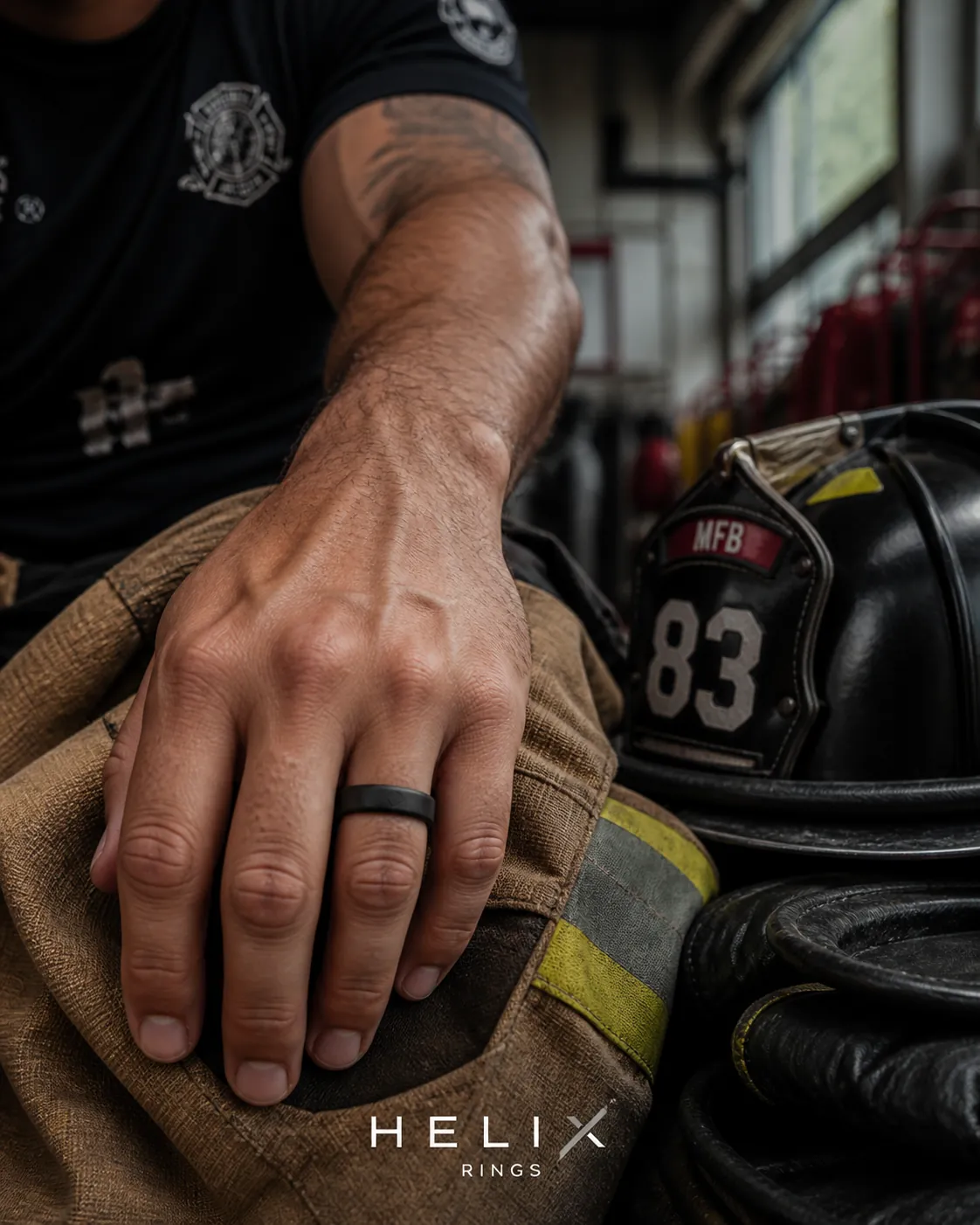
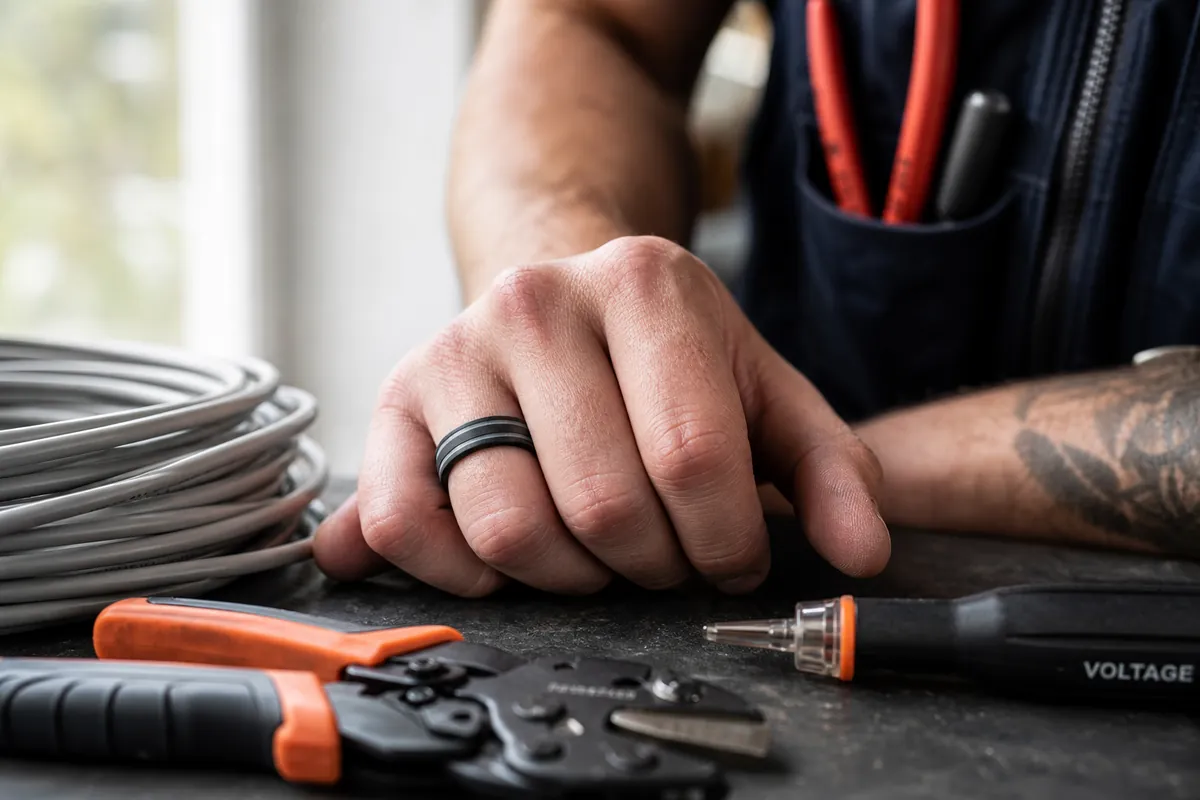
Tradie silicone wedding rings Australia are purpose-built for workers and athletes who can’t — or shouldn’t — wear a metal wedding band on the job. If you’re a plumber, electrician, builder, nurse, or gym junkie who loves your partner but isn’t sure about wearing jewellery at work, silicone rings offer a genuine solution: flexible, durable, safe-release bands that look great and meet Australian workplace safety requirements. Here’s everything you need to know.
What Is Ring Avulsion — and Why Every Aussie Tradie Needs to Know
Ring avulsion is the traumatic degloving or amputation of a finger caused by a ring catching on a fixed object while the body is in motion. It is one of the most serious hand injuries in Australian workplaces. According to research published in the Journal of Hand Surgery, ring avulsion injuries account for a significant portion of occupational hand trauma cases presenting to emergency departments — and the majority involve metal rings, particularly gold and tungsten bands.
When a traditional metal ring catches on machinery, scaffolding, a vehicle chassis, or even a workbench edge, it does not break. Instead, the ring holds while the body continues moving. The result can range from severe degloving of the skin and tendons all the way to traumatic amputation. In many cases, the finger cannot be reconstructed or reattached.
Occupations with Elevated Ring Avulsion Risk in Australia
- Electricians and electrical trades — working around live circuits and metalwork
- Plumbers — pipes, fittings, copper work
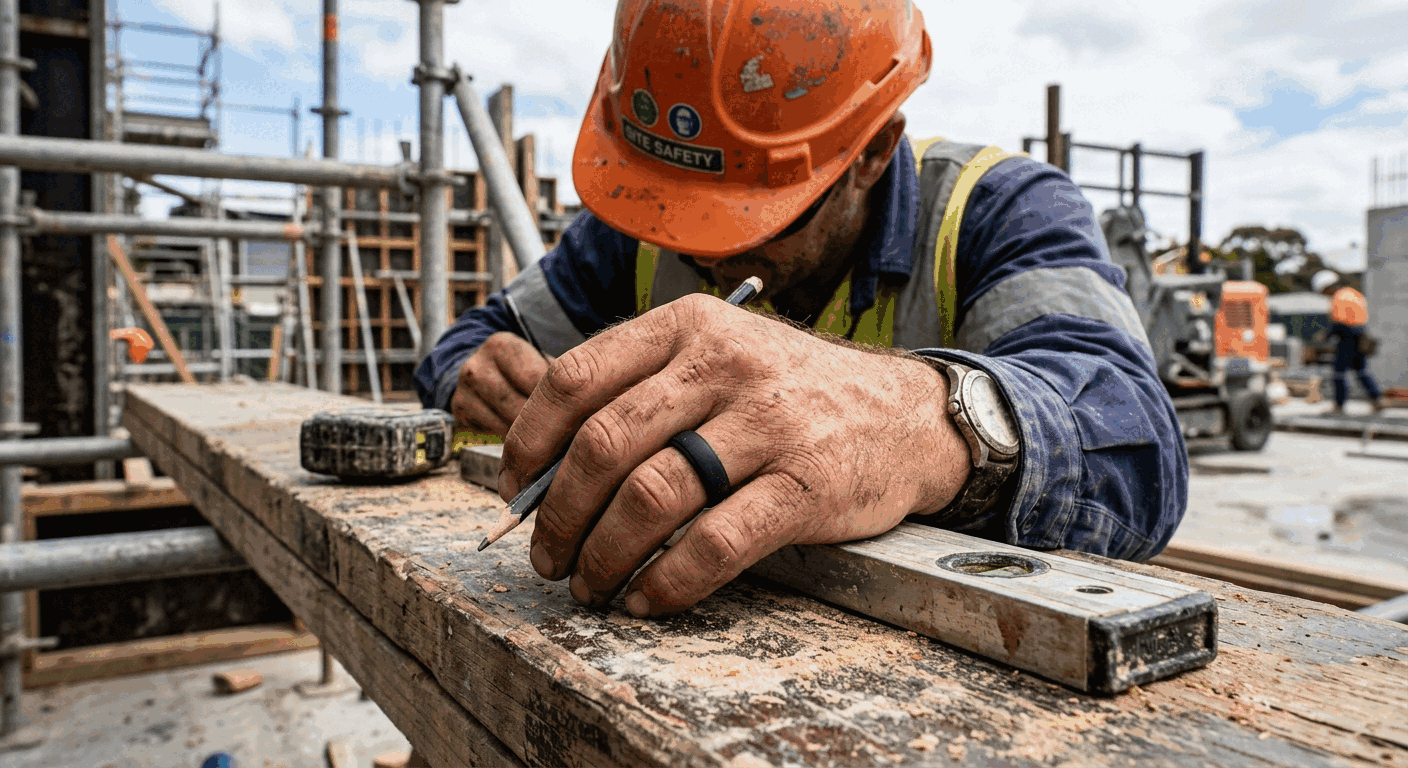
- Builders and carpenters — scaffolding, nail guns, power tools
- Mechanics and automotive trades — engines, chassis, lifting equipment
- Mining and resources — machinery, conveyors, heavy equipment
- Healthcare workers — infection control, glove compliance
- Fitness coaches and gym workers — pull-up bars, Olympic lifting, barbells
Safe Work Australia’s guidance on hand and finger protection explicitly identifies rings as a hazard in many trade environments. Employers have a duty of care under the Work Health and Safety Act 2011 to identify and mitigate foreseeable risks — including jewellery worn by workers on site.
WHS Compliance and Australian Workplace Ring Rules
Under the Work Health and Safety Act 2011 (Cth) and corresponding state legislation, both employers and workers have obligations to manage hazards in the workplace. Wearing a metal ring in a high-risk environment — where it could catch on equipment or machinery — is a foreseeable hazard that must be controlled.
What Australian WHS Law Says About Jewellery
Safe Work Australia’s model codes of practice identify jewellery, including rings, as a potential hazard in many workplace environments. Specific industries with explicit jewellery restrictions or guidance include:
- Construction — rings and loose jewellery prohibited on most commercial sites under site safety plans
- Electrical work — conductive metal rings represent an electrocution risk and are banned under electrical safety regulations in Queensland, NSW, and Victoria
- Food handling — rings are restricted under food safety standards (FSANZ Standard 3.2.2)
- Healthcare — infection control guidelines from Australian Commission on Safety and Quality in Health Care (ACSQHC) recommend removing jewellery before clinical contact
- Mining and petroleum — many mining sites have zero-ring policies as part of their PPE requirements
A silicone ring that breaks away under load is not simply a lifestyle choice — for many tradies, it’s a WHS-compliant alternative to removing your wedding band entirely. You get to honour your commitment while staying legal and safe on site.
Why Silicone Rings Are the Safe Choice for Tradie Silicone Wedding Rings in Australia
Key Safety Advantages of Silicone Rings for Australian Workers
- Breakaway design: Quality silicone rings are designed to tear or snap under pressure, releasing the finger before avulsion injury occurs. This is the single most important safety feature for trades work.
- Non-conductive: Silicone does not conduct electricity. For electricians and anyone working around live circuits, this eliminates one of the primary risks associated with metal rings.
- Non-porous and hypoallergenic: Medical-grade silicone resists bacterial growth and is safe for healthcare environments. Unlike metal rings, they don’t harbour pathogens under gloves.
- Flexible and glove-compatible: Silicone rings sit flat and flex with the finger, making them compatible with work gloves, surgical gloves, and nitrile gloves — unlike bulky metal bands that create uncomfortable pressure points.
- Temperature resistant: Quality silicone remains stable across a wide temperature range, making it suitable for work environments with heat, cold, or UV exposure — including Australian outdoor construction in summer.
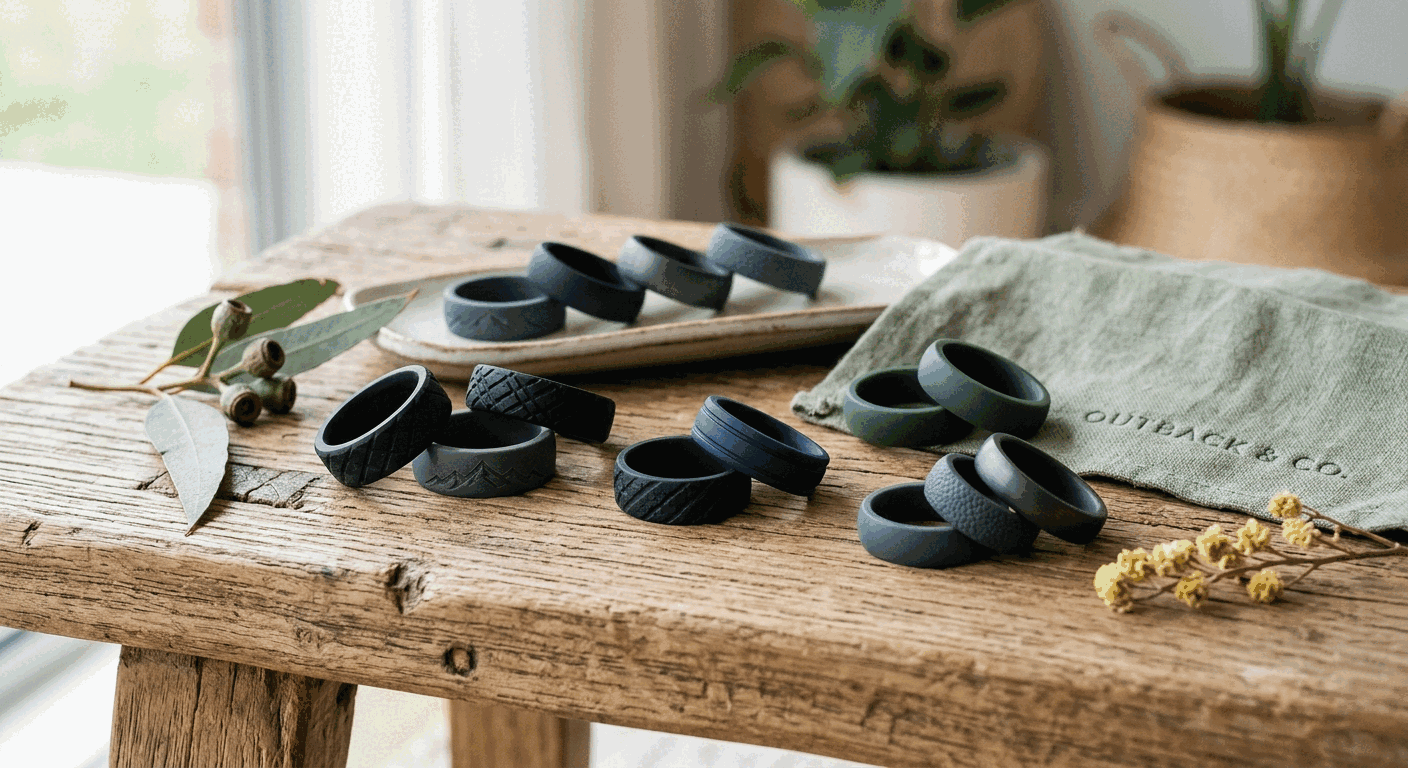
For Aussie tradies, men’s silicone rings offer the best blend of safety, durability, and style. The benefits of silicone wedding bands extend well beyond the worksite — they’re a practical choice for anyone with an active or hands-on lifestyle.
How to Choose a Tradie Silicone Ring in Australia
Not all silicone rings are made equally. When selecting tradie silicone wedding rings in Australia, there are several factors to evaluate beyond aesthetics.
What to Look for in a Quality Tradie Silicone Ring
- Material grade: Medical-grade silicone is the gold standard. It’s tested for skin safety, doesn’t leach chemicals, and is rated for long-term contact with skin.
- Breakaway design: Look for a ring designed to tear or stretch free under sudden load — secure through normal work, but built to give way before serious injury occurs.
- Width and profile: Narrower rings (5–7mm) are less likely to catch on equipment. Thinner profiles sit lower on the finger and work better under gloves.
- Surface texture: Flat-profile and comfort-fit designs are better for long shifts. Textured or engraved rings look great but can accumulate grime in heavy trade environments.
- Colour and style: Black and dark colours are practical for dirty work — they don’t show grime as readily. Helix offers a wide range of styles across its full silicone ring collection.
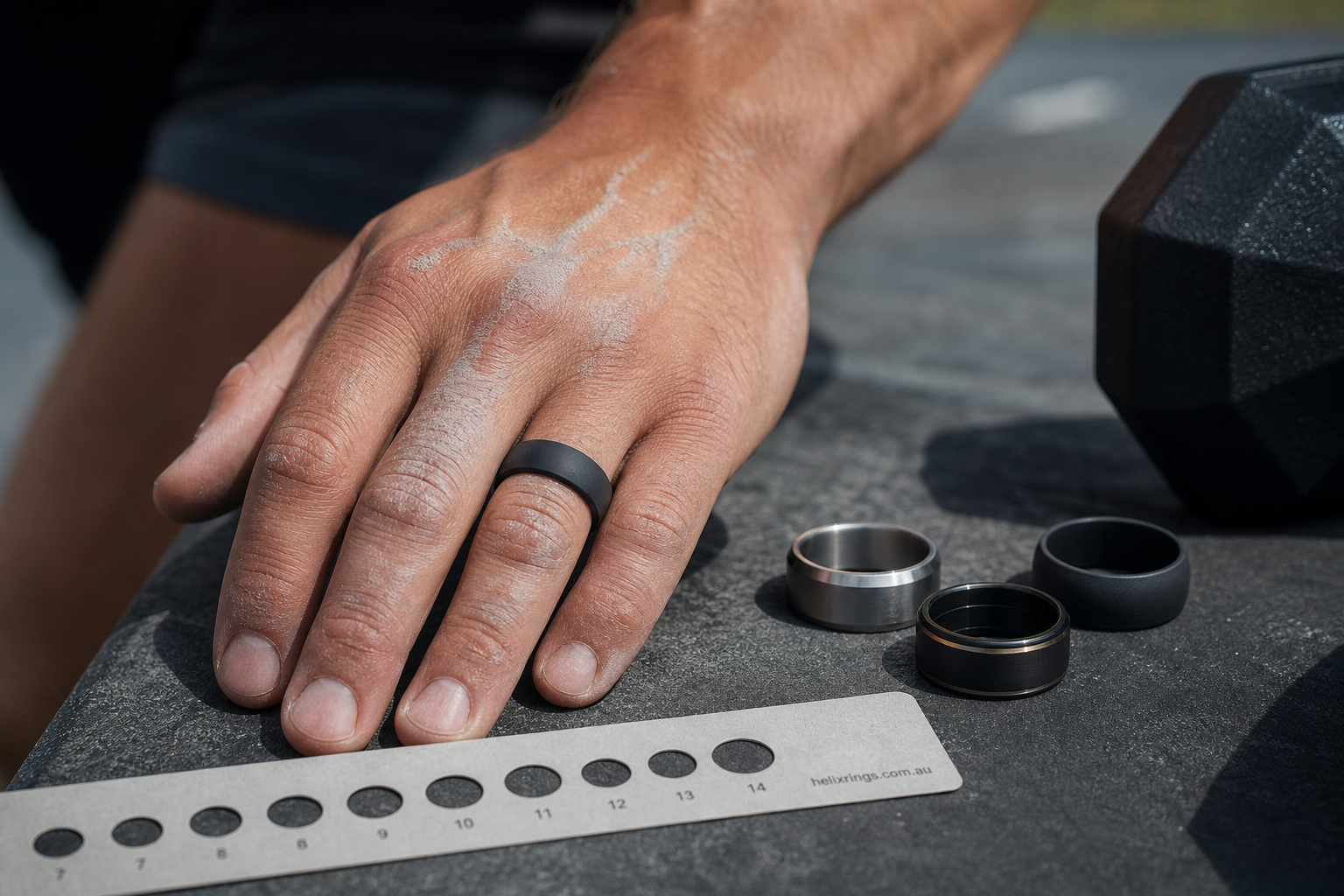
- Size accuracy: Getting the right fit matters for both safety and comfort. An overly loose ring is more likely to catch on objects. Check the Helix ring size chart before ordering.
Tradie Ring Comparison: Silicone vs Metal
| Feature | Silicone Ring | Metal Ring (Gold/Tungsten) |
|---|---|---|
| Ring avulsion risk | ✅ Low (breakaway design) | ❌ High |
| Electrically conductive | ✅ No | ❌ Yes |
| WHS compliant for high-risk sites | ✅ Generally yes | ❌ Often prohibited |
| Glove compatible | ✅ Yes | ❌ Uncomfortable/unsafe |
| Cost if damaged | ✅ $19-$29 replacement | ❌ $500-$5,000+ |
| Wedding-appropriate style | ✅ Yes (modern designs) | ✅ Yes |

Silicone Rings for Australian Athletes and Active Workers
Beyond the worksite, silicone rings have become the go-to wedding band for Australian athletes, CrossFitters, surfers, nurses, and anyone who lives an active lifestyle. The same properties that make them safe for tradies make them ideal for sport and fitness.
Sport-Specific Benefits of Tradie Silicone Rings in Australia
- Gym and CrossFit: Metal rings on a barbell or pull-up bar can tear skin and damage the ring. Silicone rings flex with your grip and don’t damage equipment.
- Surfing and swimming: Medical-grade silicone is fully waterproof and doesn’t corrode in salt water. No ring loss risk in the surf — a common problem with metal bands that expand slightly in cold water and slip off.
- Running and cycling: Lightweight and non-chafing. Silicone rings don’t catch on cycling gloves or create pressure issues on long rides.
- Rugby and contact sports: Many league and union referees require players to tape over metal rings or remove them. A silicone ring eliminates the issue entirely.
- Rock climbing: Ring avulsion risk is particularly acute in climbing — catches on holds or gear are common. Most climbing gyms and outdoor guides recommend against metal rings.
Whether you’re heading to the gym or back to site, Helix’s full range of silicone rings has options suited to every activity. Couples who are both active will find our women’s silicone ring range offers the same safety and durability features in styles designed for her lifestyle too.
The Real Cost of Getting It Wrong
The financial argument for silicone rings is compelling, but the safety argument is the one that matters most. Ring avulsion injuries often require emergency surgery, lengthy rehabilitation, and in severe cases, lead to permanent disability or amputation. Workers’ compensation claims for hand injuries in Australia cost employers and the system millions annually — and that’s before accounting for lost productivity, pain, and loss of livelihood for the worker.
According to Safe Work Australia’s Work-related Injuries in Australia data, hands and fingers are consistently among the most commonly injured body parts in the workplace, with cuts, lacerations, and crushing injuries topping the list. Many of these injuries involve jewellery as a contributing factor. Switching to a breakaway silicone ring is one of the easiest and cheapest risk controls available to any tradie or active worker.
Frequently Asked Questions About Tradie Silicone Rings in Australia
Are silicone rings safe for electricians in Australia?
Yes. Medical-grade silicone is non-conductive, meaning it does not carry electrical current. Silicone rings are the WHS-compliant choice for electricians and anyone working around live circuits, where metal rings present an electrocution hazard. Always verify compliance with your specific site’s safety plan and relevant electrical safety regulations in your state.
Can I wear a silicone ring on a construction site in Australia?
In most cases, yes. While metal rings are commonly prohibited on commercial construction sites due to ring avulsion and entanglement risk, silicone rings with a breakaway design are generally accepted as a safe alternative. Always check your site’s specific PPE and jewellery policy, as requirements vary by contractor and project.
How long do silicone rings last?
A quality medical-grade silicone ring typically lasts 2-5 years with daily wear, depending on conditions. Exposure to harsh chemicals, sharp edges, and extreme temperatures can shorten lifespan. The great news: when a silicone ring does wear out or breaks in an emergency, replacement costs $19-$29 — compared to thousands for a metal band.
Do silicone rings look like “real” wedding rings?
Modern silicone rings have come a long way from the plain rubber bands of a decade ago. Helix rings feature textured designs, dual-tone finishes, and styles that genuinely pass for a premium wedding band at first glance. Many tradies choose to wear their metal band on special occasions and their silicone ring on the job — the best of both worlds.
What size silicone ring should I buy?
Silicone rings should fit snugly but not be tight. Because silicone is flexible, minor size variations are forgivable — but for safety and comfort, accurate sizing is important. Use the Helix ring size chart to measure correctly before ordering. If you’re between sizes, size up.
Are silicone rings suitable for nurses and healthcare workers?
Yes. Medical-grade silicone is non-porous, hypoallergenic, and compatible with hand hygiene protocols. The Australian Commission on Safety and Quality in Health Care (ACSQHC) recommends removing jewellery before clinical contact — but slim-profile silicone rings that sit flush to the skin are often accommodated by facility policies. Check with your facility’s infection control guidelines.
References and Sources
- SafeWork NSW. Hazards A–Z. https://www.safework.nsw.gov.au/hazards-a-z
- Safe Work Australia. Model Work Health and Safety Act 2011 (Cth). https://www.safeworkaustralia.gov.au/law-and-regulation/model-whs-laws
- American Society for Surgery of the Hand. Ring Avulsion Injuries. https://www.assh.org/handcare/safety/ring-avulsion
- Australian Commission on Safety and Quality in Health Care. Infection Prevention and Control. https://www.safetyandquality.gov.au/our-work/infection-prevention-and-control