Silicone Rings for Athletes — The Safety Case Every Active Man Needs to Know
TL;DR
Silicone rings for athletes and active workers aren’t just a style choice — they’re a genuine safety upgrade. Metal rings worn during sport or physical work can cause degloving injuries, crush injuries, and electrical hazards. A quality silicone ring breaks away under pressure, protecting your finger when it matters most.
In This Guide
- What Is Ring Avulsion — and Why Should Every Active Australian Know About It?
- Why Silicone Rings for Athletes and Active Workers Are the Smart Safety Choice
- Who Should Switch to a Silicone Ring?
- What to Look for in a Safe Silicone Ring
- Getting the Right Silicone Ring for Your Active Lifestyle in Australia
- Frequently Asked Questions
- References & Sources
What Is Ring Avulsion — and Why Should Every Active Australian Know About It?
Ring avulsion is a traumatic injury that occurs when a metal ring catches on a surface during sudden movement, forcefully stripping the soft tissue — and sometimes the entire finger — from the hand. It is classified as one of the most severe hand injuries in emergency medicine, and in worst cases results in amputation.
According to the American Society for Surgery of the Hand, ring avulsion injuries account for a significant proportion of finger amputation cases treated in emergency departments worldwide. In Australian emergency settings, ring-related injuries are a recognised occupational health concern, particularly among construction workers, miners, tradespeople, and athletes involved in high-intensity sports like CrossFit, rugby, rock climbing, and weight training.
Here’s what happens in a ring avulsion scenario:
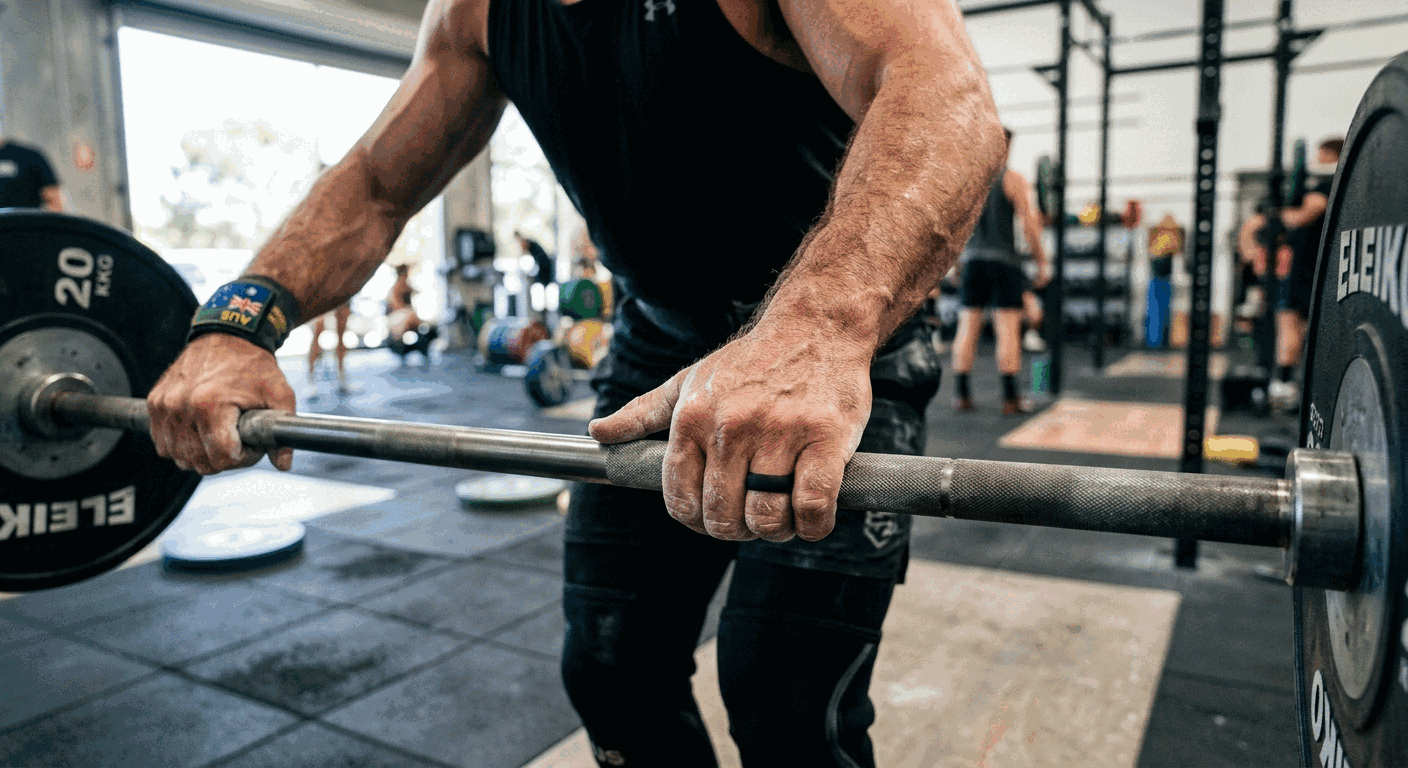
- A metal ring (gold, silver, tungsten, titanium) catches on a barbell knurling, a fence post, a machinery edge, or any fixed point
- The body keeps moving — the ring doesn’t
- The ring acts as a lever, pulling the skin, tendons, nerves, and blood vessels away from the underlying bone
- In severe cases, the entire finger can be degloving in milliseconds
The reality is simple: in a catch-and-pull accident a metal ring does not break — it holds, and the finger takes the force. A silicone ring, engineered correctly, breaks or stretches free under pressure — protecting your finger.
Understanding this risk is the first step. Choosing the right ring for your active lifestyle is the second.
Why Silicone Rings for Athletes and Active Workers Are the Smart Safety Choice
Silicone rings designed for athletes and active workers are engineered to tear or stretch free under sudden load before causing injury to the finger. This is known as a “breakaway” design, and it’s the single most important safety property for any ring worn during physical activity.
But safety isn’t the only reason silicone rings for athletes in Australia have exploded in popularity. Here’s the full picture:
They Won’t Conduct Electricity
Electricians, electricians’ apprentices, and anyone working near live circuits should never wear a metal ring. Metal is an excellent electrical conductor. A shock conducted through a metal ring can cause severe burns, muscle tetany (the inability to let go of the current source), and cardiac arrest. Silicone is a non-conductor — worn by electricians and workers in electrical environments worldwide specifically for this reason.
They Won’t Crush Under Weight
In powerlifting, strongman, and heavy labour, the force exerted through your hands is immense. A metal ring under compression — say, from a barbell pressing against the finger — can crush inward. Silicone compresses and flexes, moving with the hand rather than against it.
They Don’t Affect Grip or Performance
A low-profile silicone ring sits flush against the finger and won’t interfere with barbell grip, climbing holds, or tools. Many athletes actually forget they’re wearing one after the first session. The same can’t be said for a raised metal band that creates pressure points during grip-heavy movements.
They’re Hygienic for Sport
Metal rings — particularly those with engravings or textured settings — trap sweat, chalk, dirt, and bacteria underneath the band, creating a breeding ground for skin infections and contact dermatitis. Silicone is non-porous, easy to clean, and resists bacterial buildup even in high-sweat training environments.
Workplace and sports ring injuries are often underreported — many workers don’t report minor avulsion or crush incidents until they escalate. The best approach is prevention: removing a metal ring or switching to a breakaway silicone ring before problems occur.
For a deeper comparison of materials and why active Australians are making the switch, read our guide on silicone rings vs metal rings for active men.
Who Should Switch to a Silicone Ring?
If your daily life involves any of the following, wearing a metal ring presents a documented, avoidable safety risk. You should seriously consider a silicone ring:
Tradespeople and Construction Workers
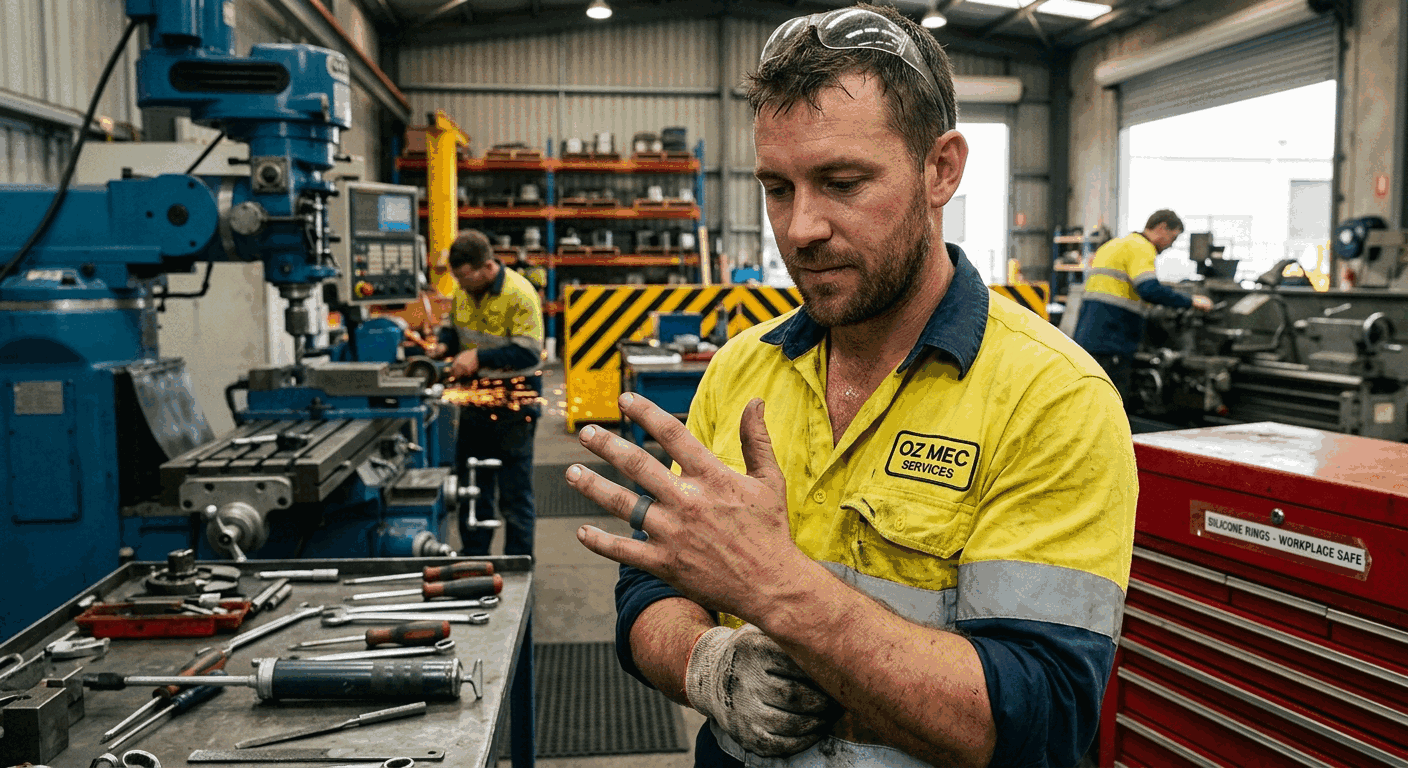
Builders, plumbers, electricians, carpenters, and labourers work in environments where ring avulsion and crush injuries are a real occupational hazard. Safe Work Australia and similar bodies routinely cite ring-related injuries in construction incident reports. Many worksites now include ring safety in induction processes. Our tradie silicone ring guide breaks down the case specifically for Australian workers.
Athletes and Gym Goers
Weightlifters, CrossFit athletes, rock climbers, rugby players, AFL players, and martial artists all face ring avulsion risk. Any sport where your hands interact with equipment, other people, or fixed objects carries this risk. The incidence rate in CrossFit is particularly noted in sports medicine literature, given the combination of high-rep movements and metal equipment.
Miners and Heavy Industry Workers
The mining sector has some of the most comprehensive personal protective equipment (PPE) standards in Australia. Many mine sites in Queensland, Western Australia, and New South Wales have blanket bans on metal jewellery for workers on site. A silicone ring meets the safe work requirement while allowing workers to continue wearing a meaningful symbol of their commitment.
Emergency Services and First Responders
Firefighters, paramedics, and police officers frequently encounter situations where a metal ring could snag, conduct heat, or pose a hygiene risk. Silicone rings are now standard among many emergency service workers in Australia who want to wear a symbol of marriage without the safety compromise.
Healthcare Workers
Surgeons, nurses, and allied health professionals often cannot wear metal rings due to infection control protocols. Silicone rings are smooth, non-porous, and can be sterilised — making them the practical choice for clinical environments.
What to Look for in a Safe Silicone Ring
Not all silicone rings are created equal. When evaluating silicone rings for safety in active or workplace settings, look for these features:
Safety Checklist — What a Quality Silicone Ring Should Offer
- Breakaway design: Should withstand normal wear but be designed to fail safely under sudden trauma
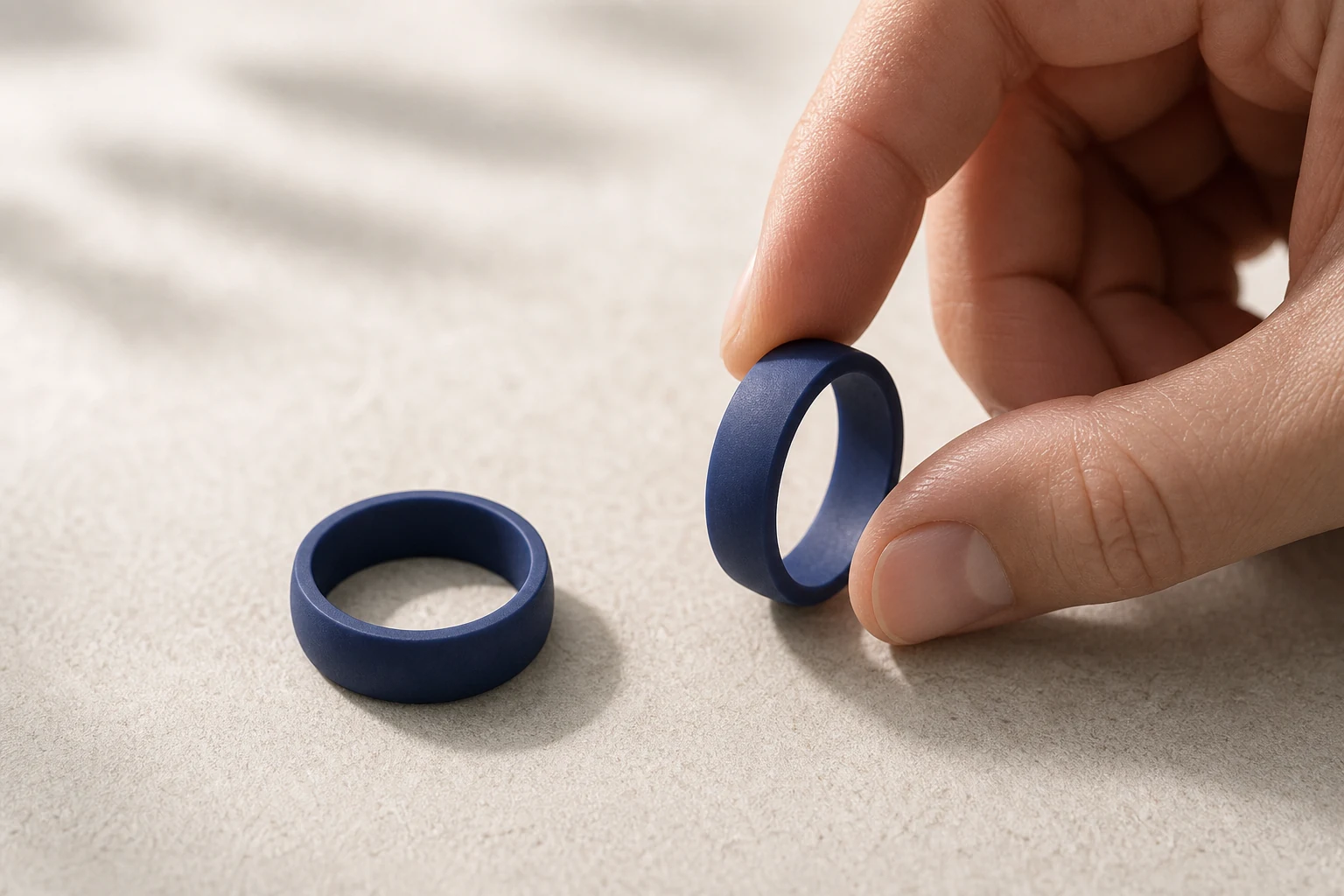
- Medical-grade silicone: Food-grade or medical-grade silicone is skin-safe, non-toxic, and won’t degrade from sweat, chlorine, or UV exposure
- Low profile: Minimal raised edges reduce the likelihood of snagging
- Proper sizing: A ring that’s too loose moves around and is more likely to catch. A ring that’s too tight restricts blood flow. Check the Helix ring size guide to get the right fit
- Ventilation channels: Some designs include airflow grooves on the inner surface to reduce moisture buildup and improve comfort during extended wear
- Solid construction: No sharp seams, thin spots, or structural weak points that would cause premature failure
The best silicone rings for athletes in Australia balance durability with intentional breakaway design. They should hold up through thousands of training sessions, resist UV degradation from Australian sun exposure, and maintain their shape in salt water and chlorine pools — while still protecting your finger in an emergency.
Getting the Right Silicone Ring for Your Active Lifestyle in Australia
Australian men shopping for a silicone ring have some specific needs that differ from overseas markets. Australian worksites have specific PPE requirements under Safe Work Australia guidelines. Our climate means rings need to handle high heat, UV exposure, ocean salt, and high-sweat environments. And our sizing conventions can differ from US sizing charts.
When you shop for a silicone ring in Australia, prioritise:
- Australian-stocked inventory — so you get fast delivery without waiting weeks from overseas warehouses
- A brand that offers genuine sizing support — ring fit is critical for both comfort and safety
- A range that covers everyday wear AND active wear — some men want a thinner, more low-key ring for sport and a slightly more styled ring for everyday
- Worksite compliance — confirm the ring meets the silicone/non-metal requirements of your specific industry
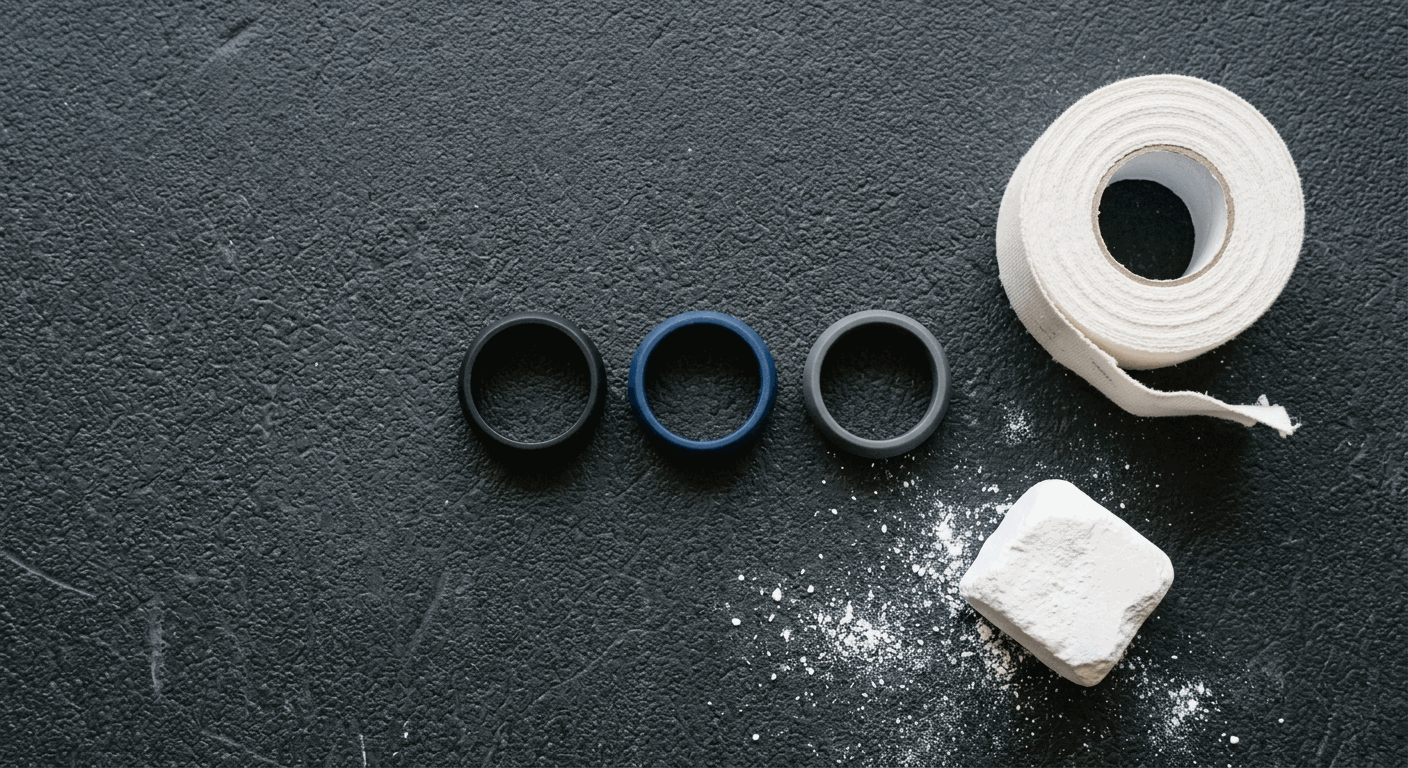
Helix Rings is an Australian brand built specifically for active men. Our full silicone ring range covers everything from ultra-low-profile rings for the gym to slightly more styled options for the office or casual wear. All rings are made from medical-grade silicone, ship from Australia, and are sized using Australian sizing conventions. If you need help with sizing, our FAQ section covers the most common fit questions.
According to Safe Work Australia’s national workplace injury data, hand and finger injuries consistently rank among the top five most common workplace injuries across Australian industries. Ring-related incidents represent a preventable subset of this data — and a simple swap to a silicone ring is one of the most straightforward prevention steps any active worker can take.
For more information on the benefits of making the switch, read our complete guide to the benefits of silicone wedding bands.
Frequently Asked Questions
Do silicone bands offer better safety than metal jewellery for athletes?
Yes — and the evidence is clear. Metal bands and rings do not break under trauma and are a documented cause of ring avulsion injuries, which can result in degloving and amputation. Silicone rings engineered with a breakaway design are intended to fail safely under force, releasing from the finger rather than stripping tissue from the bone. For athletes and active workers, this difference is the difference between a destroyed ring and a destroyed finger.
Will a silicone ring break before it injures my finger?
Quality silicone rings for athletes are designed to fail safely. Normal daily activity — handshakes, lifting, typing, training — won’t cause the ring to break, but in a sudden catch-and-pull trauma scenario the ring is built to tear or stretch free rather than hold against the finger. This intentional “fail-safe” design is what makes silicone rings the preferred choice for active men.
Can I wear a silicone ring on a worksite in Australia?
In most Australian worksites that have PPE policies around jewellery, silicone rings are the approved alternative to metal rings. Many sites in mining, construction, and electrical work specifically permit silicone rings while banning metal jewellery. However, it’s always worth checking your specific site’s PPE policy, as requirements can vary by industry, employer, and state. If you work in an environment with a no-metal-ring rule, a silicone ring is almost certainly your compliant option.
Will a silicone ring hold up at the gym and during sport?
Absolutely. Medical-grade silicone is highly durable — it’s resistant to sweat, chalk, chlorine, saltwater, and UV exposure. Most quality silicone rings are designed to last 2–5 years of regular active use before showing significant wear. The breakaway property only activates under significant trauma — not from barbells, pull-up bars, or rock climbing holds under normal grip forces. Many elite athletes and military personnel wear silicone rings full-time during training and competition.
Is a silicone ring a meaningful wedding band substitute?
For most active Australian men, yes — and increasingly, partners are fully onboard with the idea. Silicone rings are worn every day, including during sport, work, and sleep, which many argue makes them more symbolically meaningful than a metal ring that gets left on the bedside table before training. The ring is always on. The commitment doesn’t pause because you’re at the gym. Many Helix customers wear their silicone ring as their primary wedding band, or alternate between silicone for active use and metal for formal occasions.
References & Sources
- American Society for Surgery of the Hand. Ring Avulsion Injuries. assh.org — Classification and treatment overview of ring avulsion injuries in emergency medicine.
- Safe Work Australia. Work-related Traumatic Injury Fatalities, Australia. safeworkaustralia.gov.au — National data on workplace injuries across Australian industries.
- Healthline. Ring Avulsion Injury: Causes, Prevention, and More. healthline.com — Overview of ring avulsion causes, severity, and prevention.
- WorkSafe Queensland. Work health and safety guidance. worksafe.qld.gov.au — Queensland regulator guidance on managing risks on worksites.
Ready to pick one? Browse the full Men’s Silicone Rings range, or start with Silicone Wedding Rings if it is replacing a wedding band on the job.