How to Measure Your Ring Size at Home: A Silicone Ring Sizing Guide
Why Silicone Ring Sizing Matters
Here’s the thing most people don’t realise until they’ve already ordered the wrong size: silicone rings don’t fit like gold or titanium ones. A metal ring is a fixed hoop. A silicone band has give in it, so a size that feels snug in the shop can feel completely different after an hour on the tools, in the gym, or out in the Queensland heat. Get it wrong and you’ll either be constantly pushing a loose ring back up your finger, or peeling off a too-tight one after your hands swell during a workout.
This matters more for silicone than for a wedding band you wear once and forget about. Most people buying a silicone ring are active. tradies, gym regulars, nurses, mechanics. People who take rings off and on multiple times a day, or who need something that won’t crush a finger if it catches on machinery. That’s the whole point of a silicone band: it’s designed to flex and, in a lot of cases, break away under pressure rather than injure you. None of that works properly if the sizing is off from the start.
So before you add anything to cart, it pays to spend five minutes measuring properly. It’s genuinely quicker than driving to a jeweller, and if you’ve already got a ring that fits well, you can be done in about ninety seconds.
How to Measure Your Size at Home
There are three methods that actually give you a reliable number. Skip the ones that involve guessing off a chart with no reference point, they’re a coin flip at best.
Method 1: The String or Paper Strip Trick
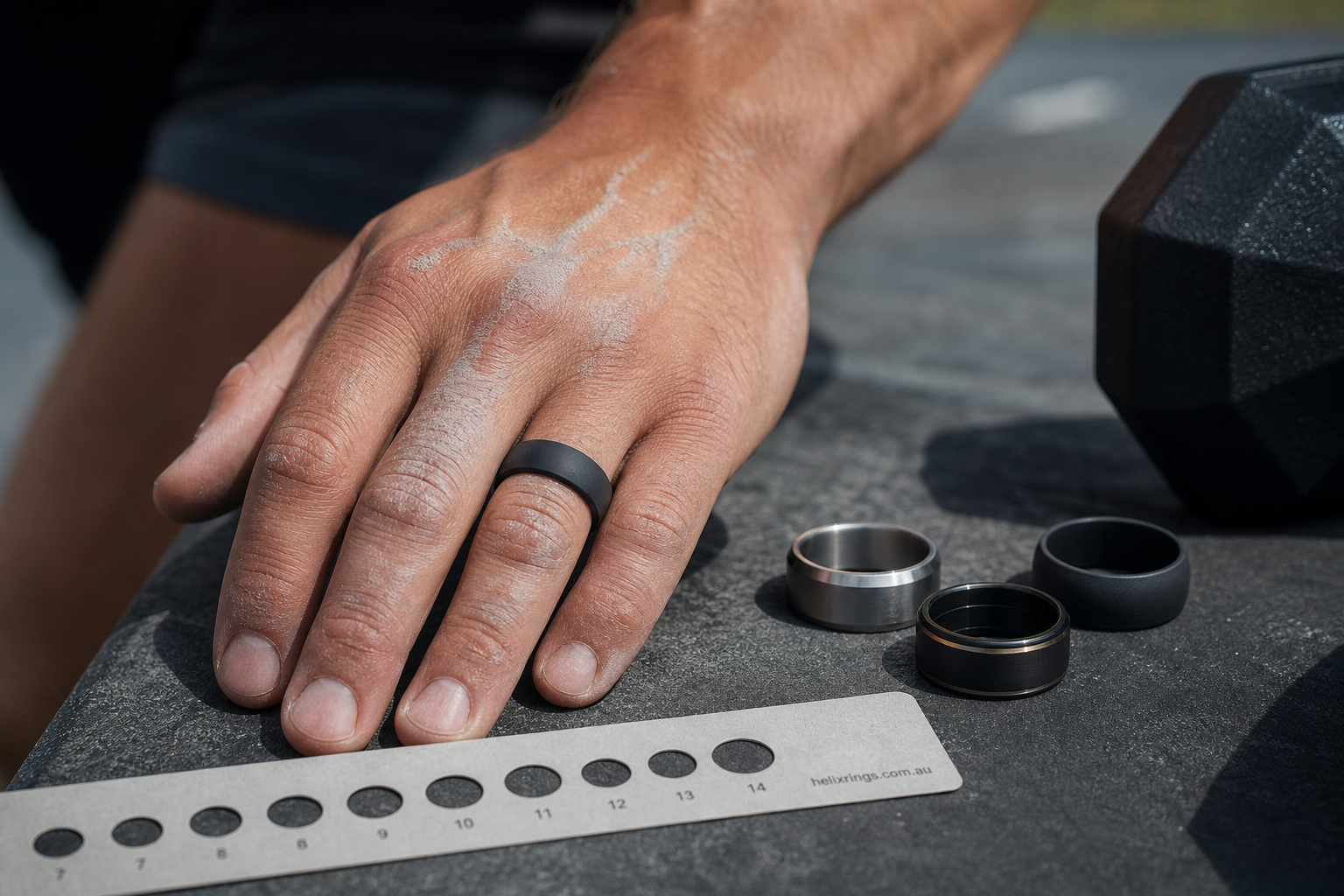
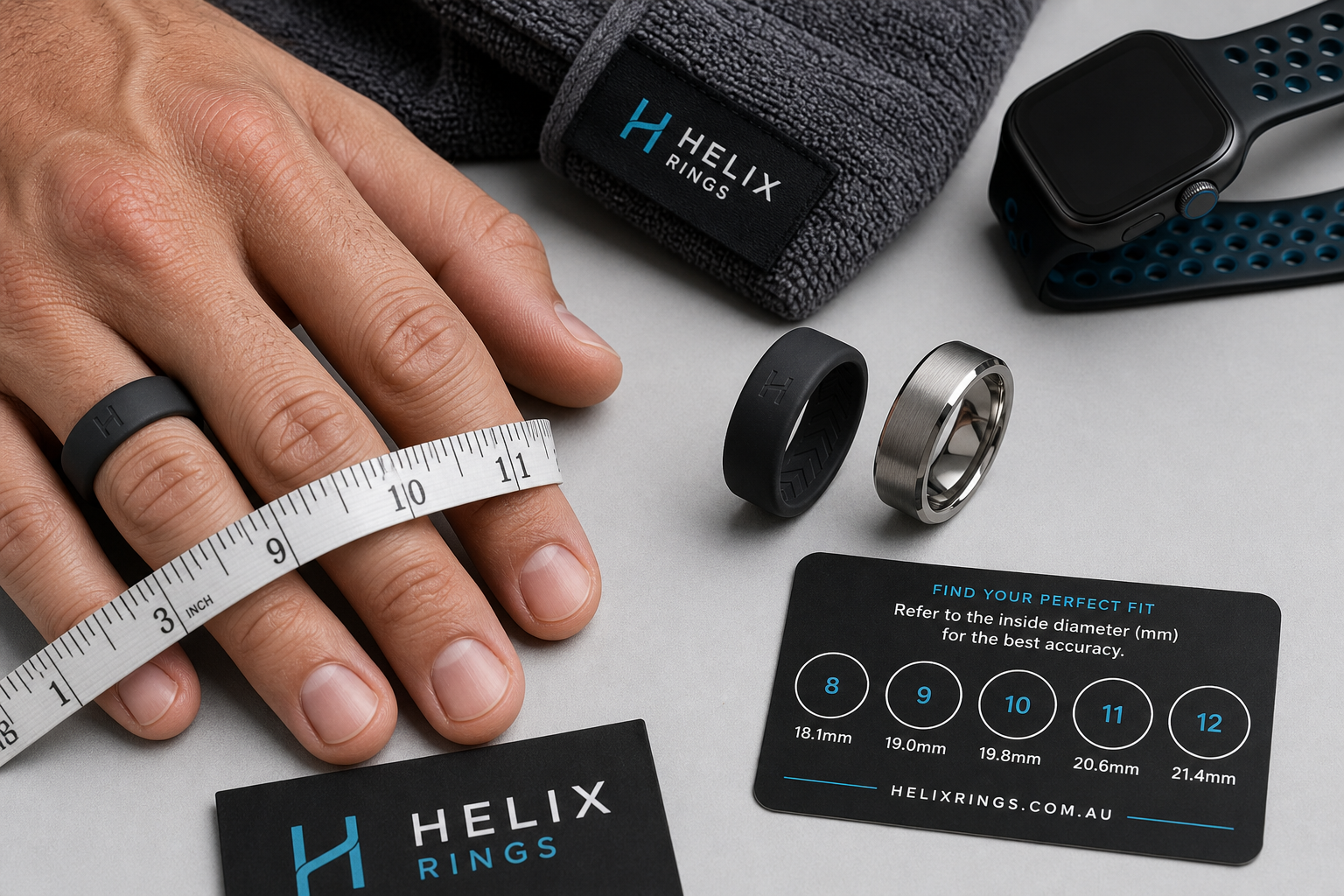
Wrap a thin strip of paper or a piece of non-stretchy string around the base of the finger you’re sizing for. Mark where it overlaps, lay it flat against a ruler, and measure in millimetres. That number is your finger’s circumference. Most Australian ring size charts convert circumference to a letter size (A through Z plus half sizes), so cross-reference the figure against a standard conversion table. Do this at the end of the day, not first thing in the morning, since fingers are typically at their largest by evening.
Method 2: Compare an Existing Ring
If you’ve already got a ring that fits the finger you’re sizing for, this is the fastest and most accurate option. Measure the internal diameter with a ruler (edge to edge, not including the band’s thickness) and match it against a size chart. This is the method we’d recommend first if you’ve got a ring on hand, because it accounts for your actual finger shape rather than a moment-in-time measurement.
Method 3: Printable Ring Sizer
A printable sizer (a strip you cut out and wrap around your finger) is a solid middle ground. Print it at 100% scale, don’t let your printer auto-fit it to the page, and follow the instructions to wrap and read the size. It’s not as precise as comparing a physical ring, but it beats eyeballing it.
Whichever method you use, measure two or three times across different times of day and take the middle value. If you land between two sizes, size up rather than down. A silicone ring that’s marginally loose is a minor annoyance. One that’s too tight can genuinely restrict blood flow, which is the opposite of what an active-lifestyle ring is meant to do.
If you’re still unsure, most retailers including Helix Rings list conversion charts on individual product pages, so you can check your millimetre measurement against the exact size you’re about to buy rather than a generic table.
Top Styles and Colour Options
Once you’ve nailed down your size, the fun part is picking a style. Silicone rings have come a long way from the plain rubber bands you might remember from a decade ago. There’s now a genuine range of textures, profiles, and colours built for different jobs and different tastes.
For understated, everyday wear, black silicone rings are consistently the most popular pick, they go with everything and hide scuffing well. If you want something with more personality on the job site or at the gym, blue silicone rings and green silicone rings are popular for a bit of colour without looking flashy.
If you’re after something that reads a bit more formal for date nights or work functions, there are metallic-finish options too, gold-tone silicone rings and bronze silicone rings both give a dressier look while keeping the comfort and safety benefits of silicone underneath. Neutral tones like grey silicone rings and brown silicone rings sit somewhere in between, casual enough for the gym, smart enough for the office.
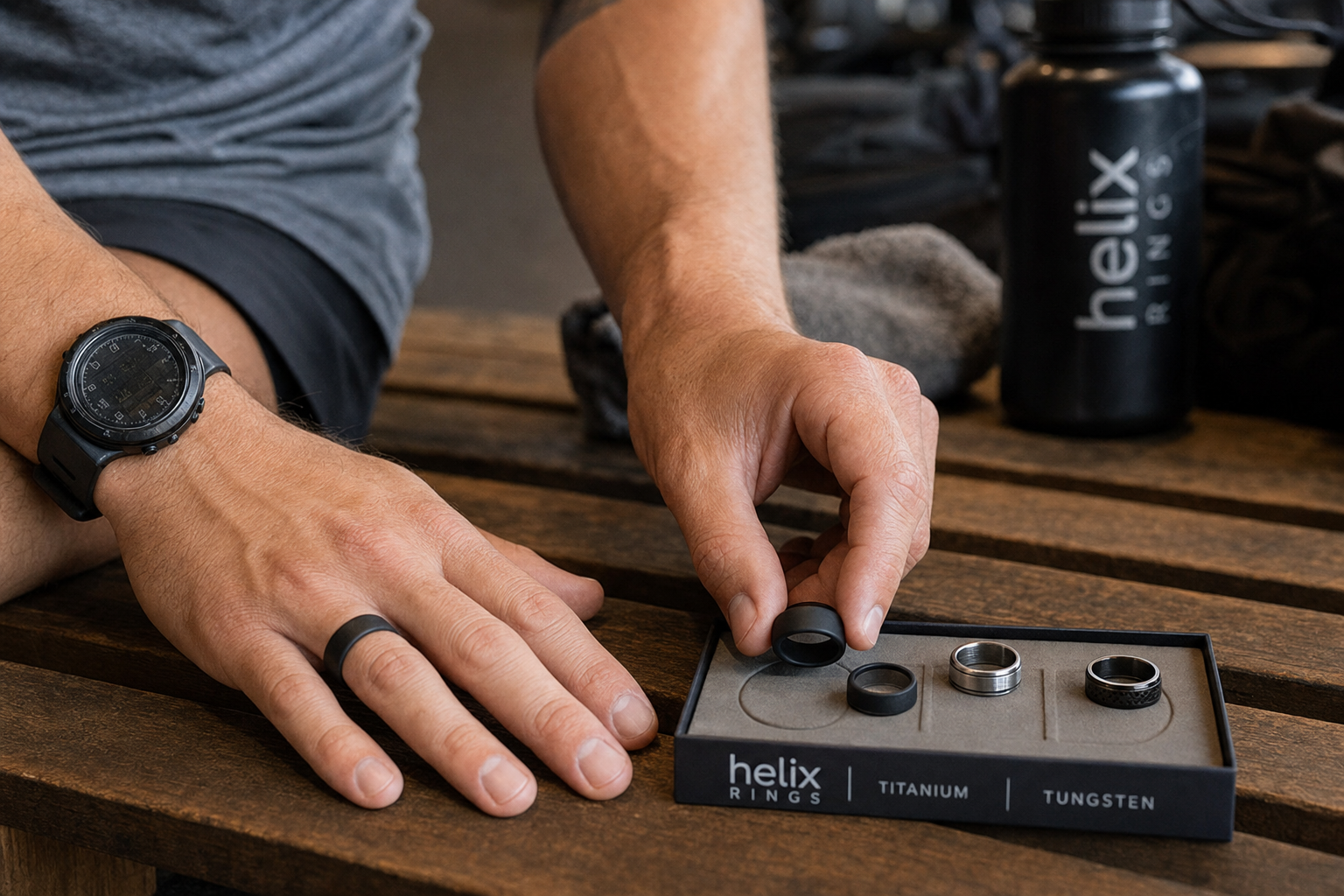
If you’re buying for yourself and a partner, or want a couple of backups for different occasions, it’s worth looking at the ring packs, which bundle a few colours together at a better price than buying singles. And if silicone isn’t quite what you’re after for one specific ring (say, an engagement or wedding piece you want in a harder-wearing metal), the custom titanium rings range is worth a browse for something with more permanence.
For men specifically shopping the full silicone lineup, the men’s silicone rings collection groups the most popular tradie and gym-friendly styles in one place, which saves a lot of scrolling.
What to Consider Before Buying
A few things worth thinking through before you check out, beyond just the size number.
Breathability and Grooves
Solid silicone against skin all day, every day, can trap moisture, particularly if you’re sweating through workouts or working in humidity. A lot of modern designs include internal grooves or channels that let air and moisture move, which cuts down on irritation. If you’ve had skin issues with rings before, look specifically for a breathable or grooved design rather than a solid band.
Breakaway Safety Rating
If you work with your hands around machinery, moving parts, or anything a ring could snag on, a breakaway silicone ring is worth the small premium. These are engineered to split apart under a set amount of force rather than crushing or degloving a finger. It’s the single biggest safety advantage silicone has over a metal band, but only if you buy a ring actually rated for it rather than assuming all silicone behaves the same way.
Width and Profile
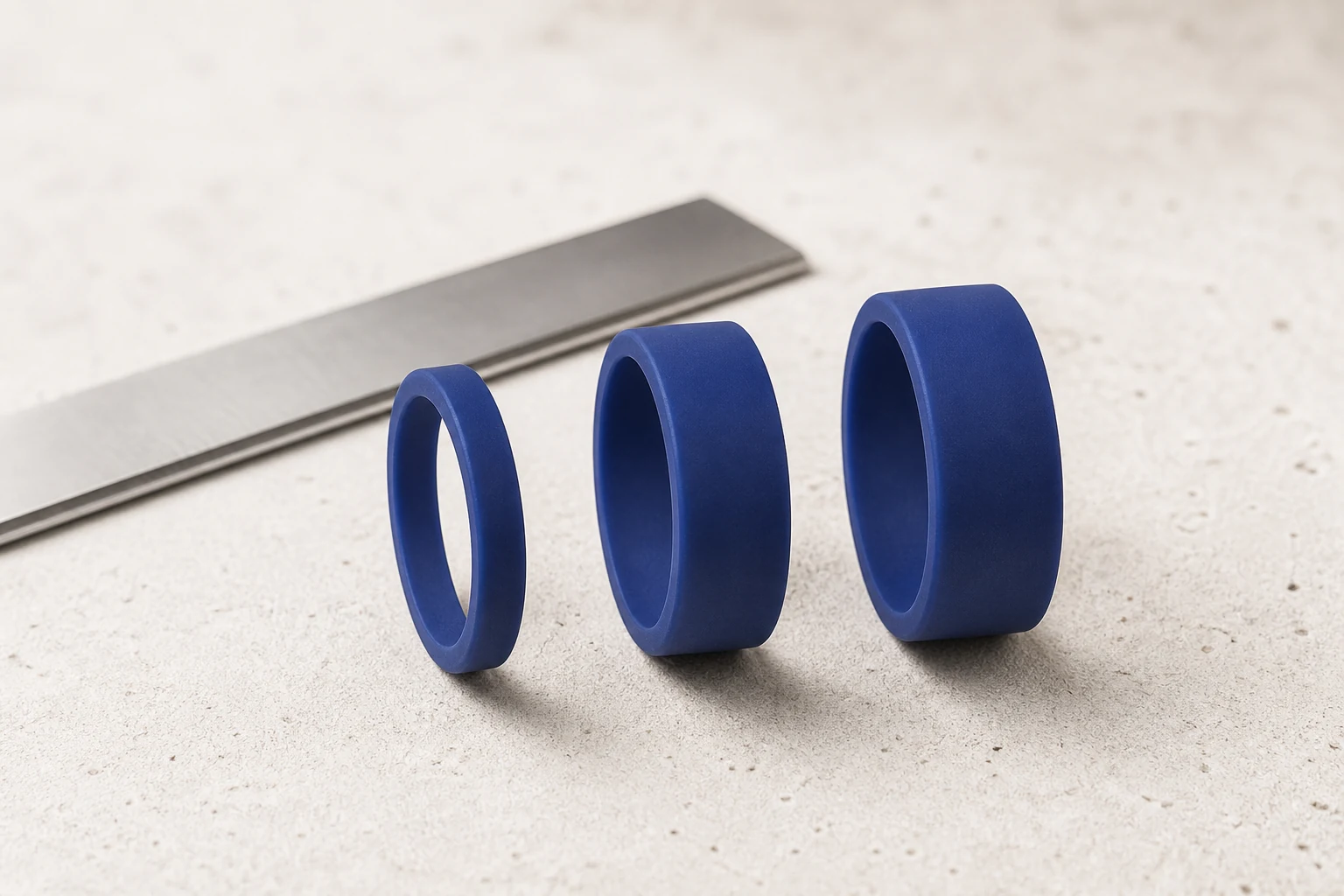
Wider bands (8mm plus) read bulkier and can feel more substantial, but they also press against more of the finger, which matters if you’ve got smaller hands or find rings uncomfortable. Narrower bands (around 4-6mm) are less noticeable day to day and tend to suit people wearing a ring for the first time.
Buying for Someone Else
If you’re sizing for a partner or family member without tipping them off, borrow a ring they already wear on the correct finger while they’re asleep or out, and use Method 2 above. It’s far more reliable than guessing based on their hand looking “about average.”
Tips from the Experts
A few things jewellers and ring-fit specialists tend to mention that don’t always make it into generic sizing guides:
- Measure at room temperature. Cold hands shrink measurably, which is why jewellers keep showrooms warm. Measuring straight after a cold shower or on a chilly morning will skew you small.
- Dominant hands run bigger. Most people’s dominant hand is very slightly larger due to muscle development, so always measure the specific finger on the specific hand you’ll actually wear the ring on.
- Knuckles are the limiting factor, not the base of the finger. If your knuckle is noticeably bigger than the base of your finger, size for the knuckle so the ring can actually get on, then check it doesn’t spin loosely once past it.
- Silicone has a small amount of stretch. Unlike metal, a silicone ring can flex slightly to accommodate a knuckle even at the correct base-of-finger size, which is part of why silicone often feels more forgiving than a hard metal band of the same nominal size.
- Re-check sizing after big lifestyle changes. Weight changes, pregnancy, and even a switch to a much more physical job can shift ring size by half a size or more within months.
If you want to browse before committing to a size, the full all rings collection lets you compare widths and profiles side by side, and the Helix Rings homepage has current sizing charts linked from every product page.
Frequently Asked Questions
What is the best silicone ring sizing guide?
The most reliable approach is comparing an existing ring you own against a millimetre ruler, since it accounts for your real finger shape rather than a single moment-in-time measurement. If you don’t have a ring to compare, the string or paper strip method is the next best option, measured at the end of the day when your fingers are at their largest.
How do I know which silicone ring sizing method is right for me?
If you’ve already got a well-fitting ring, use the comparison method first, it’s the fastest and most accurate. If you’re sizing from scratch, use a printable sizer or the string method, take three measurements at different times of day, and go with the middle result. When in doubt between two sizes, always size up.
What should I look for when buying a silicone ring online?
Look for a guide that gives you a millimetre-to-size conversion chart, not just vague small/medium/large labels, since finger sizes vary too much for generic sizing to be reliable. It should also account for knuckle size separately from base-of-finger size, as that’s where most sizing mistakes happen.
Are there budget-friendly ways to size a silicone ring?
Yes, a strip of paper and a ruler costs nothing and works just as well as a printed sizer for getting a rough measurement. Buying a multi-pack, like the Helix ring packs, is also a cost-effective way to test a couple of adjacent sizes without paying full price for each one individually.