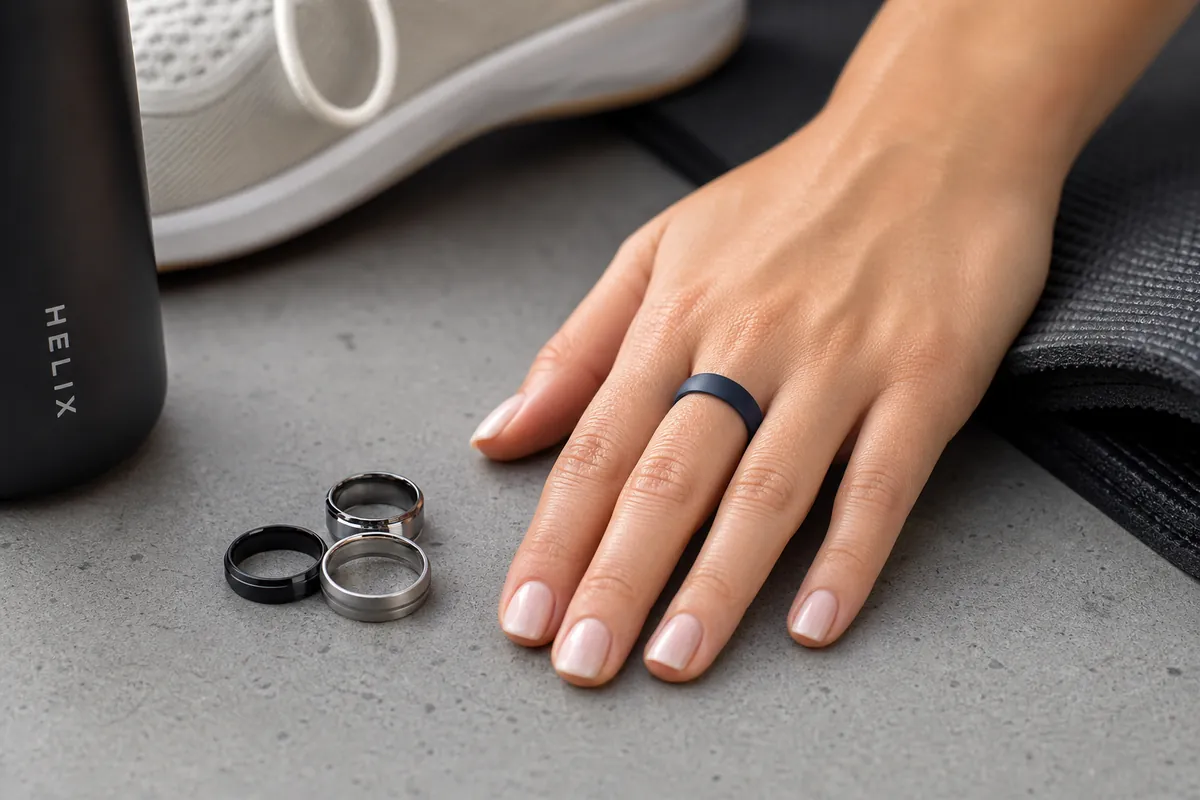
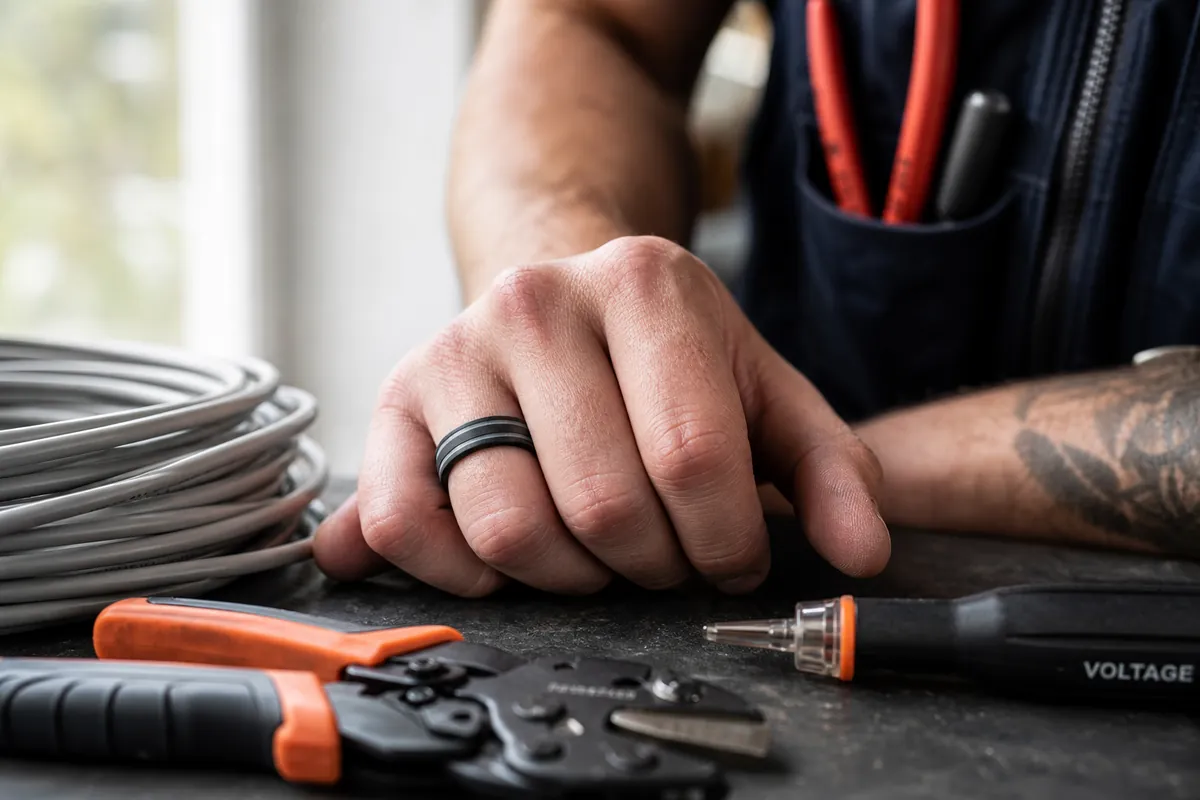
Do Silicone Rings Really Come Off in an Emergency? The Breakaway Safety Design Explained
What Breakaway Ring Safety Actually Means
Ring avulsion is not a rare freak accident. It’s the injury you get when a ring catches on something fixed, a ladder rung, a chain-link fence, a piece of gym equipment, a car door as you’re jumping down from a ute tray, and your body keeps moving after the ring has stopped. Orthopaedic literature calls it degloving, and it’s ugly enough that most trade safety programs simply ban metal rings on site. That’s the whole reason breakaway silicone ring safety exists as a category rather than a marketing gimmick.
A genuine breakaway silicone ring is engineered to fail before your finger does. Some use a segmented design with small connector points that snap under a set amount of force, usually somewhere in the range of 10 to 25kg of pull depending on the brand and thickness. Others rely on the silicone itself tearing cleanly along a thinned channel moulded into the band. Either way, the goal is the same: the ring gives up its shape long before the force reaches a level that would damage tendons, nerves, or skin.
This is different to a ring simply being “soft.” Plenty of silicone rings on the market are solid, uniform bands with no engineered weak point at all. They’re comfortable and they won’t scratch, but under enough force they behave more like a rubber band stretched to its limit, gripping and dragging rather than releasing. That distinction, engineered break point versus just being made of silicone, is the entire subject of this article.
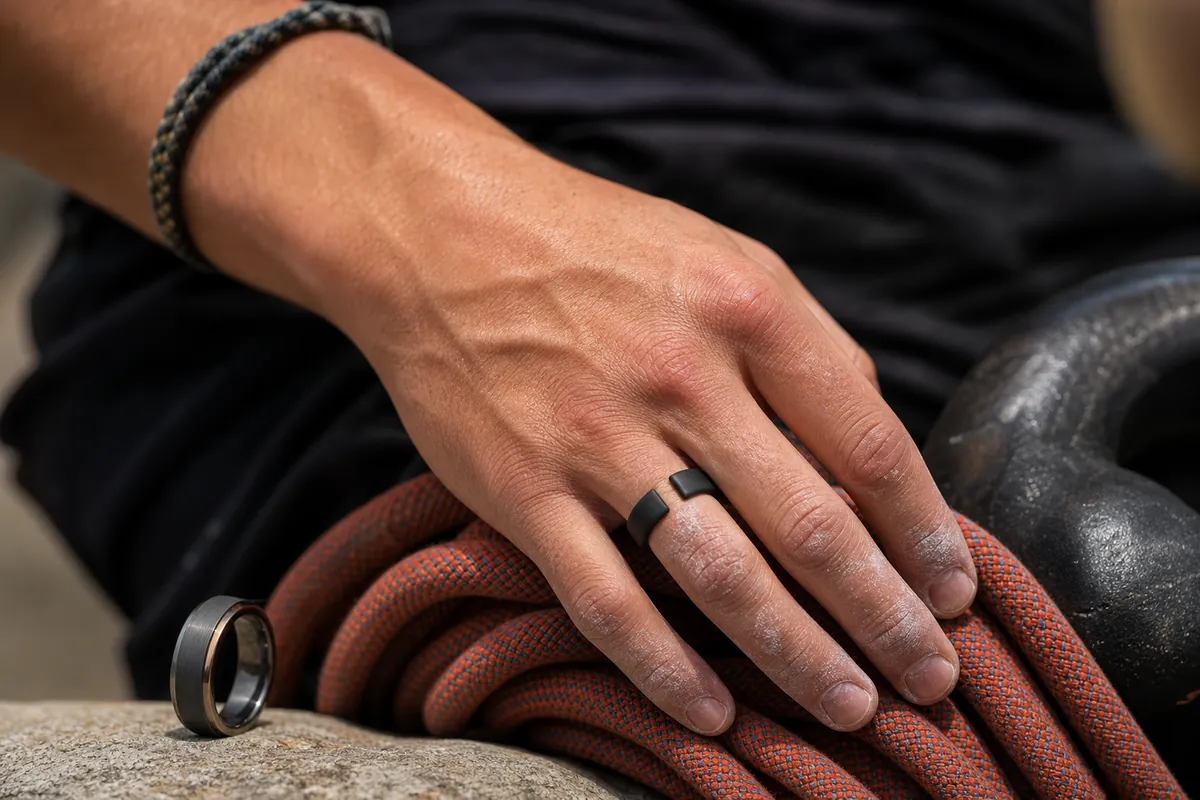
Choosing the Right Breakaway Ring
Start with what you actually do with your hands all day. A concreter or a rigger needs a different break-force threshold to someone who lifts weights three times a week and otherwise sits at a desk. If the ring is too easy to break, you’ll be replacing it every few weeks from ordinary friction against tools and machinery. Too tough, and you’ve defeated the purpose.
Look for a stated breakaway force in the product description. Reputable makers will tell you the band is designed to separate at a specific load rather than just calling it “safety rated” with no numbers attached. If a listing can’t tell you how it fails, assume it doesn’t have an engineered failure point at all.
Sizing matters more with breakaway rings than with a standard band. A ring that’s slightly loose will spin and catch more easily; one that’s too tight puts constant low-level stress on the segment joints, which can wear them out early. Measure your finger at the end of the day when it’s at its largest, and if you’re between sizes on the silicone ring range, size up rather than down.
Thickness and width play into it too. A narrower band, say 6mm rather than 8mm, generally needs less force to separate, which suits people working around fast-moving machinery. Wider bands feel more substantial for everyday wear but need a slightly harder pull to release, so they suit people whose main risk is a snag rather than a full entrapment.
Top Styles and Options
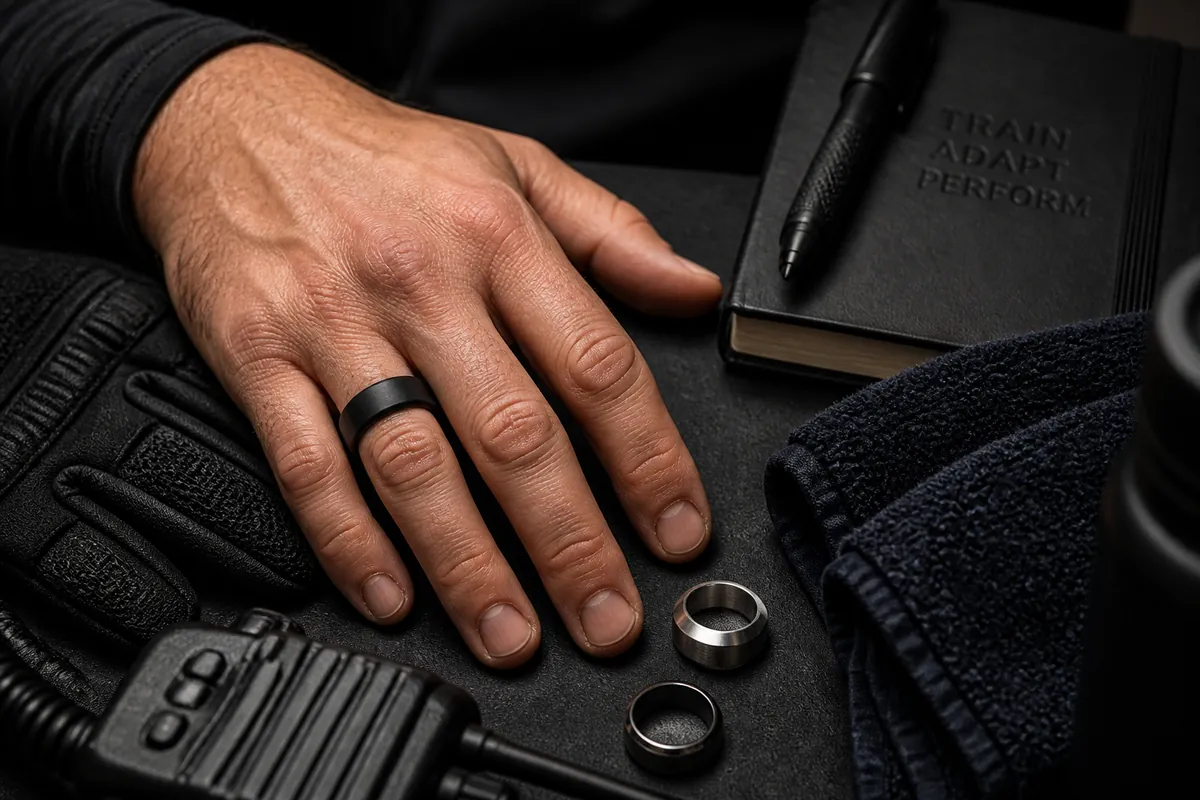
Colour and finish don’t affect the safety mechanism, but they do affect whether someone actually wears the ring every day, and a ring left in a drawer protects nobody. The black silicone ring range is the most popular pick for tradies and gym-goers because it hides scuffing and grease better than lighter colours, and it reads as a normal wedding band from arm’s length rather than shouting “safety gear.”
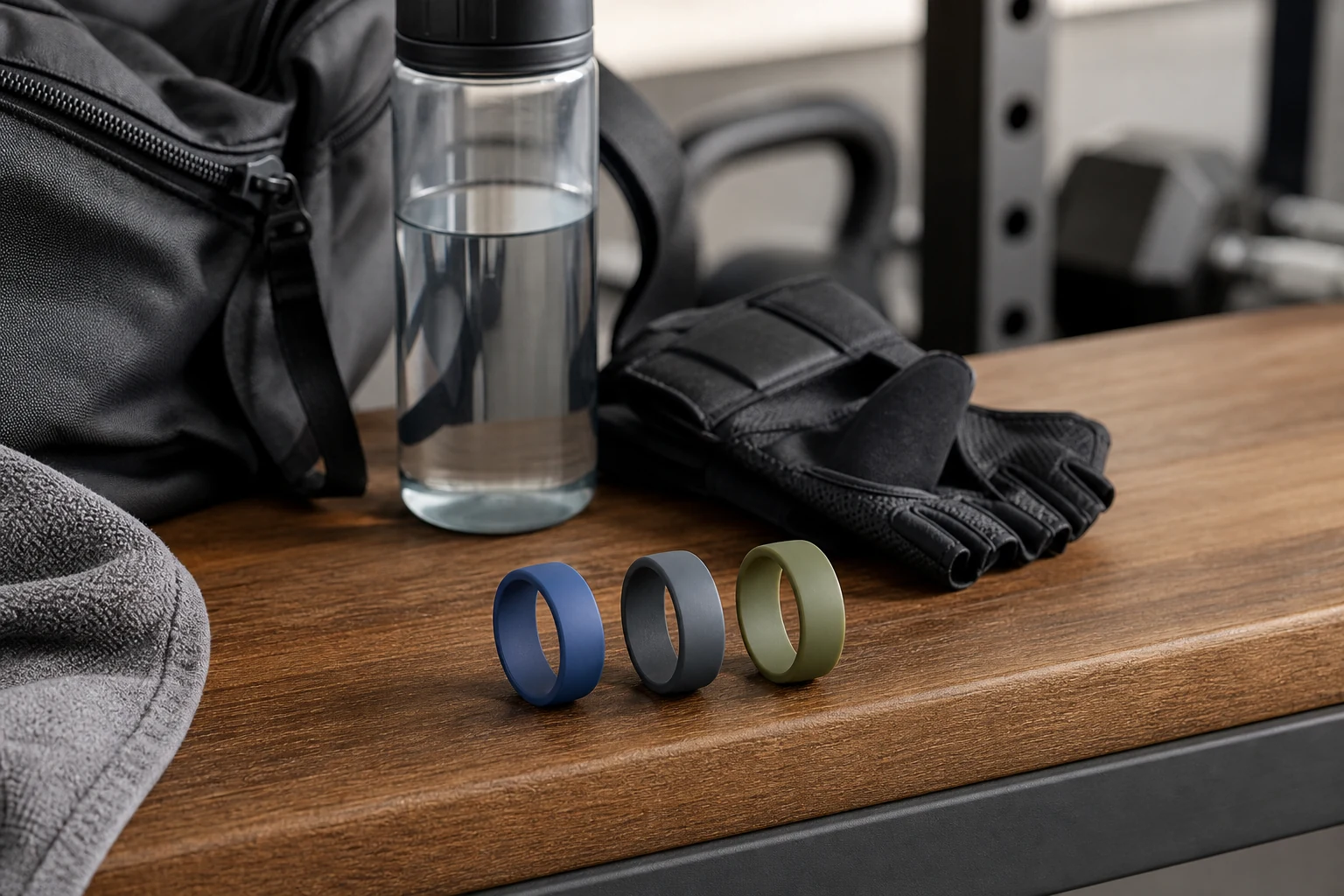
For anyone who wants a bit more personality without giving up the breakaway construction, the blue silicone ring collection is worth a look, particularly the navy and slate tones that still read as understated in an office setting. If you want to buy a few at once and rotate depending on what you’re doing that day, the ring packs work out cheaper per ring and mean you’ve always got a spare when one does its job and separates.
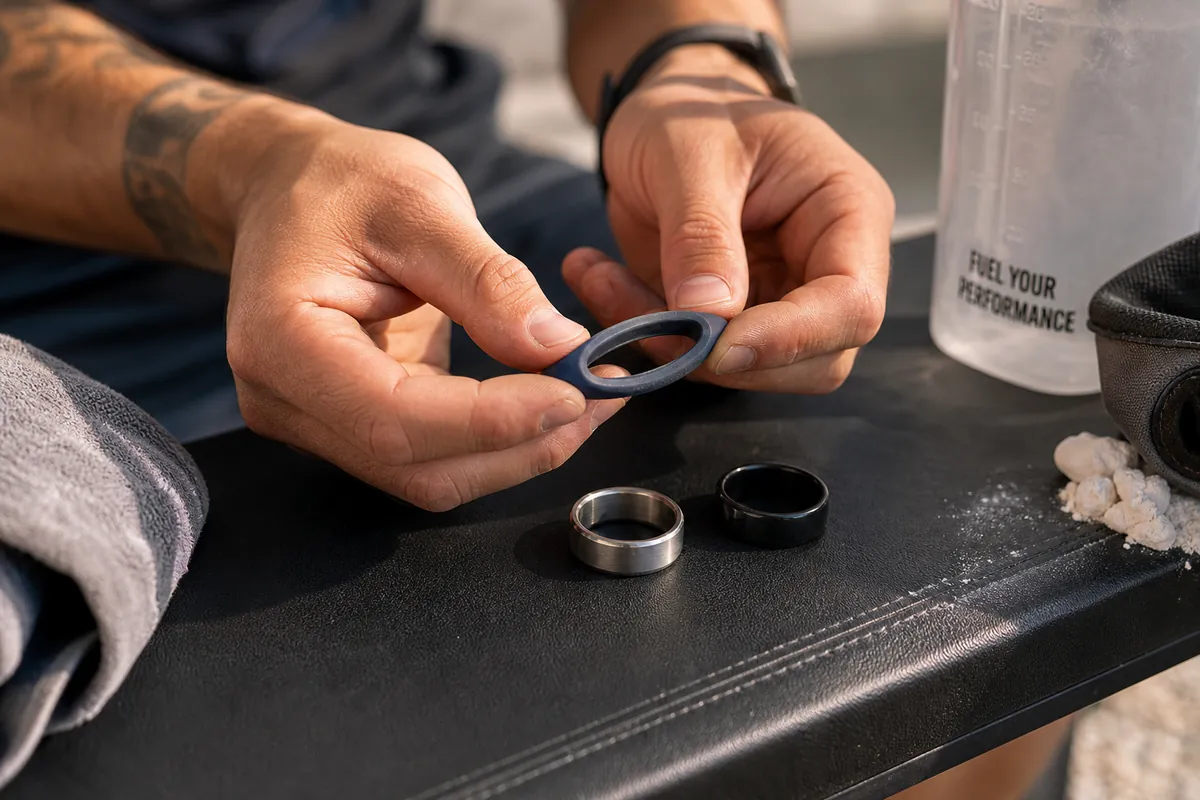
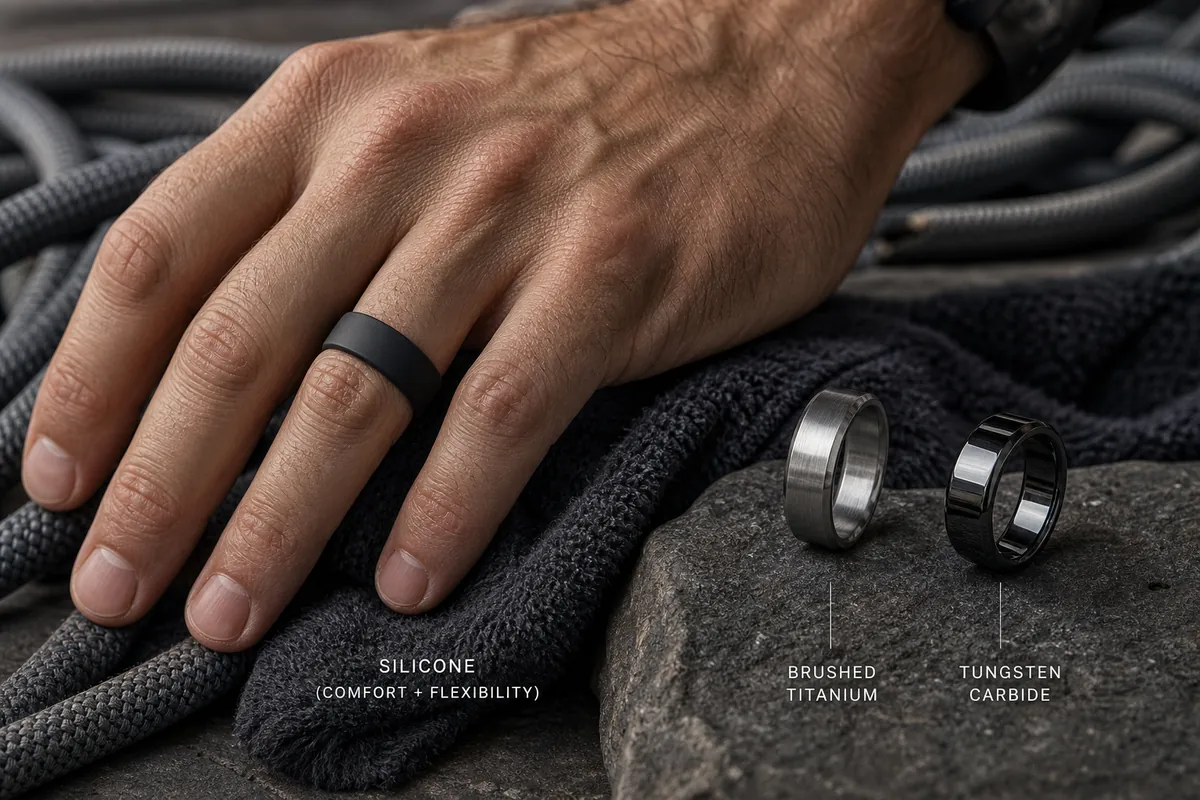
If breakaway is genuinely your top priority and you’re not fussed about matching a wedding set, the dedicated men’s silicone ring styles tend to have the clearest break-force specs listed, since that audience is buying specifically for gym and trade use rather than as a jewellery substitute. For anyone who still wants a metal option on weekends or for dress occasions, pairing a breakaway silicone band for work with a titanium ring for everything else is a common setup among the tradies we hear from, two rings, two jobs.
What to Consider Before You Buy
Check the break-force rating against your actual environment, not against a worst-case scenario you’ll never face. A forklift driver and a rock climber both need breakaway protection, but the forces involved and the direction of pull are completely different, so the “right” ring for one might be the wrong ring for the other.
Think about how the ring fails, not just whether it does. Some designs pop apart into two or three curved pieces that fall away cleanly. Others split at a single point and can still leave a partial loop caught on whatever snagged it. If your job involves fast-moving machinery rather than a slow drag, a clean multi-point separation is worth paying a bit more for.
Replace the ring after it’s been through a hard knock, even if it didn’t break. A near-miss can micro-fracture the weak points without you noticing, and the next incident might not separate as cleanly as it should. Treat a breakaway ring a bit like a bike helmet: once it’s absorbed an impact, its job is done even if it looks intact.
Don’t assume “silicone” and “breakaway” are the same word. Browse the full ring range and you’ll notice not every silicone band even mentions a breakaway spec. Read the actual product description rather than judging by material alone, and if a listing doesn’t mention a failure mechanism, email the seller and ask before you buy it for someone doing physical work.
Tips from the Experts
Industrial safety guidance has been consistent on this for decades: the safest ring on a job site is no ring at all, and the second safest is one engineered to release under load. The U.S. Occupational Safety and Health Administration flags rings and other jewellery as a hand safety hazard around moving machinery, which is exactly the gap breakaway silicone bands are designed to close for people who aren’t willing to take the ring off entirely (see references below).
Occupational health researchers who study hand and finger injuries note that degloving injuries cluster heavily around ladders, machinery, and vehicles, situations where a ring can catch on something fixed while the rest of the body is still moving. That’s a useful mental checklist: if your day involves climbing, lifting near moving parts, or getting in and out of vehicles repeatedly, a breakaway band is doing real work, not just looking the part.
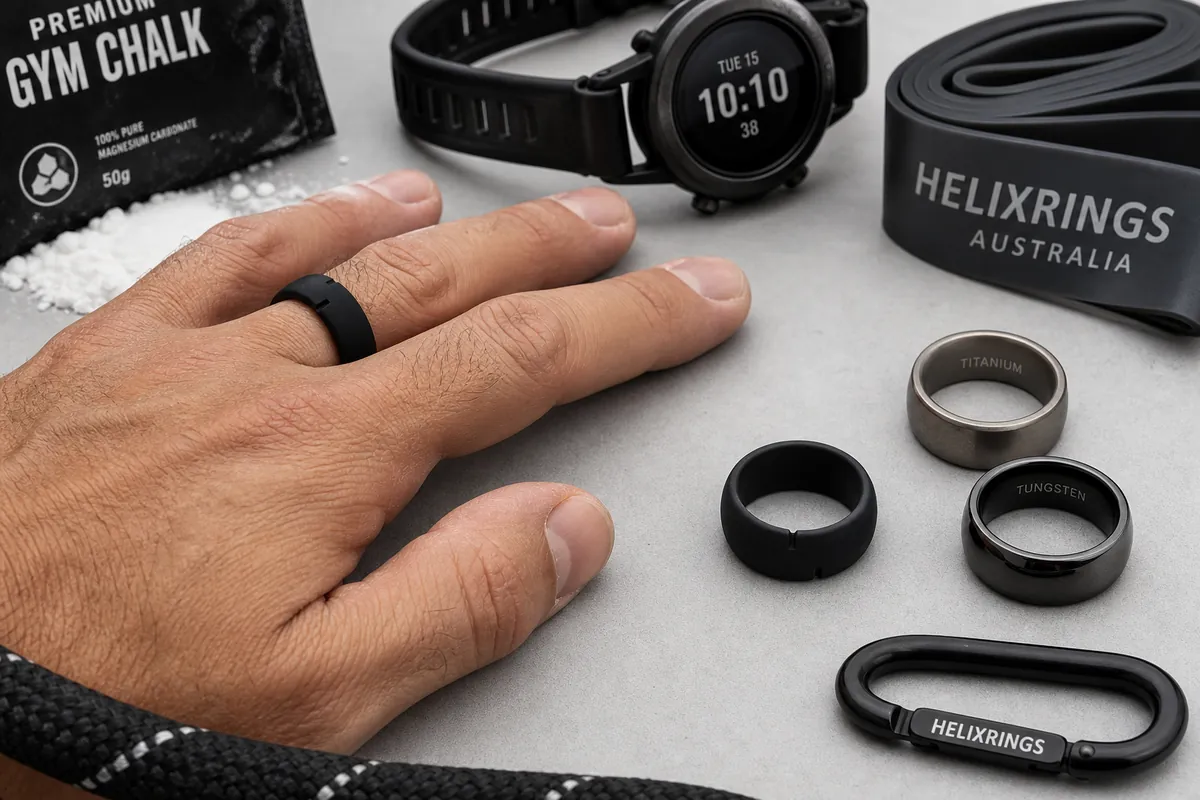
One more tip worth passing on: test the fit yourself once a year. Bodies change, especially if you’ve picked up or dropped muscle mass, and a ring that fit perfectly two years ago might now be loose enough to spin freely, which increases the odds of a snag in the first place. If it’s gotten loose, size up rather than layering a second ring underneath, which defeats the breakaway mechanism entirely. You can browse the Helix Rings homepage for the current size guide and full collection if you’re due for a refit.
Frequently Asked Questions
What is the best breakaway silicone ring safety?
The best option is a ring with a clearly stated break-force rating and a segmented or thinned-channel construction that separates cleanly under load, rather than a solid band marketed as “safety” with no failure spec at all. Match the rated force to your actual work or gym environment rather than buying the cheapest listing you find.
How do I know which breakaway silicone ring is right for me?
Think about the forces you’re actually exposed to. Someone working around machinery or ladders needs a lower, more reliable break threshold than someone whose main risk is a barbell snag at the gym. Get properly sized first, since a loose or overly tight ring changes how predictably it releases.
What should I look for when buying a breakaway silicone ring?
Look for a stated breakaway force, a clear description of how the ring fails (clean multi-point separation versus a single split), and accurate sizing information. Avoid listings that use the word “safety” without explaining the actual failure mechanism.
Are there budget-friendly breakaway silicone rings?
Yes, buying in multipacks is usually the cheapest route per ring and means you’ve got a spare on hand once one does its job and separates. It also makes sense to keep a couple of colours in rotation so you’re not waiting on a reorder after a ring breaks away mid-shift.