Silicone Rings for Rock Climbing and Bouldering: What Climbers Need to Know
What Is a Silicone Ring and Why It Matters
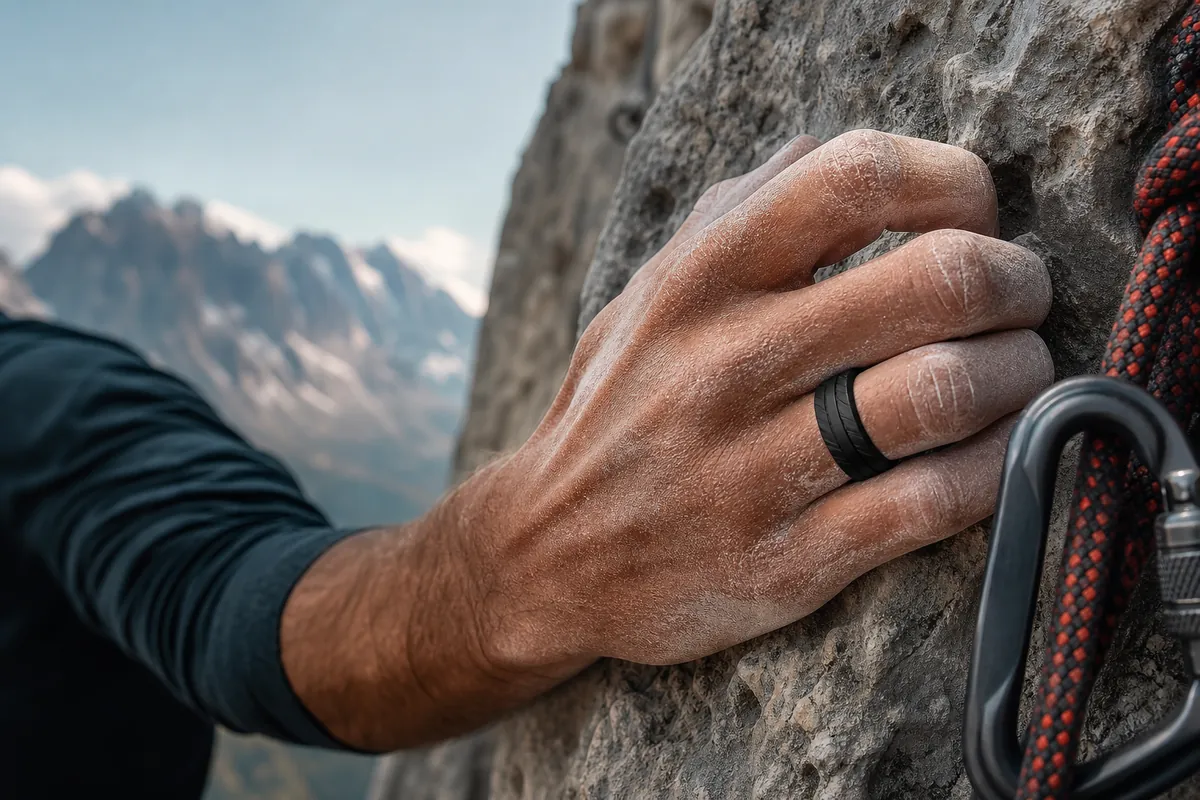
If you’ve spent any time on a crag or in a bouldering gym, you’ve probably watched someone slide their wedding band off before they tie in, then spend the next hour hunting for a chalk bag pocket it isn’t in. That’s the problem silicone rings were built to solve. Instead of a rigid metal band that can’t give under pressure, a silicone ring is made from a flexible, medical-grade elastomer designed to stretch, compress, or tear away entirely if it gets caught on a hold, a cam, or a crack.
For climbers this isn’t a minor comfort upgrade, it’s a safety consideration. Ring avulsion injuries, where a metal band catches on something during a fall or a jam move and degloves the finger, are a documented risk in any sport involving grip and sudden load (see the hand-surgery references below). Bouldering and trad climbing both put your fingers into cracks, pockets, and gaps where a hard band has nowhere to go except straight through soft tissue. A silicone band, by contrast, is engineered to fail safely, splitting or stretching off before it does real damage to your finger.
There’s also the everyday practicality. Metal rings hold chalk, get scratched to bits on granite, and turn your hand into a slick, sweaty mess inside the band. Silicone breathes, it doesn’t hold moisture the way metal does against skin, and it’s genuinely comfortable when you’re hanging a crimp for the fifteenth attempt on a project. Have a browse through the full silicone ring range and you’ll see this isn’t a niche product anymore, it’s become standard kit for a lot of active climbers.
How to Choose the Right Silicone Ring
Sizing is where most climbers get it wrong, and it’s worth getting right before you head out. A ring that’s even slightly loose will spin on your finger mid-crimp, which is annoying at best and a snag risk at worst. Too tight and you’ll cut circulation on a hangboard session or when your hands swell after a long day on rock. The general rule: measure your finger at the end of the day, when it’s at its largest, and go with a snug fit that you’d have to work slightly to remove. If you’re between sizes, size down rather than up, silicone has a bit of give that a hard metal band never will.
Thickness matters more for climbers than for most other silicone ring buyers. A thick, chunky band gives you more material to catch on a hold. Look for a slimmer profile in the 4–6mm range if you’re doing anything technical, reserve the heavier bands for gym sessions or approach days where you’re not jamming your hands into cracks. Helix’s men’s silicone ring collection has a good spread of profiles if you want to compare thickness side by side before deciding.
Texture is the other variable worth thinking about. Smooth bands are lower profile and slide more easily out of a crack if it does catch, which some crack and trad climbers actually prefer for that reason. Textured or ridged bands grip better against sweat, which some boulderers like on hot days at the gym. Neither is objectively better, it comes down to what kind of climbing you’re doing most.
Finally, check the breakaway rating if the retailer publishes one. Cheaper silicone rings are basically just soft rubber bands with no engineering behind the failure point, they either won’t break when they should or they’ll snap for no reason during normal wear. A ring purpose-built for active use will list a load rating designed to release before it causes injury, which is the entire point of wearing one while climbing in the first place.
Top Styles and Options
Colour is mostly personal preference, but it does have a practical side for climbers: darker bands hide chalk stains and rock dust far better than pale ones. If you’re someone who climbs three or four times a week, that’s not a small thing. The black silicone rings are the most popular pick for exactly this reason, they go weeks without looking grubby.
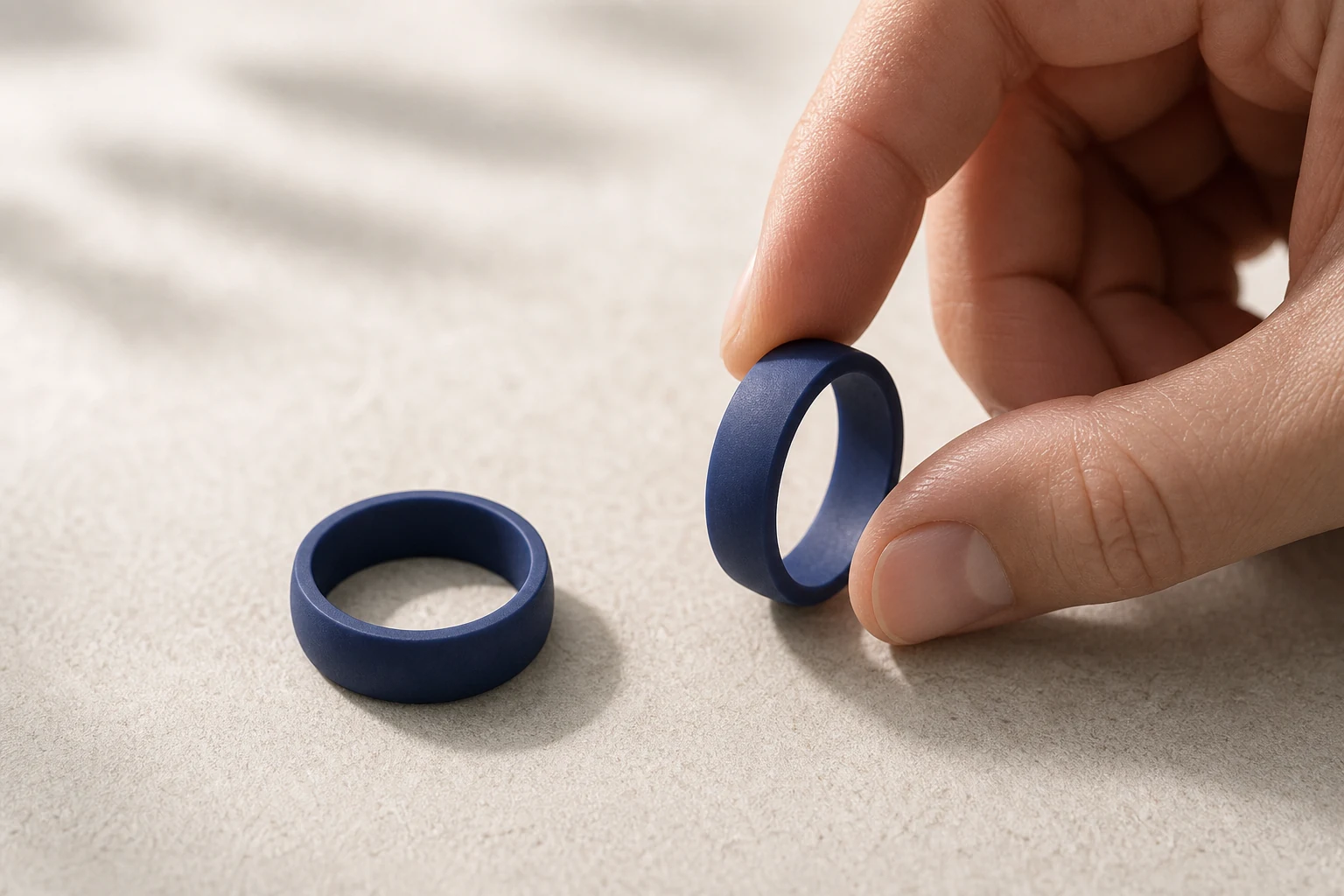
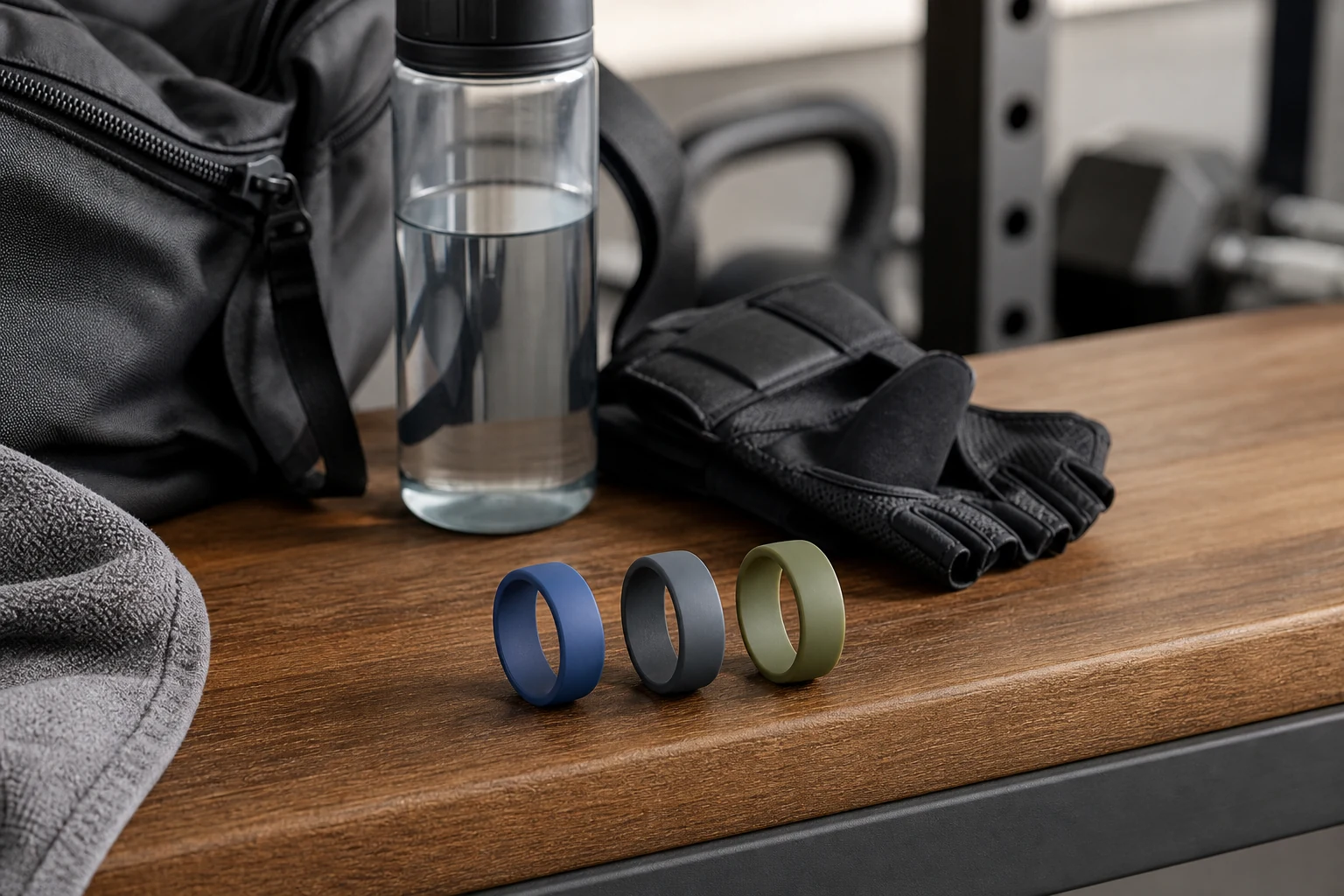
If you want something with a bit more personality without sacrificing that practicality, the blue silicone rings and green silicone rings both sit at the darker end of the spectrum, so they still resist showing chalk while giving you some colour on your hand. Greys are a solid middle ground too, the grey silicone rings read as understated and go with pretty much anything, which is useful if you’re wearing it to work the next morning and don’t want it to stand out.
A lot of climbers who are new to silicone bands don’t want to commit to one colour, or they want a backup on hand for when a ring inevitably tears (which, if you’re climbing regularly, it will eventually, that’s the design working as intended). This is where a multi-pack makes sense financially and practically. The Helix ring packs bundle several colours and sometimes profiles together at a lower cost per ring than buying individually, which is genuinely the smarter way to buy if you’re climbing outdoors on rough rock where wear is faster.
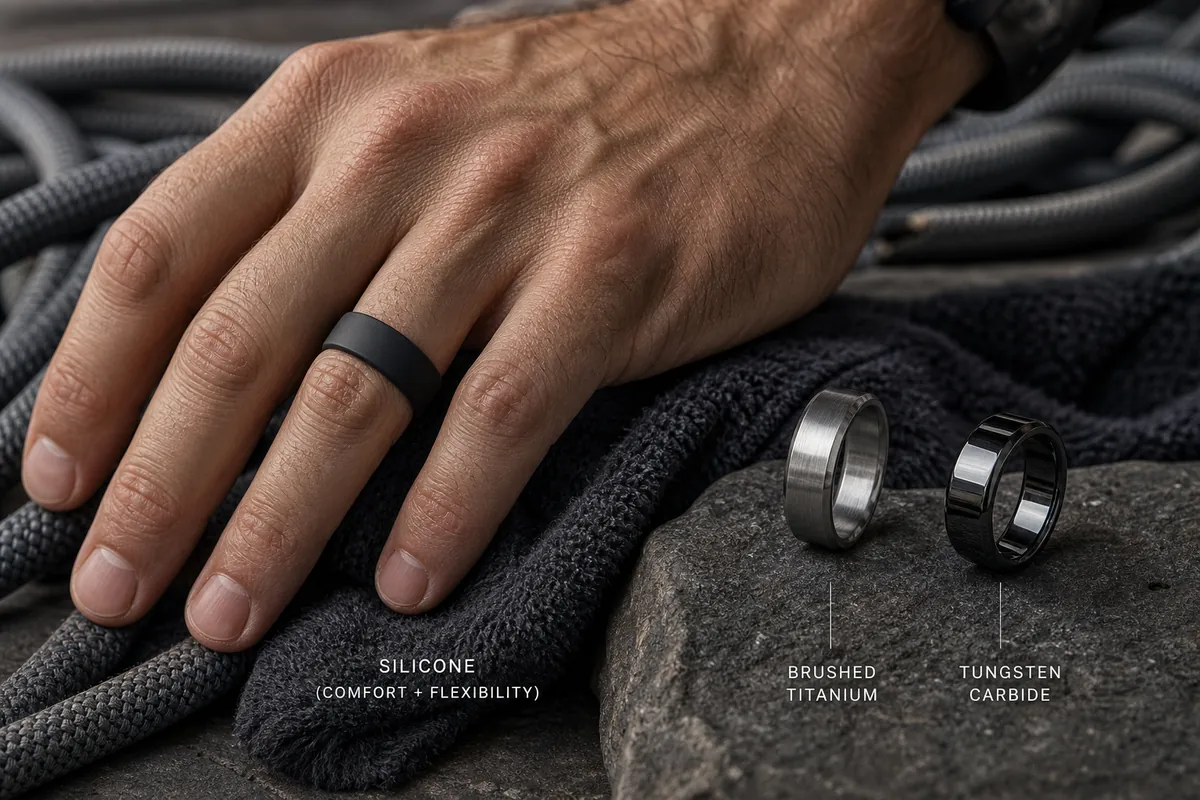
Worth a mention too: some climbers keep a titanium ring for non-climbing days, weddings, work functions, whatever, and switch to silicone specifically for sessions. If that’s your approach, it’s worth looking at something like custom titanium rings for the everyday piece, so you’ve got a proper band for daily wear and a dedicated safety ring for the wall or the crag.
What to Consider Before You Buy
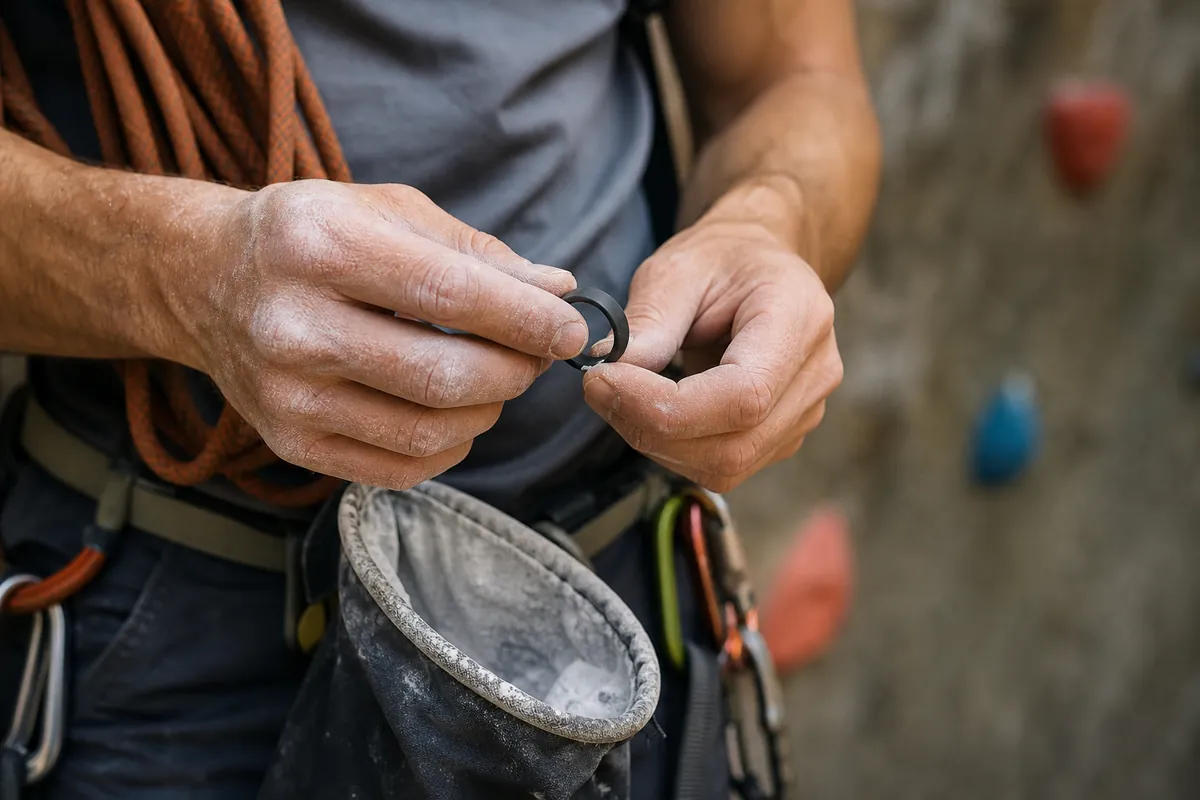
Think about how often you actually climb before you buy just one ring. If you’re bouldering two or three sessions a week, plus the odd outdoor day, a single band is going to wear out faster than you’d expect, especially on coarse rock like sandstone or granite where the texture chews through silicone. Buying two or three from the start, or going with one of the ring packs, means you’re not stuck bare-fingered mid-week waiting on a replacement to arrive.
Check the material spec, not just the price. Genuine medical-grade or platinum-cured silicone is hypoallergenic and holds its shape better than the cheap injection-moulded stuff you’ll find on marketplace listings for a few dollars. Those bargain rings tend to go stiff, discolour, or crack within weeks of regular gym use. If a ring is priced suspiciously low compared to everything else in a range, that’s usually the reason.
Also think about where you’ll actually wear it. If you’re crack climbing or doing a lot of hand jamming, a wider band offers more surface protection inside the crack but also more to catch, so there’s a genuine trade-off there rather than a single right answer. Sport and gym climbers who are mostly crimping and pinching don’t have this issue as much and can lean toward the slimmer, low-profile options. It’s worth browsing the full ring range with your specific discipline in mind rather than grabbing whatever’s first on the page.
Lastly, don’t ignore how it fits with a chalk bag and tape. If you regularly tape your fingers for crack or splitter climbs, factor that bulk into your sizing decision, a ring that fits perfectly bare-fingered might be uncomfortably tight once you’ve got a strip of tape wrapped below the knuckle.
Tips from the Experts
Climbing coaches and hand surgeons who deal with grip-related injuries generally agree on one thing: inspect your ring the way you’d inspect a harness or a biner. Before a session, give it a stretch test between two fingers, if you see any hairline splits or the material feels tacky and degraded rather than smooth, retire it. A ring that’s already compromised won’t break away cleanly when you actually need it to, it might just fail unpredictably or, worse, not fail at all.
Rotate your rings if you climb often. Silicone that’s constantly under tension and exposed to chalk, sweat, and UV at an outdoor crag breaks down faster than most people expect, often within two to four months of regular use. Keeping two in rotation, one drying out between sessions, extends the life of both and means you’re never climbing on a band that’s past its prime.
One thing experienced climbers mention often: don’t size a silicone ring the same way you’d size a metal one. Metal rings are sized to sit comfortably loose enough to spin freely. Silicone should be snugger, because a loose fit is exactly what causes it to shift and catch on a hold in the first place. If you’re ordering online without trying it on, size to your most swollen-finger measurement and expect it to feel a touch firm out of the packet.
Finally, treat the ring as one part of a broader hand-care routine, not a substitute for good technique. No ring, silicone or otherwise, replaces learning to jam properly or reading a crack before you commit your hand to it. It’s a safety margin, not a fix for bad habits. If you want to browse further before deciding, the Helix homepage has the full current range and sizing guide in one place.
Frequently Asked Questions
What is the best silicone ring rock climbing?
The best option is a slim, low-profile band (around 4–6mm) made from genuine medical-grade silicone with a stated breakaway rating. Darker colours like black or grey are popular with climbers because they hide chalk and rock dust between washes.
Which silicone ring climbing option suits me?
It comes down to your discipline. Crack and trad climbers often prefer a smooth, slightly wider band that slides free easily if it catches, while sport and gym climbers can go slimmer since they’re mostly crimping and pinching rather than jamming.
What to look for in a climbing silicone ring?
Look for a snug (not loose) fit, a genuine breakaway design rather than plain rubber, and a slimmer profile if you’re doing technical or crack climbing. Check the material is medical-grade silicone rather than a cheap moulded substitute, which tends to stiffen and crack quickly.
Budget-friendly silicone rings for climbing?
Yes, buying in a multi-pack works out cheaper per ring than buying single bands, and it means you always have a spare when one wears out from regular chalk and rock exposure. It’s a smarter buy than a single premium ring if you’re climbing several times a week.