Women’s Silicone Rings: A Practical Buying Guide
A women’s silicone wedding ring is a flexible rubber band worn instead of, or alongside, a metal or diamond ring for anything that puts the hands under stress — the gym, a hospital shift, the pool, or a day of constant hand-washing. Searches for silicone rings womens and silicone wedding band women have grown as more women look for a way to protect an expensive engagement ring while still wearing something on their finger during the day. This guide covers what the rings are made from, which styles suit which lifestyle, sizing, safety, and how to look after one so it lasts.
What Are Silicone Rings for Women?
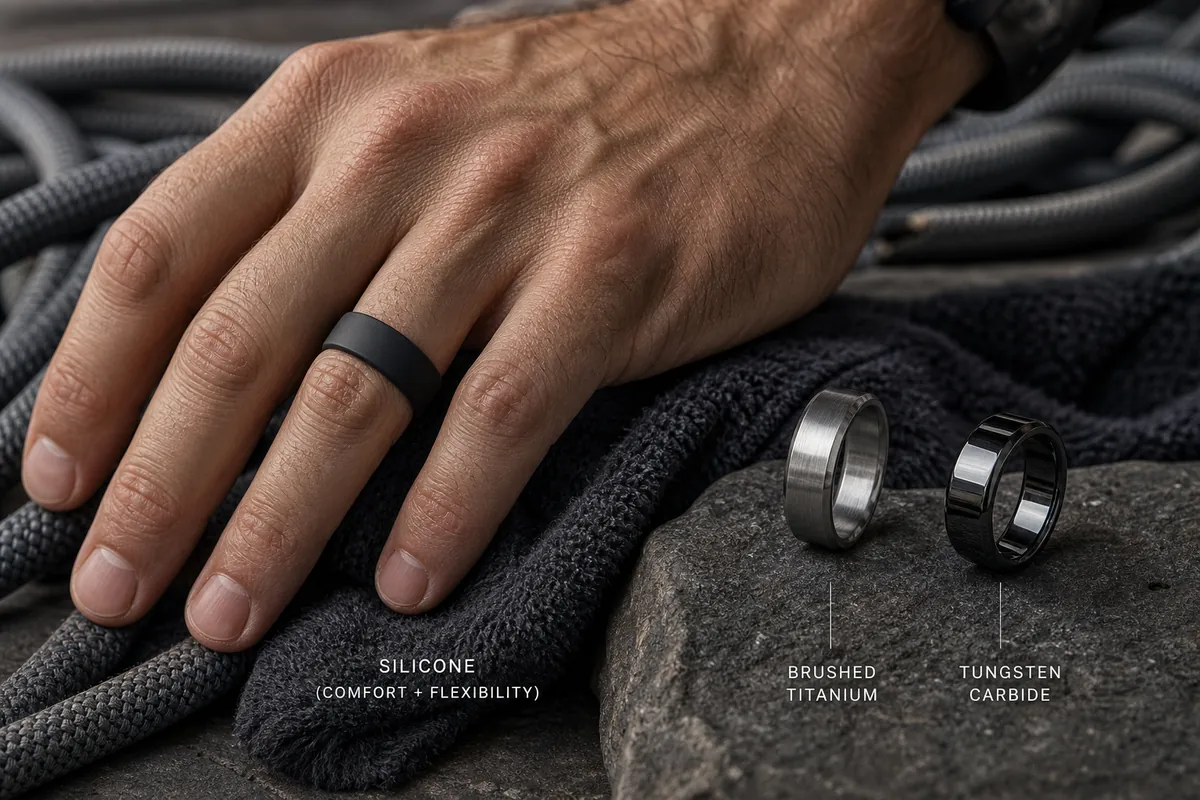
Silicone rings are moulded from medical-grade silicone rubber — the same soft, flexible polymer used in kitchenware and medical devices, described in detail on Wikipedia’s overview of jewellery, which traces how the definition of “jewellery” has widened well beyond precious metal to include modern materials like silicone. Unlike a metal band, silicone has no hard edges, will not scratch, and will not react with chlorine, saltwater or hand sanitiser.
They are also genuinely lightweight in a way that is easy to underestimate until you compare the two side by side. A metal band, especially one carrying a stone, has real weight and can feel noticeable during a long day of typing, lifting or repetitive hand movement. A silicone band weighs almost nothing, which is part of why so many women describe forgetting they have one on at all after the first few days — it simply stops registering as jewellery on the hand and starts behaving more like a second skin.
Helix’s women’s silicone rings collection is built around that idea: slim, comfortable bands in colours and finishes that still look considered, so the ring does not feel like a downgrade from a real wedding set.

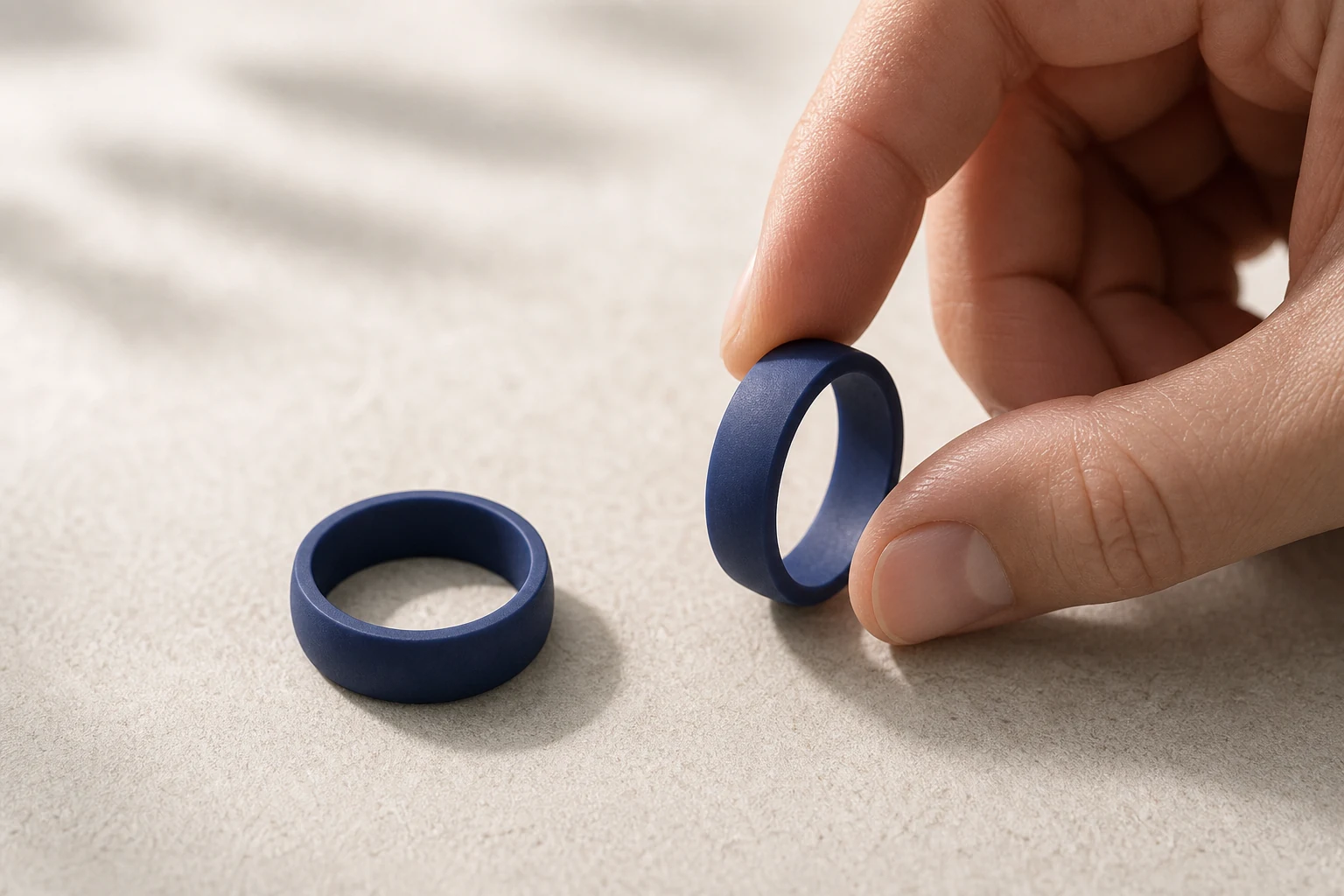
Most women’s silicone rings are moulded as a single flexible piece, though some higher-end designs use a thin internal core so the band keeps its round shape on the finger instead of going oval with wear. Width and finish do most of the work in how a ring reads: a slim 2mm to 3mm band in a soft matte finish looks closest to a delicate metal ring, while a wider 6mm band in a bright colour reads more like sport or streetwear jewellery. Stacking two slim bands together is a popular middle ground — it gives more visual presence on the hand without moving up to a bulkier single ring.
Why Women Choose a Silicone Band
The most common reason is protecting an engagement or wedding ring. Many women take their diamond ring off for the gym, gardening, cleaning or swimming and want something on their finger in the meantime rather than an empty hand. A silicone band fills that gap without the risk of losing or damaging a valuable ring.
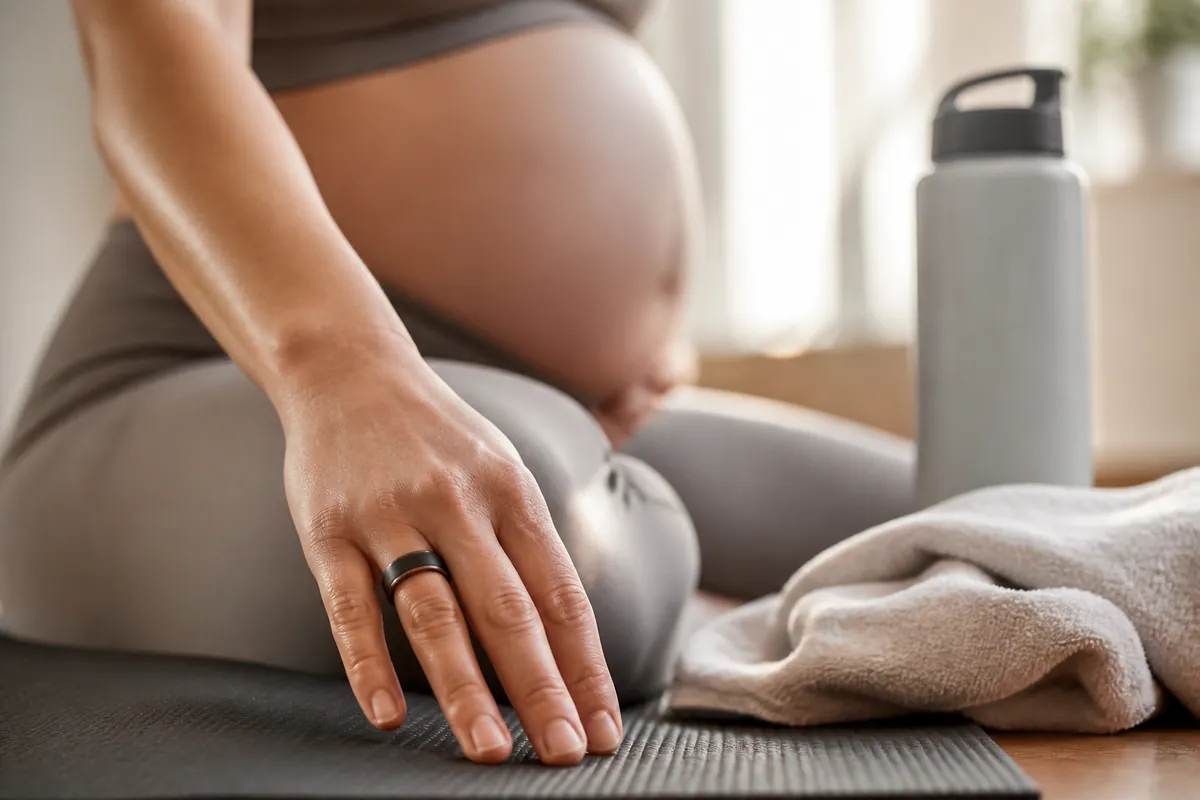
Comfort during swelling is another driver. Hands can swell during exercise, pregnancy, hot weather or long shifts on your feet, and a rigid metal ring can become tight or even need to be cut off. Healthline’s guide to removing a ring from a swollen finger and the visual breakdown in WebMD’s slideshow on swollen finger causes both cover how common this is and what triggers it. A flexible silicone ring simply stretches with the swelling instead of cutting in.
Hygiene is a third reason that comes up constantly with women in healthcare, food service, childcare and hospitality — any role built around frequent hand-washing or hand sanitiser. A metal ring, especially one with a stone setting, traps moisture and residue underneath it, which is part of why so many workplaces ask staff to remove rings before handling food or patients. Silicone has no crevices for anything to collect in, rinses clean in seconds, and does not react with alcohol-based sanitiser the way some metals and plated finishes can over time.
Best Silicone Ring Styles for Women
Slim bands between 2mm and 4mm are the most popular women’s width, worn alone or stacked two or three at a time for a fuller look. Thin metallic-finish silicone in rose-gold or silver mimics a delicate metal band closely enough to wear to work, while brighter colours like pink, purple or teal suit the gym or weekend wear. Helix’s pink silicone rings and rose-gold silicone rings are the two most-searched colourways for exactly this reason — one leans playful, the other leans closer to a traditional band.

Silicone Rings for Work, Gym and Swimming
Choosing a style around where the ring will actually be worn makes it last longer and feel more comfortable. Helix organises its range by context, and these are worth checking before you buy:
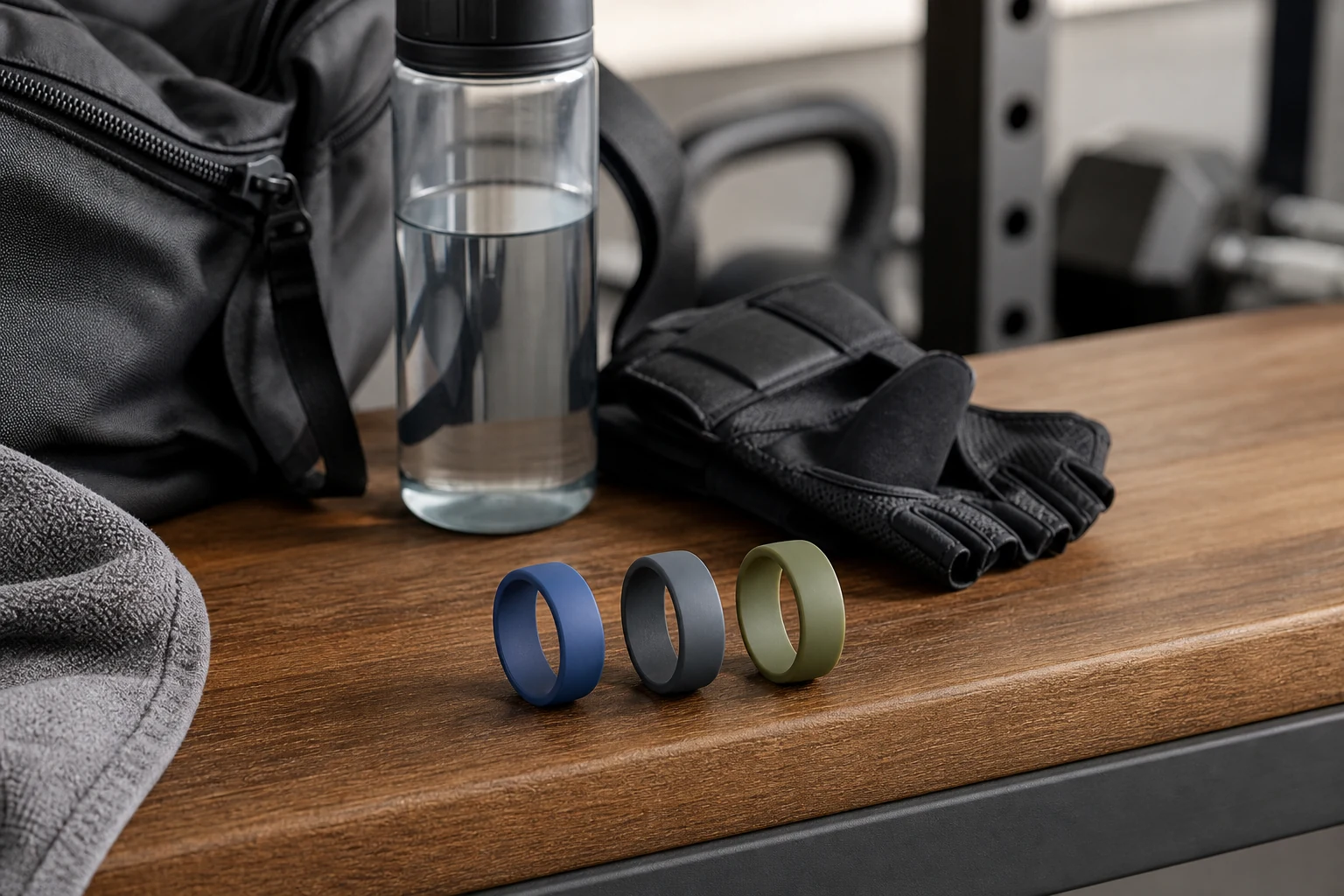
- Silicone rings for the gym and strength training — grip-friendly and flexible under load.
- Silicone rings for swimming and water — waterproof and unaffected by chlorine or saltwater.
- Silicone rings for healthcare workers — glove-friendly and easy to sanitise between shifts.
- Silicone rings for outdoor work and adventure — for hiking, camping and travel.
Nurses and other healthcare workers are some of the most consistent silicone ring wearers, since most hospitals require staff to remove rigid jewellery before gloving up, and a silicone band is one of the few options allowed to stay on.
Think about the week rather than the wardrobe when picking a first ring. A woman training most mornings and working a desk job the rest of the day gets more use from one grooved, gym-ready band worn all day than from swapping between a “gym ring” and a “work ring” twice daily. The swap habit rarely survives a busy week, so a single band that suits the busiest parts of the routine tends to be the one that actually stays on.
How to Size a Women’s Silicone Ring
Because silicone has natural give, a snug fit out of the packet usually softens into a comfortable everyday fit after a day or two of wear. Measure an existing ring against Helix’s ring size chart and sizing guide, or use the printable sizer, before ordering. If your hands tend to swell in the afternoon, during a workout, or in warm weather, size up slightly rather than down — a ring that is too tight is uncomfortable and harder to remove quickly if you need to.
Silicone Ring Safety: What to Know
Silicone’s main safety advantage over metal is how it behaves if it gets caught on something — it stretches or tears rather than staying rigid, which lowers the risk of the degloving-type injuries associated with a snagged metal ring. That said, no ring is completely risk-free, and a ring stuck on a swollen finger should still be removed carefully rather than forced. Jewelers Mutual, an insurer that publishes consumer guidance on ring care and safety, has practical advice on Jewelers Mutual’s ring care and insurance resources for anyone dealing with a stuck or swollen-finger ring situation.
It is also worth separating “safe to wear” from “safe to keep on for everything.” Silicone is the better choice for exercise, water and shift work, but it is not a substitute for taking any ring off before something genuinely high-risk, like operating machinery with exposed moving parts. The point of a silicone band is that the consequences of it catching on something are far lower than a rigid ring, not that the ring becomes impossible to injure yourself with. Treat it as a safer default, not a reason to stop thinking about where your hands are going.
Caring for a Silicone Wedding Band
Silicone rings are low-maintenance: rinse with warm water, wipe dry, and store away from prolonged heat, which can shorten the material’s lifespan. Most brands, Helix included, suggest replacing a silicone ring every 12 to 18 months with regular wear as it slowly loses elasticity — see the benefits of silicone wedding bands page for the full picture. Many women keep a small rotation of colours on hand — one for the gym, one for work, one to match an outfit — rather than treating silicone as a single-ring purchase.
A simple way to check if a ring needs replacing is to stretch it gently between two fingers: fine surface cracking, a chalky texture, or a shape that stays stretched instead of springing back are all signs the silicone has lost elasticity. Heat speeds this up, so a ring left in a hot car, a gym bag in direct sun, or on a windowsill will wear out faster than one stored somewhere cool. Rotating two or three rings rather than wearing one constantly also extends how long each one lasts.
FAQ
Are silicone rings good for women’s engagement backup?
Yes, they’re a popular way to protect a diamond ring during the gym or chores.
What width silicone ring suits women?
2mm to 4mm is the most popular; thicker 6mm suits a bolder look.
Can silicone rings be worn swimming?
Yes, they’re waterproof and unaffected by chlorine or saltwater.
Do silicone rings suit nurses and healthcare staff?
Yes, they’re glove-friendly, easy to sanitise, and commonly allowed on shift.
How often should I replace a silicone ring?
Most brands recommend every 12 to 18 months of regular wear.
Do silicone rings stretch if my fingers swell?
Yes, the flexible material stretches instead of cutting in.
References & Sources
- Wikipedia — Jewellery
- Healthline — How to Get a Ring Off a Swollen Finger
- WebMD — Swollen Fingers: Reasons
- Jewelers Mutual — Ring Care Resources
Ready to find your fit? Browse Helix’s full women’s silicone rings range, or check the Helix FAQ for shipping, sizing and warranty questions.