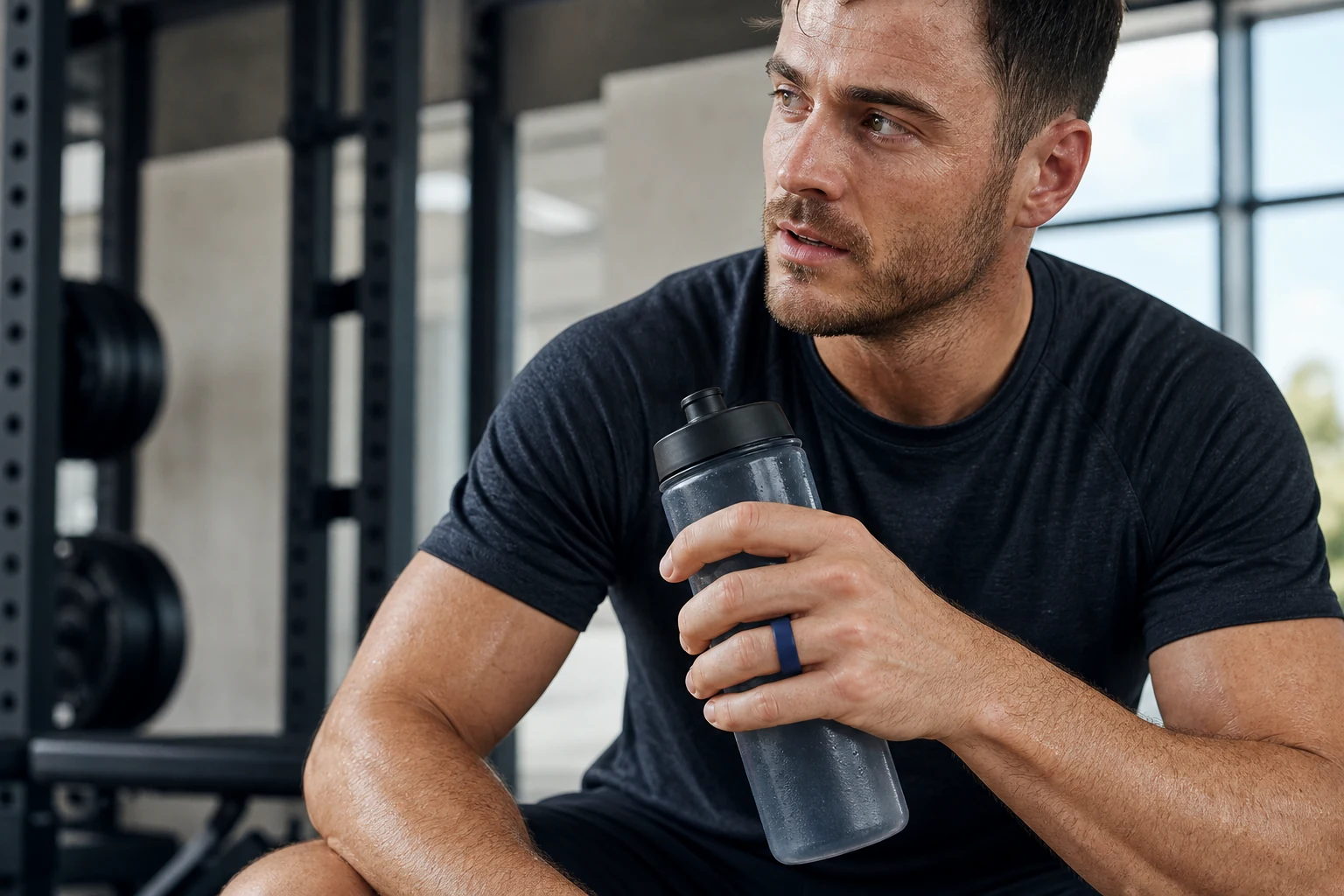
Why Active Australian Men Are Choosing Silicone Over Metal Rings
TL;DR
Silicone rings are safer, more practical, and better suited to active lifestyles than metal rings. For Australian men who train, work with their hands, or live outdoors, a silicone ring eliminates ring avulsion risk, survives punishment, and costs a fraction of what a metal band does to replace. The smart move: wear silicone every day, save the metal for special occasions.
In This Guide
- Why Active Men Are Ditching Metal Rings
- The Ring Avulsion Problem: Why Metal Can Be Dangerous
- Silicone vs Tungsten: What Changes When You Go Active
- Silicone vs Titanium: Lightweight Doesn’t Always Mean Safe
- The Two-Ring System: The Smartest Way to Wear a Wedding Band
- Who Should Make the Switch to Silicone
- FAQ
- References
Why Active Men Are Ditching Metal Rings
Active men in Australia are choosing silicone rings over metal because silicone is safer, more comfortable under load, and built for real life. A silicone ring flexes and breaks away before it can trap your finger, making it the only sensible choice for gym work, trade jobs, surfing, climbing, and anything else that puts stress on your hands.
Let’s be straight about it: a metal wedding ring is designed to last a lifetime. That’s the point. But that same indestructibility is exactly what makes it wrong for the gym floor, the job site, or the surf lineup. Metal doesn’t compress. Metal doesn’t break. And in the wrong situation, that means your finger is the thing that gives first.
The shift toward silicone rings among active Australian men isn’t about caring less about marriage — it’s about being smart. Silicone rings are purpose-built for the life you actually live Monday to Saturday, while your metal band waits safely at home for the moments that call for it.
According to the Safe Work Australia database, hand and finger injuries are among the most common workplace injuries recorded annually. Ring-related incidents are a documented subset — and employers in trade, construction, and outdoor industries increasingly advise workers to remove jewellery entirely, or swap to silicone alternatives.
The Ring Avulsion Problem: Why Metal Can Be Dangerous
Ring avulsion is an injury where a metal ring catches on an object and tears the soft tissue — and sometimes bone — from your finger. It happens fast, it’s catastrophic when it does, and metal rings make it possible. Silicone rings, by contrast, are designed to break before your finger does, eliminating the avulsion risk entirely.
You don’t need to look far for examples. Stories of ring avulsion injuries are common among climbers who catch a ring on a hold, tradies who snag a ring on machinery, gym athletes who deadlift with their ring on, and anyone who’s ever had their hand get caught during a fall. The injury ranges from severe skin degloving to partial or full digit amputation.
The physics are simple: a rigid metal ring can’t stretch. Under sudden load — say, catching your ring on scaffolding as you fall, or on a barbell during a missed lift — the force has to go somewhere. Either the ring breaks (which tungsten can do, but not in a way that helps you), or the tissue does.
Silicone rings are engineered with a specific break-away threshold. Quality silicone bands will stretch under load and eventually snap before the force transfers to your finger. That snap point is calibrated to be well above the force of normal wear but below the threshold of injury. It’s the same logic as a fuse in your electrical system — you want the cheap part to fail so the expensive part doesn’t.
Hand surgery bodies, including the Royal Australasian College of Surgeons, treat ring avulsion injuries, and the consistent clinical advice is to remove a ring before high-risk physical activity. Silicone rings are the next-best solution for men who need to keep wearing a ring for personal or professional reasons.
For men working in trades, construction, mining, or any industrial setting, the choice between silicone and metal isn’t just a lifestyle preference — it’s a safety decision. Explore men’s silicone rings at Helix built specifically for active and working environments.
Silicone vs Tungsten: What Changes When You Go Active
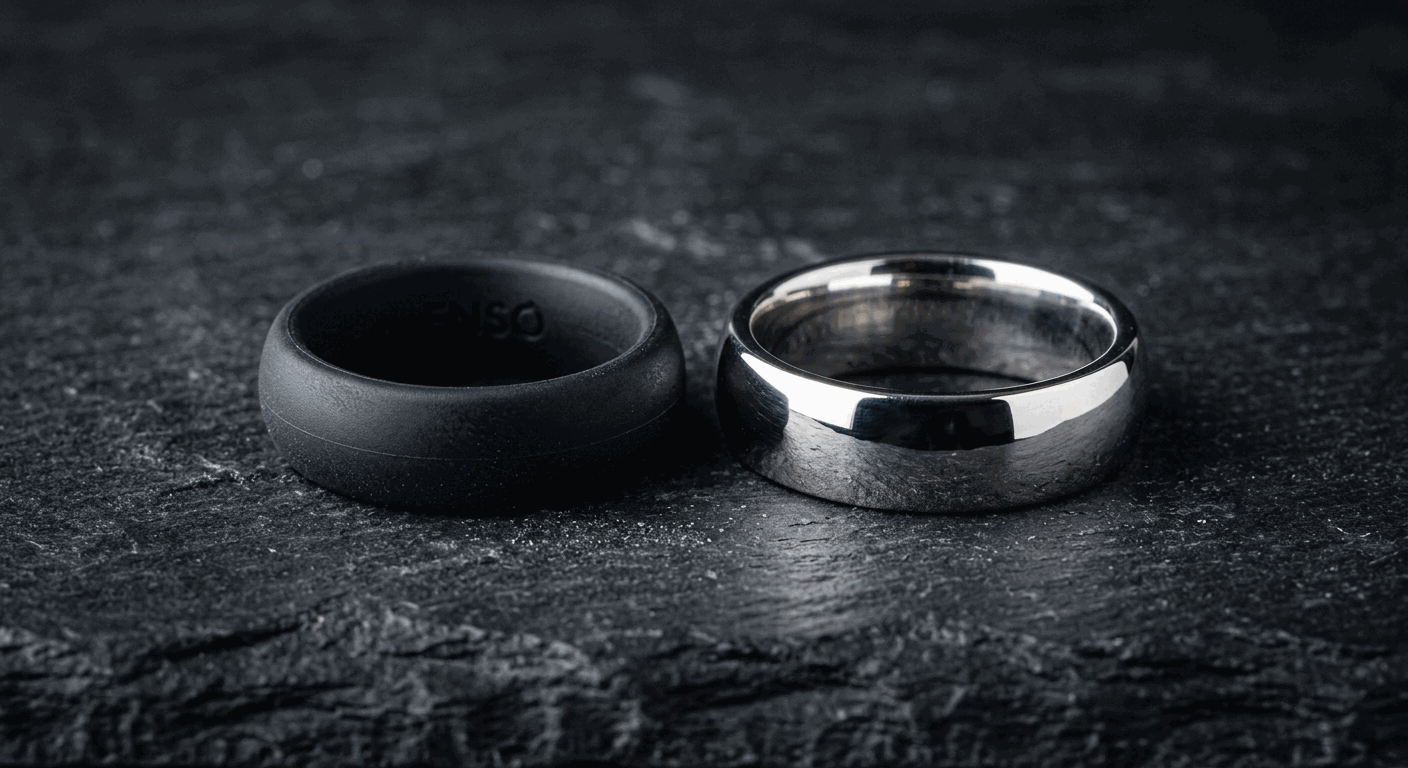
Tungsten rings are heavy, scratch-resistant, and permanently rigid. For daily wear in a desk job, that’s fine. For an active lifestyle — gym sessions, sport, physical work — tungsten’s inability to flex or break away creates real injury risk, and its weight becomes noticeable under training conditions. Silicone wins on every active metric.
Weight
Tungsten is one of the densest metals used in jewellery. A standard tungsten band weighs around 15–25 grams depending on width. A silicone ring weighs around 2–4 grams. That difference is imperceptible in a meeting room but very real when you’re pulling 200kg off the floor, paddling out through a set, or doing pull-ups.
Flexibility and Comfort
Silicone conforms to your finger as it swells during exercise. Blood flow increases during training, fingers swell, and a rigid tungsten ring becomes uncomfortable — or can restrict circulation. Silicone stretches with you.
Safety in a Break Scenario
Here’s where tungsten has a specific and dangerous quirk: tungsten carbide is brittle. It doesn’t bend — it shatters. In a ring avulsion scenario, a tungsten ring is more likely to shatter into fragments than cleanly break away. That’s not better. The fragments can cause secondary lacerations, and the force required to break tungsten is often the same force that injures the finger first.
Cost of Loss or Damage
Tungsten rings range from $100 to $400+ for a quality band. Silicone rings from Helix start at well under $50. For active men who train hard, work outdoors, or get their hands dirty, replacing a lost or damaged ring shouldn’t require a financial conversation. A 3-pack of Helix ring packs means you always have a spare without the cost of a metal replacement.
The Verdict: Silicone vs Tungsten for Active Men
- Weight: Silicone ✅
- Flexibility: Silicone ✅
- Break-away safety: Silicone ✅
- Scratch resistance: Tungsten
- Formal appearance: Tungsten
- Cost per wear (active use): Silicone ✅
Silicone vs Titanium: Lightweight Doesn’t Always Mean Safe
Titanium is the lightest true metal used for rings and genuinely comfortable for everyday wear. But lightweight doesn’t mean safe for active use. Titanium rings are still rigid — they won’t flex under load, they don’t break away in a ring avulsion scenario, and they can interfere with hand function during high-intensity activity. Silicone is still the better call for active men.
The Weight Argument
Titanium rings weigh around 4–8 grams — dramatically lighter than tungsten. That’s why they’re popular with active men who want a metal ring but find tungsten too heavy. But the comparison point for active wear isn’t “how light is it for a metal ring?” — it’s “does it behave safely under stress?” And on that measure, titanium still falls short of silicone.
Titanium and Ring Avulsion
Titanium is strong and doesn’t shatter like tungsten. But unlike tungsten, it also won’t snap cleanly away from your finger in a true ring avulsion event — it deforms. Deformation under extreme load still transfers significant force to the digit. Emergency departments can remove titanium rings, but the process is harder than with softer metals and sometimes requires a ring cutter.
Durability Under Real Conditions
Titanium scratches more easily than tungsten and develops a matte wear pattern over time. For men who train regularly, work outdoors, or handle equipment, a titanium ring will show wear quickly. A silicone ring from Helix’s Performance Packs range is designed to take punishment and be replaced when it’s done its job — no attachment required.
Custom Titanium — When Metal Makes Sense
Helix does offer custom titanium rings for men who want a metal option. These are excellent for formal wear, anniversaries, and moments where appearance matters. The key insight is context: titanium at a wedding is perfect. Titanium at the gym or on a job site is a risk you don’t need to take.
The Verdict: Silicone vs Titanium for Active Men
- Weight: Titanium (close match)
- Flexibility: Silicone ✅
- Break-away safety: Silicone ✅
- Scratch resistance: Titanium
- Formal appearance: Titanium
- Cost for active daily use: Silicone ✅
The Two-Ring System: The Smartest Way to Wear a Wedding Band
The two-ring system is simple: wear a silicone ring every day for work, training, and sport, and switch to your metal band for dinners, events, and special occasions. It protects your metal ring from damage, eliminates injury risk during active hours, and means you’re always wearing something that represents your commitment — just the right ring for the right context.
This approach has become standard for active married men across trades, military, emergency services, sport, and any other profession where hands take a beating. The idea isn’t to downgrade your commitment — it’s to make wearing a ring consistently feasible and safe.
Why It Works
For the ring: Metal rings — especially tungsten and gold — scratch, dent, and degrade under active conditions. A silicone ring takes the punishment so your metal band doesn’t have to. Your tungsten or titanium ring stays in better condition longer because you’re only wearing it when conditions are appropriate.
For your finger: Active hours are when ring avulsion risk is highest. Wearing silicone during those hours eliminates the risk. Swapping back to metal for calm, social, or ceremonial occasions means you still get the look and feel of a proper wedding band — just not when it could hurt you.
For the budget: A silicone ring from Helix costs $19–$29. Your tungsten or titanium band cost $200–$500. Protecting the expensive ring with a cheap, purpose-built one makes financial sense. When the silicone wears out, replace it. That’s the deal.
Setting Up Your Two-Ring System
Start with your existing metal band for formal wear. Then pick a silicone ring that matches your style — or just grab black, which goes with everything. Black silicone rings from Helix are the most popular choice for active men because they’re low-profile, tough, and neutral enough to wear anywhere. Keep the silicone ring in your gym bag or work bag and swap before you head into anything physical.
If you want variety, Helix’s Performance Packs give you multiple colours and styles so you can match different activities or moods without committing to a single look.
Who Should Make the Switch to Silicone
Any active man in Australia who wears a ring while training, working with his hands, surfing, climbing, or doing anything physically demanding should switch to silicone for those hours. The list of occupations and activities where a metal ring creates unnecessary risk is long — and the barrier to switching is genuinely low.
Gym-Goers and Athletes
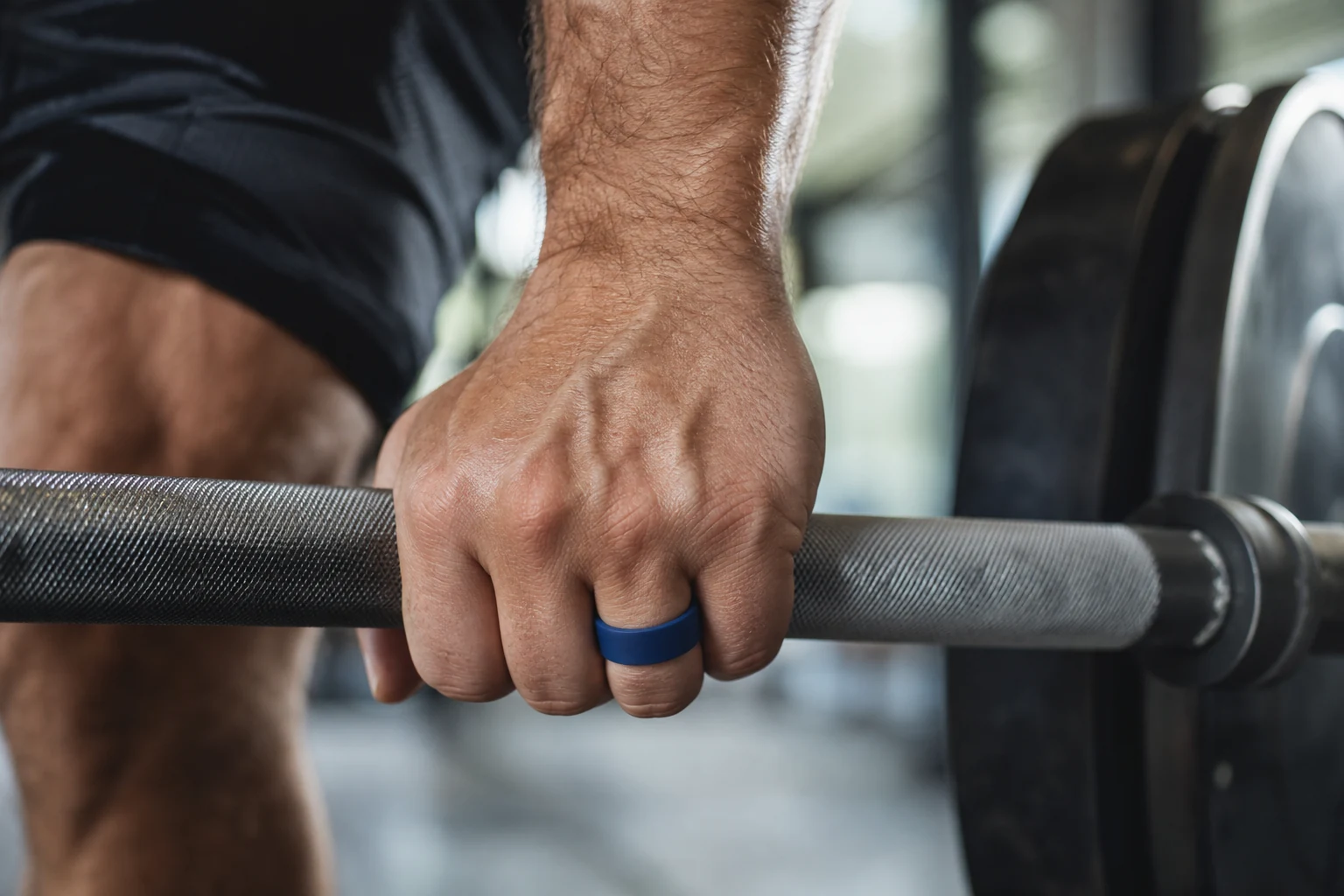
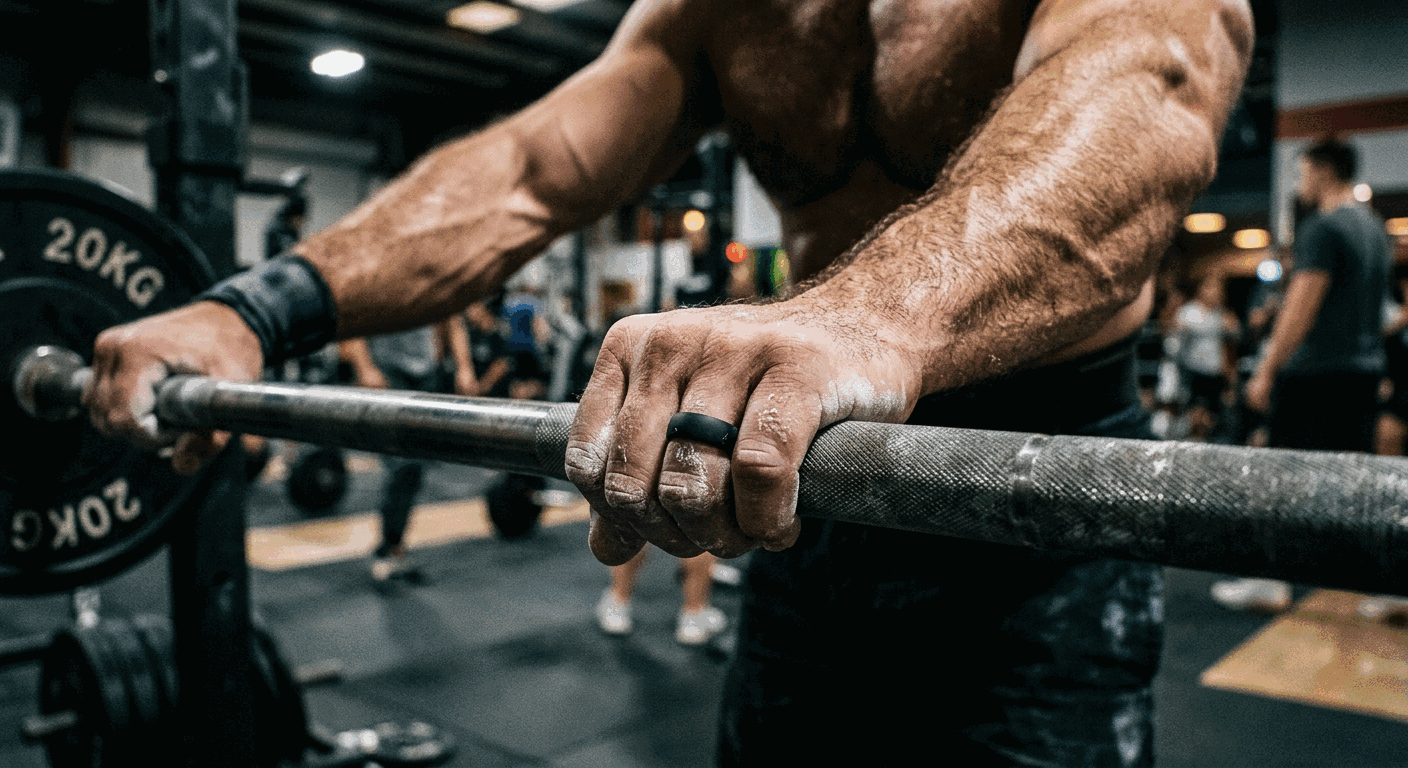
Deadlifts, pull-ups, Olympic lifting, CrossFit, powerlifting — any barbell or bar work where your grip is under load. A metal ring catching on a bar during a missed lift or a dropped barbell is how avulsion injuries happen in training environments. Silicone breaks away. Metal doesn’t.
Tradies and Construction Workers
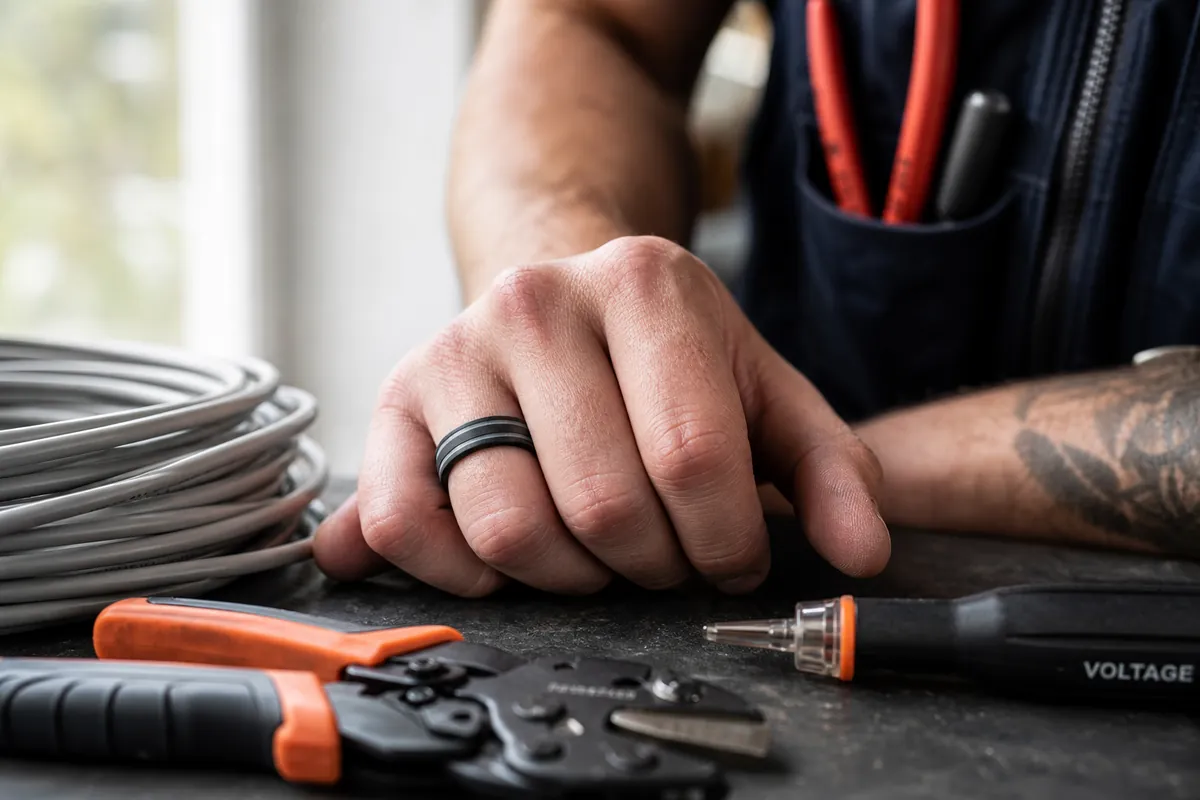
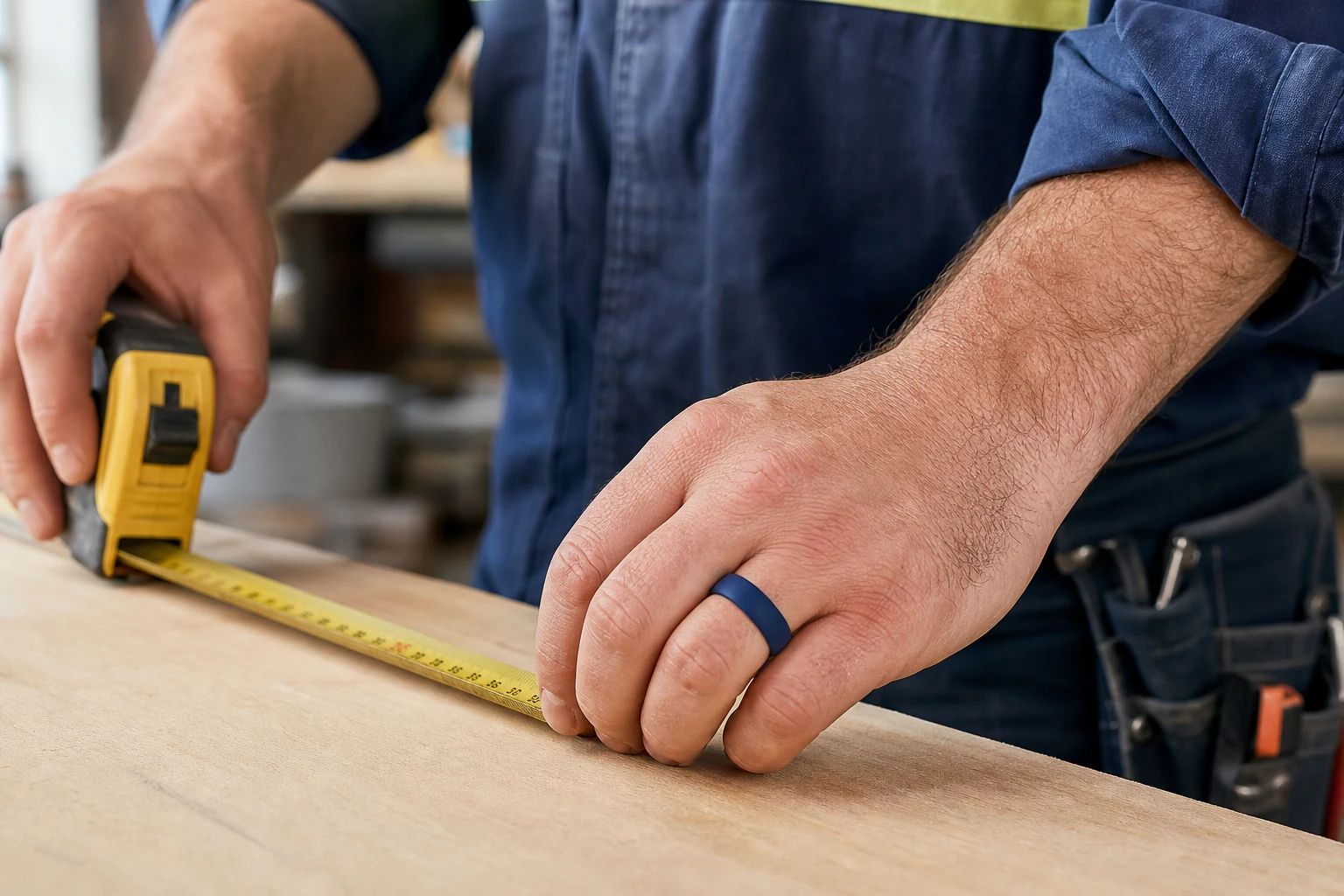
Electricians, plumbers, carpenters, concreters, miners — anyone whose hands interact with machinery, tools, scaffolding, or heavy materials. Safe Work Australia guidelines consistently advise ring removal during physical work. A silicone ring is the practical compromise when you need to wear something but can’t afford the risk of metal.
Surfers, Climbers, and Outdoor Enthusiasts
Salt water degrades metal rings over time, and a ring catching on climbing holds or rocks is a well-documented cause of finger injury. Silicone is chemically resistant to salt, chlorine, and UV exposure — it’s genuinely built for outdoor Australian conditions. Check out the full silicone ring range at Helix for options suited to water and outdoor use.
Military, Police, and Emergency Services
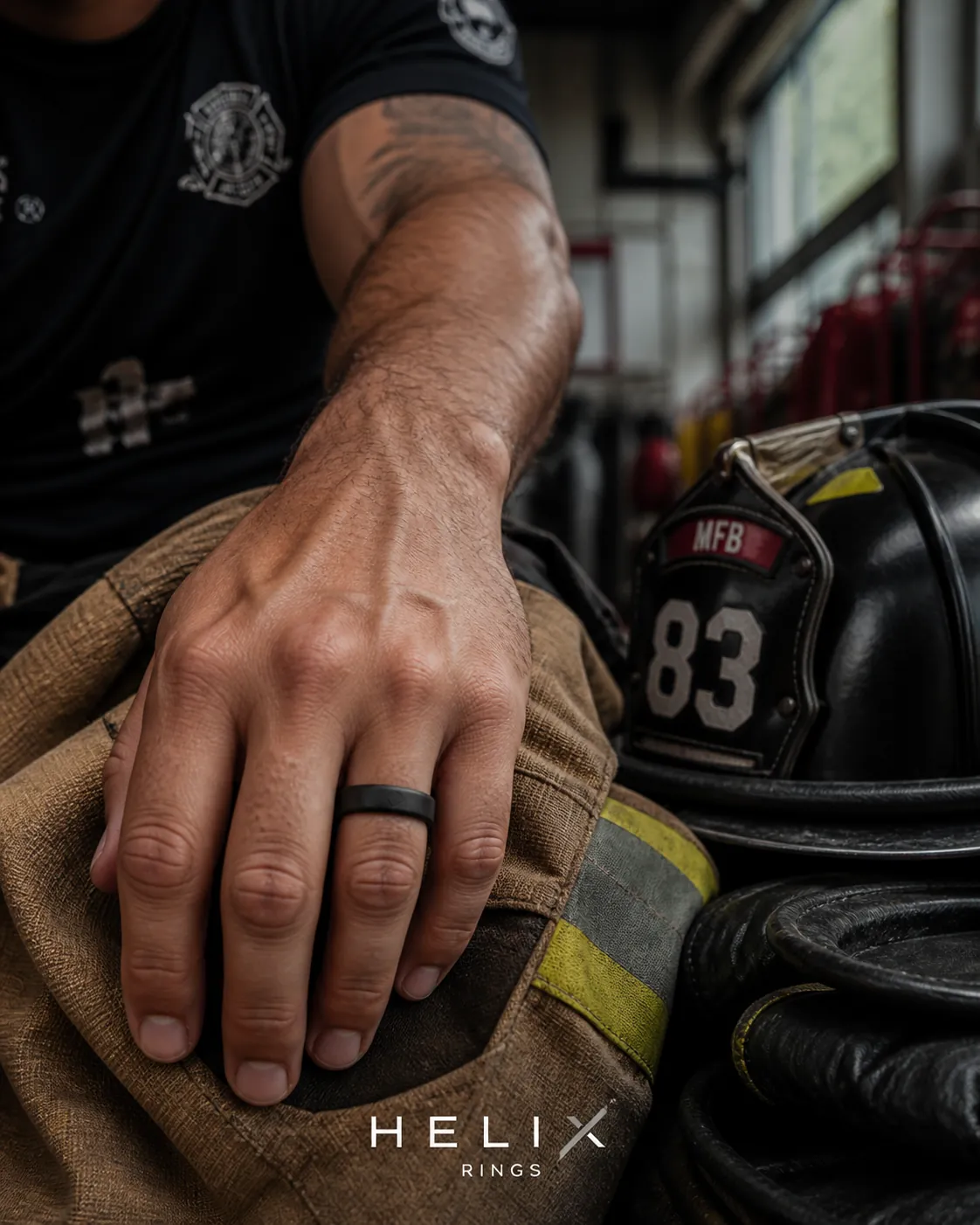
These professions often mandate ring removal for operational safety. Silicone rings are increasingly accepted as an alternative because they meet the safety threshold that metal rings can’t.
Anyone Who Values Practicality
Honestly? Most active men who make the switch report they mostly forget it’s there — which is the point. A good silicone ring shouldn’t require constant adjustment, careful removal, or worry. It should just work.

Frequently Asked Questions
Is a silicone ring safe to wear at the gym?
Yes — silicone rings are the recommended choice for gym use precisely because they break away under sudden force, preventing ring avulsion injuries. Metal rings (tungsten, titanium, gold) are rigid and can trap or injure your finger if caught on a barbell or equipment. Quality silicone rings are designed to snap before the force transfers to your digit.
Can silicone rings replace wedding bands for active men in Australia?
Absolutely. Many Australian men use a two-ring system: a silicone ring for daily active wear and a metal band reserved for formal occasions. The silicone ring represents the same commitment while eliminating injury risk during training, work, or sport. Helix silicone rings are purpose-built for this role and available in a range of styles to suit any look.
What is ring avulsion and how does silicone prevent it?
Ring avulsion is a traumatic injury where a ring catches on an object and tears the soft tissue from the finger — sometimes causing partial or full amputation. It happens when a rigid ring is subjected to sudden lateral force. Silicone rings prevent avulsion because they are engineered to stretch and break at a threshold well below the force needed to injure the finger, acting as a safety fuse between your ring and your digit.
How durable are silicone rings for everyday active use?
Quality silicone rings are highly durable under normal active conditions — they’re resistant to sweat, salt water, chlorine, UV exposure, and general wear. They’re not meant to last forever; they’re designed to take punishment and be replaced affordably when needed. Most active men get 12–24 months of hard daily use from a quality silicone ring before replacing it.
Are silicone rings suitable for tradespeople in Australia?
Yes. Silicone rings are the recommended alternative to metal rings for tradespeople, consistent with Safe Work Australia guidance on jewellery safety in physical work environments. They eliminate the risk of metal rings snagging on machinery or materials, are non-conductive (relevant for electricians), and are comfortable enough to wear all day without interference with gloves or hand tools.
Which is better for active men: tungsten, titanium, or silicone?
For active daily use — gym, sport, trades, outdoor — silicone is the clear winner. It’s lighter than both tungsten and titanium, breaks away safely to prevent ring avulsion, is comfortable under swelling during exercise, and costs a fraction of the price to replace. Tungsten and titanium remain excellent choices for formal wear and special occasions, which is why many active men use both through the two-ring system.
References & Sources
- Safe Work Australia — Managing Health and Safety
- Royal Australasian College of Surgeons — Royal Australasian College of Surgeons (RACS)
- American Society for Surgery of the Hand — Ring Avulsion: Causes, Treatment, and Prevention
Last updated: March 2026. Information is provided for educational purposes. For workplace safety guidance specific to your industry, refer to your state’s relevant WorkSafe authority.