Silicone vs Tungsten Wedding Bands: Which Is Better for Active Couples?
Why Silicone vs Tungsten Matters
If you’ve never thought about what your wedding ring is actually made of, that’s normal. Most people pick a band, get it sized, and don’t think about it again until something goes wrong. For active couples, though, the material matters a lot more than it does for someone who works a desk job and lifts nothing heavier than a coffee mug.
Tungsten carbide is one of the hardest metals used in jewellery. It doesn’t scratch, it holds a polish for years, and it looks the part next to a tuxedo or a set of rings in a bridal shoot. The catch is that tungsten is brittle rather than bendable. Drop it on concrete and it can crack. Get it caught on a barbell, a machine guard or a car door and it will not give way, it will squeeze. Because it’s so hard, most tungsten bands also can’t be resized once you buy them.
Silicone rings solve exactly that problem. They’re soft, they stretch, and if a ring gets snagged on equipment or a fence, the silicone tears or slips off before it crushes your finger. That’s the whole reason brands like ours started making them for tradies, CrossFit athletes, climbers and anyone who works with their hands. You can browse the full silicone ring range and see just how far the category has come from the plain rubber bands of a decade ago.
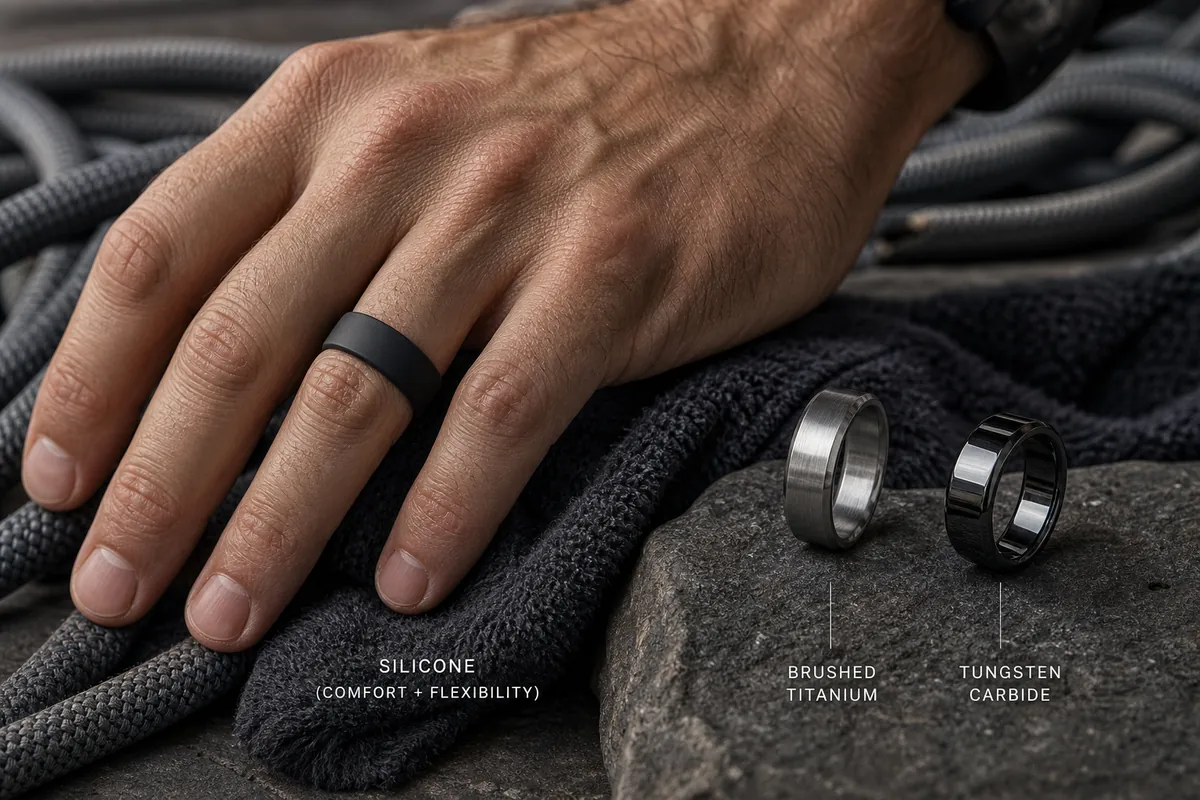
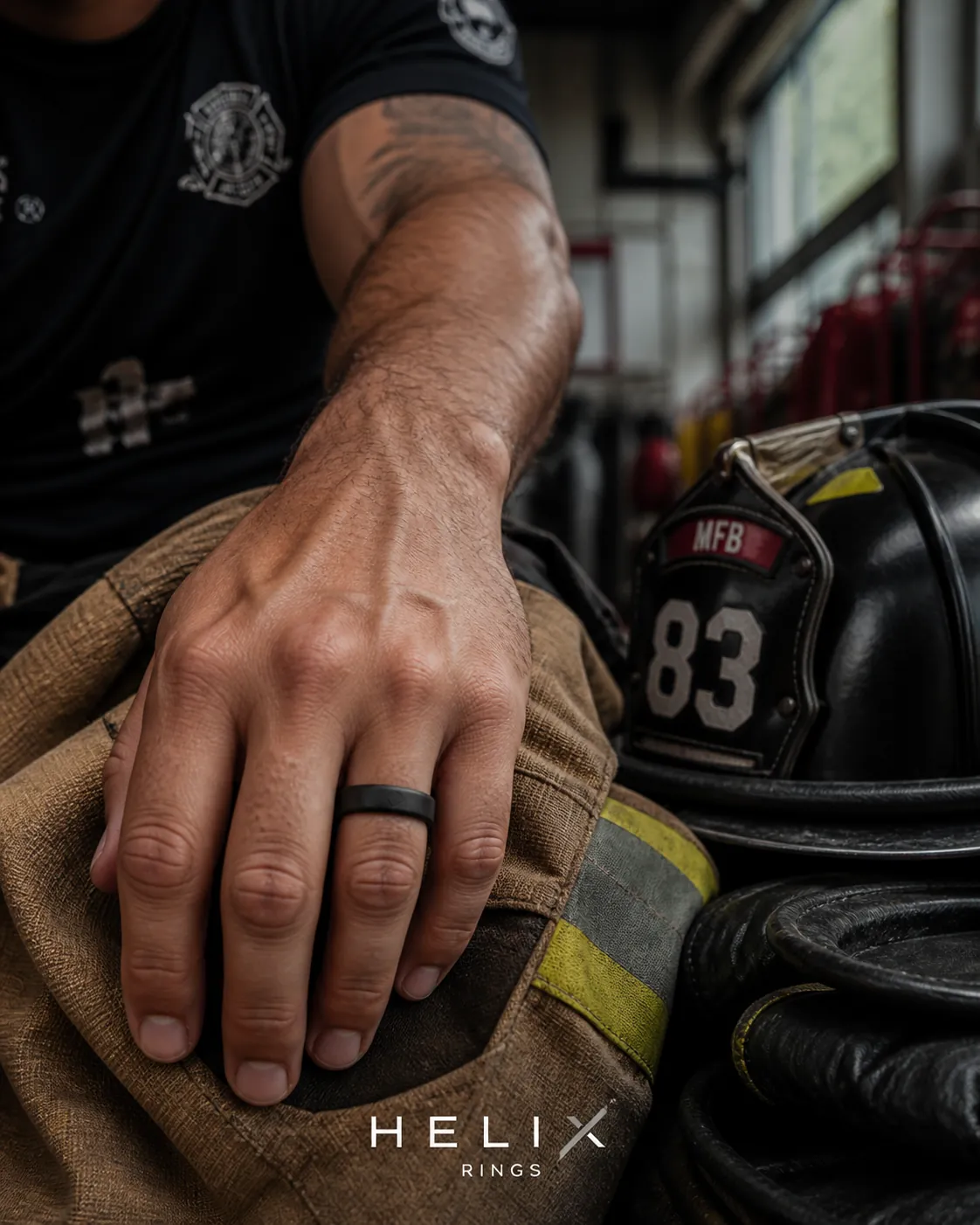
The safety angle isn’t a marketing line either. Hand surgeons have written for years about “ring avulsion” injuries, where a rigid ring catches on something and degloves the finger as the body falls away from the hand. It’s rare, but it’s serious enough that fire crews, mechanics and gym owners now actively warn against wearing hard metal rings on the job. Tungsten sits at the riskier end of that spectrum precisely because it won’t deform or break away like silicone will.
Choosing the Right Band for You
The honest answer is that most active couples don’t choose one or the other, they choose both. A silicone band for the gym, the worksite, or a surf, and a tungsten or titanium band for the wedding day itself and the nights out afterwards. It’s the same logic as owning both runners and dress shoes.
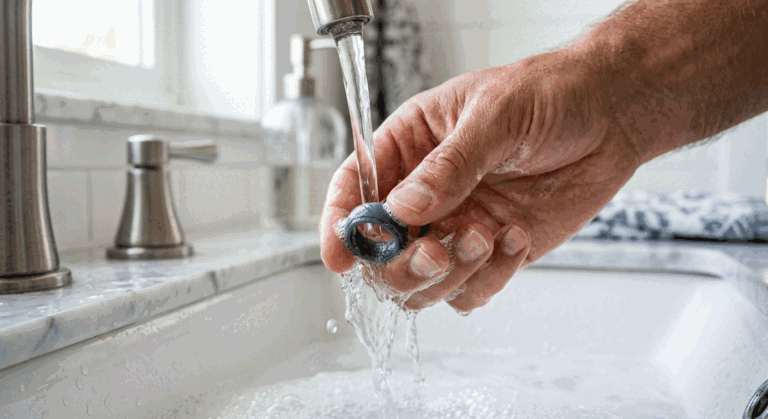
Start by being blunt about your week. If you’re in a warehouse, on a construction site, coaching junior footy, or doing three CrossFit sessions a week, a hard metal ring is going to spend more time in your pocket than on your hand, which defeats the purpose of wearing one. Silicone rings from the men’s silicone collection are built to be worn every single day without a second thought, including in the shower, the pool and while you sleep.
If your week is mostly meetings, client dinners and the occasional gym session, tungsten’s weight and shine will actually get noticed, and the durability concerns matter less because you’re not swinging a spanner in it. For custom engraving, a specific finish, or a heavier presence on the hand, our custom titanium rings give you that traditional-metal look with a fair bit more give than tungsten, since titanium can be resized and doesn’t shatter under impact.
Comfort fit also plays a part. Silicone rings are made with a slightly domed inner profile so they don’t create pressure lines the way a flat metal band can after eight hours on a hot day. If you’ve ever taken a metal ring off at the end of a shift and seen a red groove underneath, that’s exactly what silicone is designed to avoid.
Top Styles and Options
Silicone has moved well past the plain black gym band. Colour, texture and profile all do real work now, both for style and for practicality.
Colour and finish
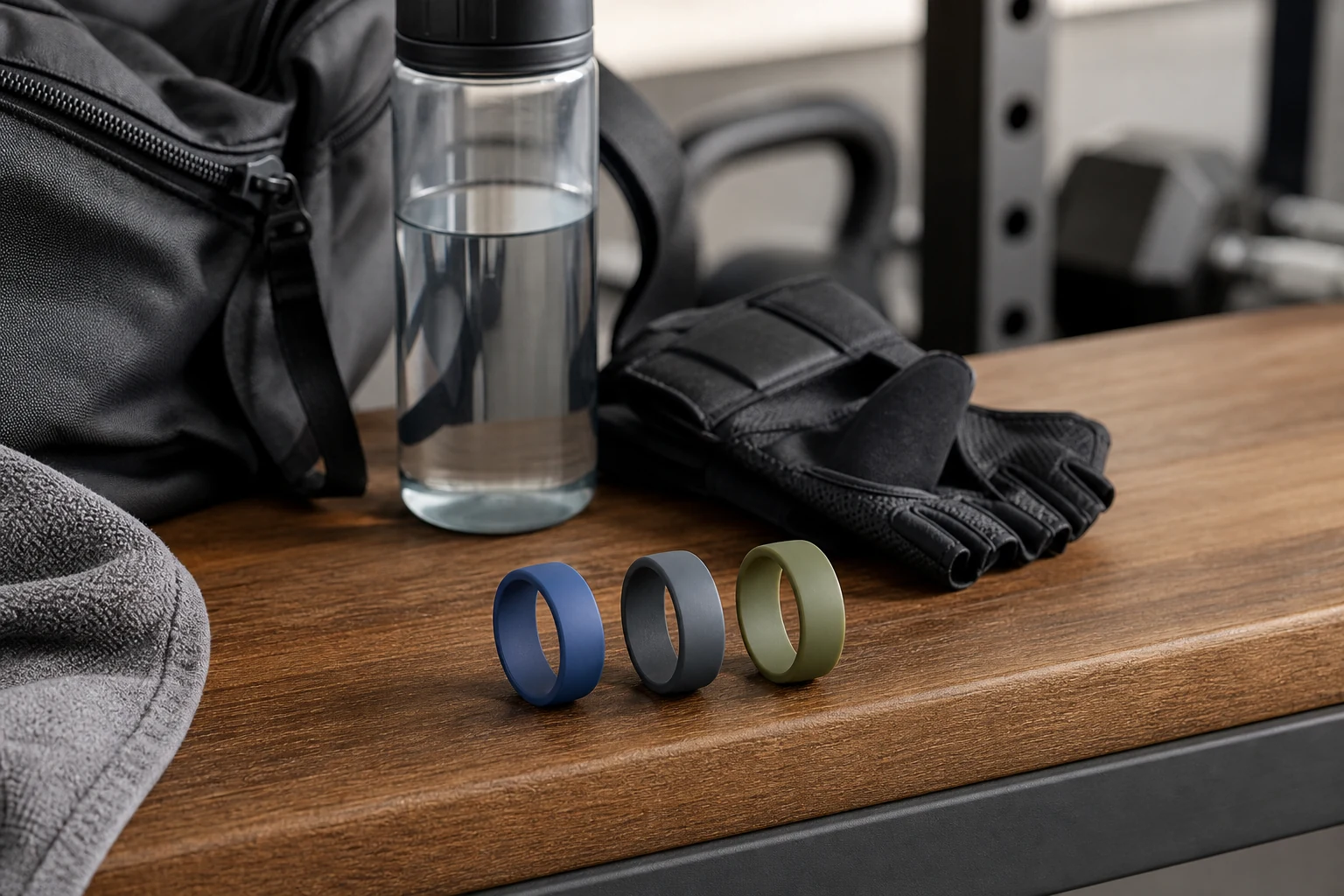
Classic black silicone rings are still the most popular pick because they read as a normal wedding band from across the room, not a novelty item. For couples who want something with more personality, blue silicone rings are a strong second choice, and they’re genuinely easier to spot if you drop one in long grass or on a dark gym floor, which happens more often than you’d think.
Breathable, textured designs with internal airflow channels are worth paying attention to as well. They stop the ring turning into a sweat trap during long training blocks, which is one of the more common complaints people had with early-generation silicone bands.
Sets and pairs
A lot of couples now buy in twos or threes rather than one ring each. Our ring packs bundle a few colours and widths together at a lower per-ring cost, so you’ve got a spare on hand the moment one wears out or gets lost at the crag. Given a decent silicone ring costs a fraction of a tungsten band, having three or four on rotation still comes in well under the price of one metal ring.
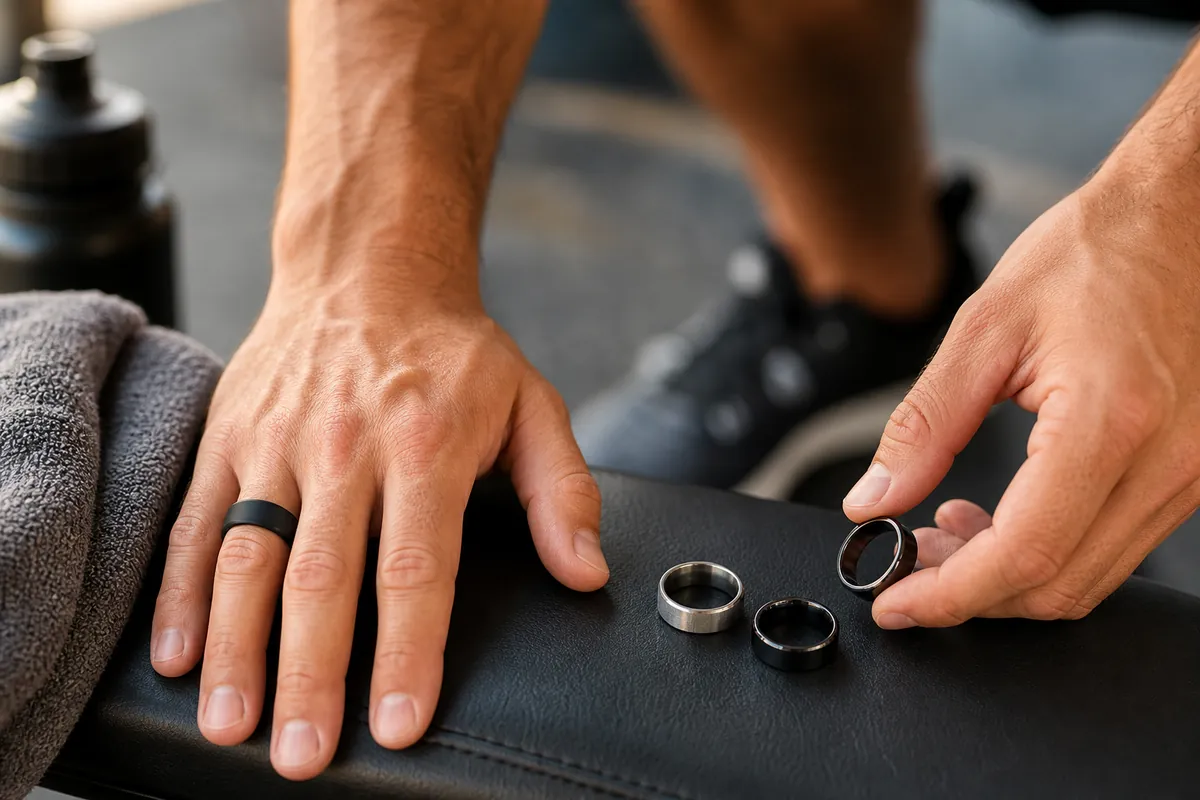
On the tungsten and titanium side, brushed and matte finishes have overtaken high polish as the more popular choice for anyone active, simply because they hide scuffs better. If you want the weight and shine of a traditional metal band without giving up too much practicality, browse the wider full ring range and compare finishes side by side before deciding.
What to Consider Before You Buy
A few practical checks save a lot of regret later.
Sizing and resizing
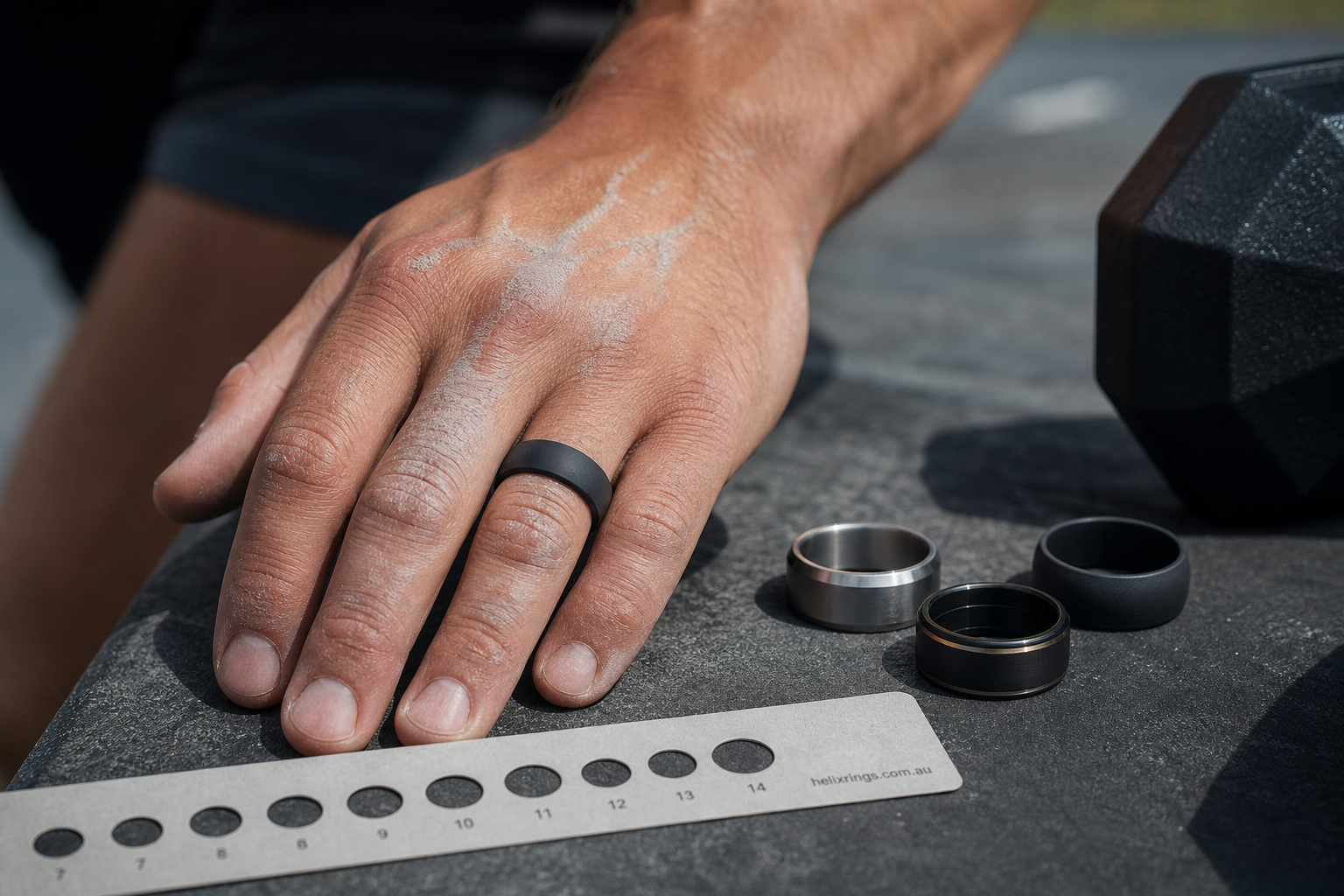
Tungsten can’t be resized in the way gold or platinum can, because the same hardness that resists scratching also resists reshaping. If your weight fluctuates with training cycles, a snug tungsten band from bulking season can turn painfully tight, or fall off entirely, six months later. Silicone sidesteps this because most bands come in a couple of width and thickness options and cost little enough that reordering a new size isn’t a financial decision.
Skin reactions
Nickel sensitivity is genuinely common, and it’s worth checking whether a tungsten band is nickel-free before buying, since some cheaper alloys use it as a binder. Medical-grade silicone rings sidestep this entirely for most wearers, though anyone with a known silicone or latex sensitivity should still patch test first.
Where you’ll actually wear it
Be realistic about tools, machinery, weights and water. If your hands are in and out of chlorinated pools, silicone won’t degrade the way some metal plating can. If you’re around electrical work, metal rings carry a genuine conductivity risk that a silicone band simply doesn’t. For couples who split their time between the gym and the office, keeping one of each on hand from the silicone rings collection and a metal band for everything else is the least fussy solution we see people land on.
Tips from the Experts
A few things worth weighing up if you’re on the fence between the two:
Buy the silicone ring first. It’s the lower-cost decision, and it tells you a lot about how you actually feel wearing something on that finger day to day, which then informs whether you want a heavier, permanent metal band at all.
Check the ring’s edges before you buy. Cheap silicone rings can have a hard seam from the moulding process that irritates skin during long wear. Good ones are finished smooth all the way around, which is one of the easiest ways to tell quality apart before you even put it on.
Don’t assume tungsten is indestructible just because it’s scratch-resistant. Hardness and toughness are different properties. A tungsten ring resists scuffs brilliantly but can crack from a sharp direct impact, something a softer metal like titanium generally handles better.
If budget allows, treat the two materials as complementary rather than competing. Plenty of couples wear a metal band for the ceremony and everyday errands, then swap to silicone the second they hit the gym, the trade, or a surf trip. It’s not a compromise, it’s just matching the ring to the job at hand.
Frequently Asked Questions
What is the best silicone vs tungsten wedding band?
There’s no single “best” material, it depends on how you live day to day. Silicone wins for anyone in a gym, trade, or outdoor job, while tungsten suits people whose hands stay mostly out of heavy work. Many active couples end up owning one of each rather than picking a side.
How do I know whether a silicone or tungsten wedding band is right for me?
Map out a typical week and be honest about where your hands actually go, whether that’s a squat rack, a workshop, or a boardroom. If there’s any regular contact with machinery, weights or water, start with a silicone band. If your days are mostly low-impact, tungsten’s weight and shine will hold up fine.
What should I look for when choosing between silicone and tungsten bands?
For silicone, check it’s medical-grade, seamless at the edges, and breathable so it doesn’t trap sweat. For tungsten, confirm whether it’s nickel-free, ask about resizing policy up front since it usually can’t be resized later, and choose a brushed finish if you want scuffs to stay less visible.
Are there budget-friendly silicone and tungsten wedding bands?
Silicone is the more budget-friendly path by a wide margin, and buying a multi-colour pack brings the per-ring cost down further while giving you a spare for when one wears out. Tungsten bands cost more upfront, but a plain brushed finish without extra engraving keeps that cost as low as the material allows.