Silicone Rings for Firefighters and Paramedics: Emergency Service Safety Guide
What Firefighter Silicone Rings Are
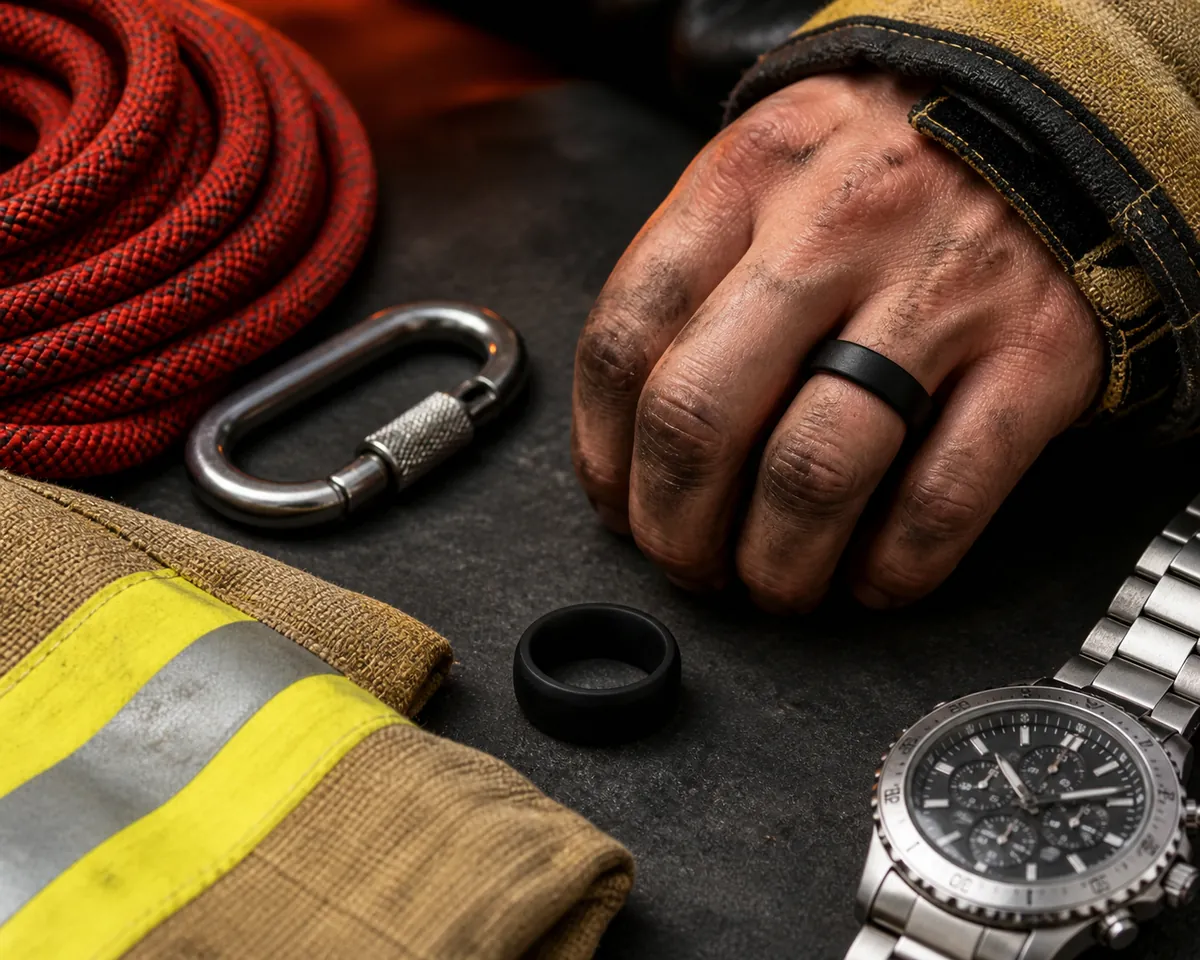
If you’ve spent any time around a fire station or an ambulance bay, you’ve probably noticed how few crews wear their wedding bands on shift anymore. It’s not sentiment, it’s physics. A gold or platinum ring caught on a hydraulic ram, a stretcher rail or a patient’s clothing during an extraction doesn’t bend, it grips, and the finger loses. Emergency medicine sees this often enough that it has its own name: ring avulsion injury, where a ring caught on a fixed object degloves or amputates the finger as the body keeps moving and the ring doesn’t.
Silicone rings solve the problem differently to just “take it off and lose it in a locker somewhere.” They’re built from medical-grade silicone that’s designed to stretch and tear before your finger does. Most breakaway designs snap cleanly under roughly 40–80kg of force depending on the brand and profile, which is well below what it takes to injure a finger caught in machinery. They’re also non-conductive, so there’s no risk of arcing near live electrical panels or car batteries during a vehicle extrication, and they don’t hold heat the way a metal band does when you’re working near a structure fire or a hot engine bay.
Firefighters, paramedics, linesmen and mine site workers all landed on the same solution independently, which tells you something. If you want to see the full range crews are actually buying, Helix’s silicone ring collection is a good starting point before you narrow things down.
Choosing the Right Fit and Style
Fit matters more here than with a normal ring, because the whole point is that it comes off cleanly when it needs to and stays put the rest of the time. Too loose and it’ll spin, catch on glove linings and annoy you all shift. Too tight and you’ve defeated the breakaway design, because a ring that’s already stretched to its limit around your finger won’t have anywhere left to go when it actually needs to snap.
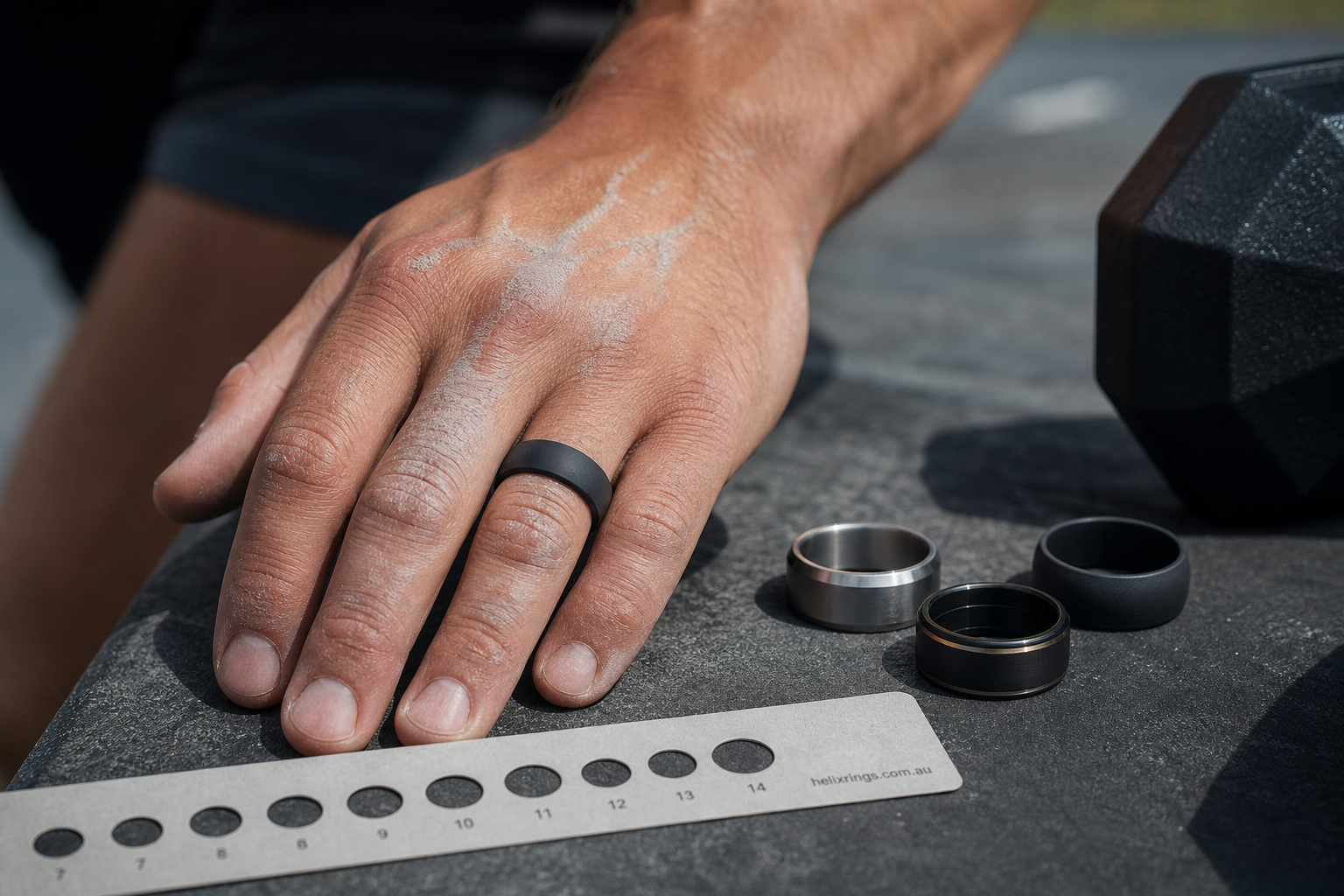
Get sized properly rather than guessing from an old wedding band, since silicone sits differently on the finger than metal does and swells slightly with heat and humidity, both of which you’ll get plenty of on an engine or in the back of a rig in summer. Most crews find their true silicone size sits within half a size of their metal ring size, but check it rather than assume it.
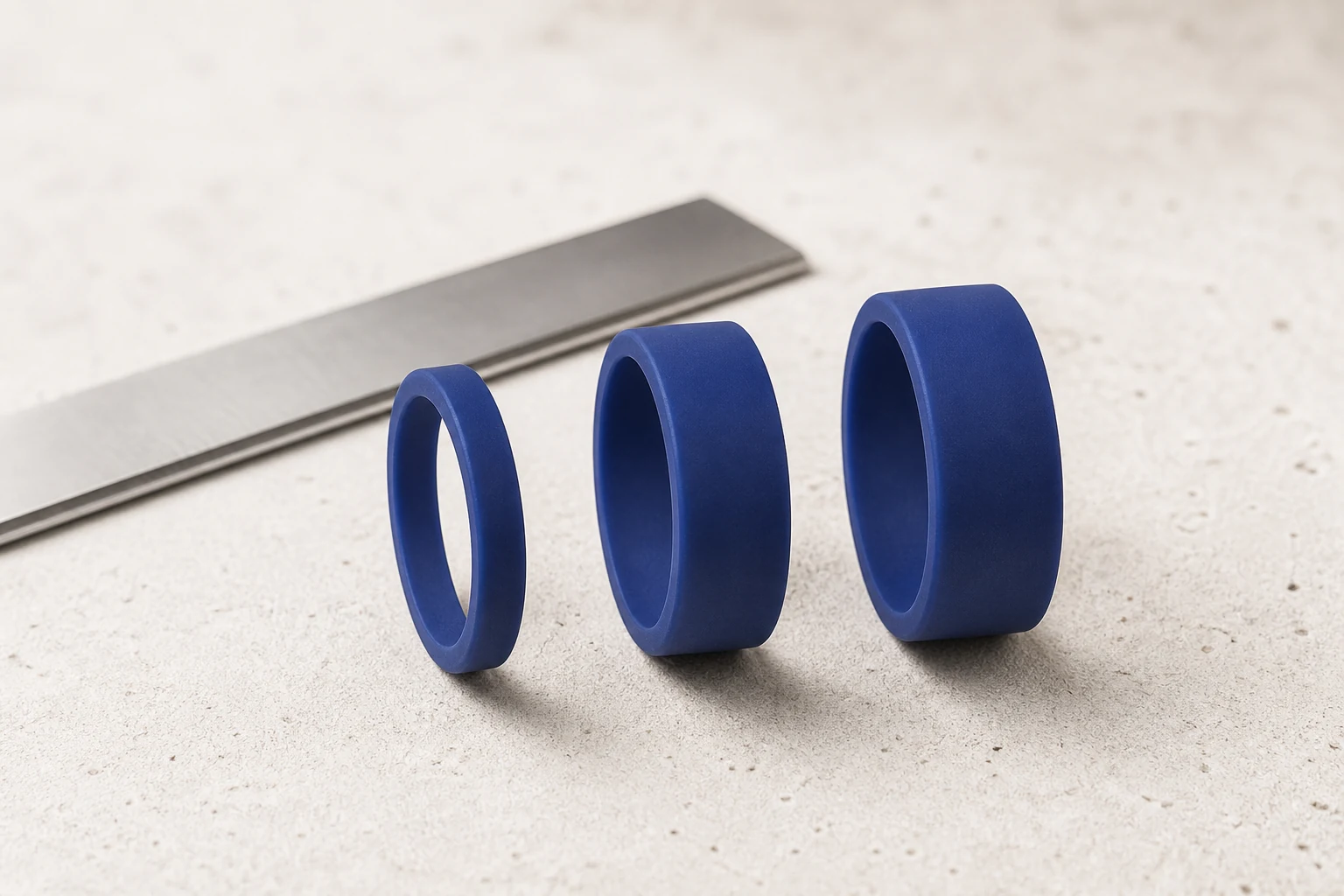
Width is the other decision. A 6mm or 8mm band is standard and comfortable for daily wear under gloves. Some crews prefer a narrower profile specifically because it sits lower and catches less on webbing, straps and equipment. If you’re between sizes or want something that won’t slip during heavy hand use, a multi-size ring pack is genuinely the smart move here, since it means you’re not paying postage twice when the first guess is a fraction off.
Top Styles and Options
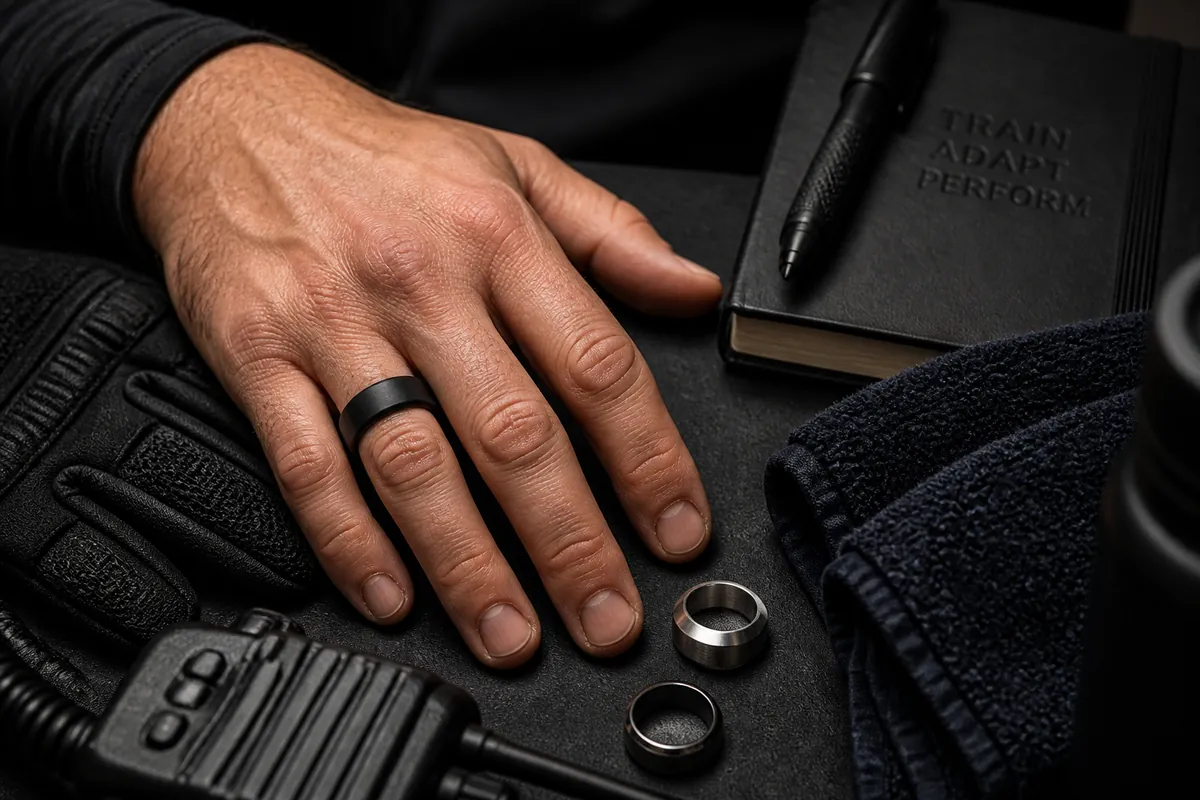
Colour and finish come down to what’s practical on your particular job, and there’s more variety here than most people expect walking in. Black is the default for a reason. It hides grime from soot, diesel and hand sanitiser, and it doesn’t stand out against turnout gear or scrubs, which some crews prefer for a low-profile look on the job. Have a look through the black silicone range if that’s your priority.
Grey and charcoal tones are close behind in popularity for the same reasons, plus they tend to show less wear over months of daily use than lighter colours. Check out the grey silicone collection if you want something that reads as more “everyday jewellery” than “work gear” when you’re off shift.
For paramedics who move between the ambulance, the hospital and home in the same day, a lot of crews keep two rings on rotation, a plain one for work and a second style for when they’re not in uniform. Blue is a common second choice, since it still reads as understated but isn’t identical to the work ring, so there’s no mix-up grabbing the wrong one off the counter at 5am. Worth a browse: the blue silicone options.
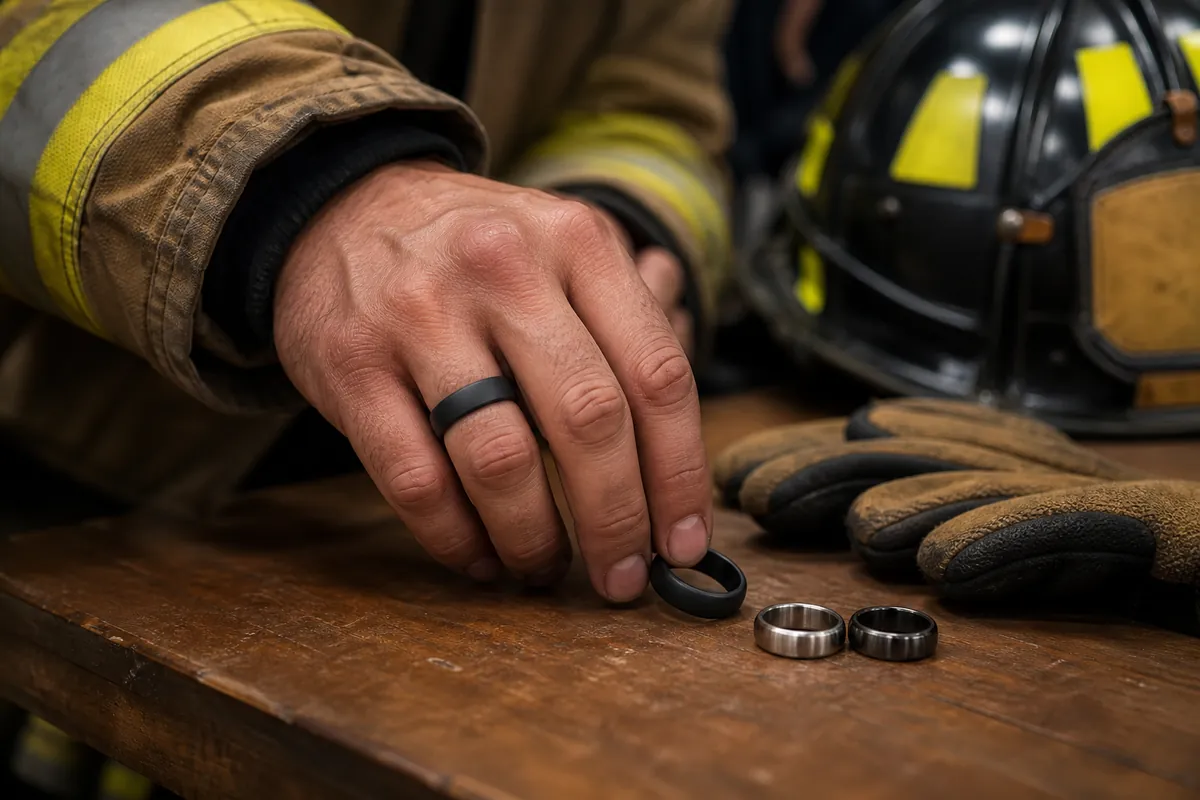
If you want something a step up from silicone for time off duty, custom titanium is worth a look too. It’s not appropriate for the fireground or a trauma call, but for weddings, formal events or just wanting something with more presence, custom titanium rings are a popular pairing with a work silicone band, so you’ve got the right ring for the right situation rather than one ring trying to do both jobs badly.
What to Consider Before You Buy
A few things separate a ring that lasts twelve months of shift work from one that splits after six weeks. Thickness is the big one. Ultra-thin novelty bands under 2mm look neat but they don’t have the material to withstand daily stretching, glove friction and repeated hand washing. Anything in the 6-8mm range with a rounded inner edge holds up far better and is comfortable enough that you forget it’s there by hour three of a shift.
Breathability matters too, more than people expect. A solid silicone band trapped against skin for 12+ hours under a nitrile glove gets sweaty and can irritate the skin over time. A lot of the newer designs use a honeycomb or grooved inner surface specifically to let air move and reduce that build-up, which is worth checking for if you’re on your feet for long stretches or working in structural gear.
Then there’s the breakaway threshold itself. Not every silicone ring is designed to fail at the same force, and cheaper novelty rings sometimes aren’t designed to fail predictably at all, they’re just soft rubber that happens to stretch. If injury prevention is actually the reason you’re buying one, look specifically for products described as breakaway or safety-rated rather than assuming any silicone ring will do the job. And don’t buy on price alone, a genuinely engineered breakaway ring costs a few dollars more than a supermarket rubber band, and that difference is the whole point of wearing one. Browse men’s silicone rings built for daily work wear to compare designs side by side.
Replace them more often than you’d think. Silicone degrades with repeated stretching, UV exposure and contact with hand sanitiser or fuel, so a ring that’s a year old and has seen daily shift use isn’t performing the same as it did on day one. Most crews replace theirs every 6-12 months, sooner if it’s visibly thinning or the edges are fraying.
Tips from the Experts
Talk to enough station officers and a few patterns come up again and again. First, don’t wear the same ring for the gym, the job and everywhere else. Rotating two or three rings means each one sees less wear and you’re never caught out with a stretched, weakened band on the one day it actually matters. A ring pack covers this cheaply rather than buying single rings one at a time.
Second, check the fit every few months, not just when you first buy it. Fingers change size slightly with weight, temperature and even hydration, and a ring that was snug in winter can be loose by summer. A loose safety ring is nearly as much of a liability as no ring at all, since it can slide, catch on the wrong part of the finger, or come off unnoticed on scene.
Third, and this comes up a lot with paramedics specifically: check your service’s actual PPE and jewellery policy before you assume silicone is automatically fine everywhere. Most services that have moved away from banning rings outright now specifically permit breakaway silicone as the approved alternative, but it’s worth confirming rather than assuming, particularly if you’re moving between different site or hospital environments with different rules. If you’re unsure where to start, the full ring range gives you a sense of what’s actually out there before you go shopping site by site, and the Helix Rings homepage has current sizing guides if you’re ordering for a whole crew at once.
Frequently Asked Questions
What’s the best ring for firefighters?
A breakaway-rated silicone ring in the 6-8mm width range is the safest option for active fireground and patient-handling work, since it’s designed to release under force rather than trap the finger. Look for a design specifically marketed as safety or breakaway rated rather than a generic novelty rubber band, as they’re built and tested differently.
How do I know which ring is right for me?
Start with an accurate size rather than guessing from your old metal ring, since silicone fits slightly differently. From there it’s mostly about colour and thickness preference, a 6-8mm black or grey band covers most work environments comfortably, and a multi-size pack is a good way to nail the fit without a return trip.
What should I look for when buying one?
Confirm it’s a genuine breakaway design rated to fail under load, check the width sits between 6-8mm for durability, and consider an inner surface designed for airflow if you’re wearing it for 12-hour shifts. Avoid ultra-thin novelty bands, they don’t hold up to daily work wear.
Are there budget-friendly options?
Yes, silicone rings are inexpensive compared to metal bands generally, and buying a multi-pack works out cheaper per ring than buying individually while also giving you spares for rotation. It’s still worth paying slightly more for a properly rated breakaway design rather than the cheapest rubber band available, since that engineering is the actual safety feature you’re buying.