How to Clean and Care for Your Silicone Ring — Complete Guide for Active Men
TL;DR
Cleaning your silicone ring takes less than 60 seconds: warm water, mild soap, a gentle scrub with your fingers, and a dry with a soft cloth. For active Australians who wear their ring through sweat, surf, and heavy work, a weekly deep clean keeps it hygienic, odour-free, and lasting for years.
In This Guide
- What Is a Silicone Ring Care Routine?
- Why Silicone Ring Care Matters for Active Australians
- How to Clean Your Silicone Ring — Step-by-Step Guide
- Common Silicone Ring Cleaning Mistakes to Avoid
- Silicone Ring Care for Different Active Lifestyles
- How Long Does a Silicone Ring Last With Proper Care?
- When to Replace Your Silicone Ring
- Frequently Asked Questions
- References & Sources
What Is a Silicone Ring Care Routine?
A silicone ring care routine is a regular cleaning and maintenance practice that keeps your ring hygienic, odour-free, and structurally sound. Unlike metal rings that can tarnish, scratch, or corrode, silicone is non-porous and highly resistant to bacteria — but that does not mean it is maintenance-free. Sweat, sunscreen, gym chalk, and Australian red dust all accumulate in the ring’s texture over time, and without regular cleaning, this build-up can cause skin irritation and unwanted smells.
For Australians following a silicone ring care and cleaning guide, the good news is that maintenance is simple. A 30-second daily rinse and a 5-minute weekly scrub is all it takes to keep your ring in peak condition for years.
Why Silicone Ring Care Matters for Active Australians
Silicone rings are designed for an active lifestyle — but that same durability that makes them perfect for the gym, the job site, and the surf also means they collect more grime than a ring worn only at the office. According to Safe Work Australia, skin-contact dermatitis is one of the most common occupational health conditions in the country, affecting workers across construction, healthcare, and outdoor industries.
A dirty ring worn against the skin creates a warm, moist environment — particularly under the band where friction occurs. Without regular cleaning, the following issues can develop:
- Contact dermatitis — redness and irritation from trapped sweat and contaminants
- Odour build-up — bacteria can accumulate in ring grooves and texturing
- Ring staining — certain chemicals (chlorine, sunscreen, oils) can discolour lighter-coloured rings over time
- Premature wear — abrasive grit embedded in the ring’s surface texture can accelerate degradation from the inside out
Research published by the Australasian College of Dermatologists notes that silicone is considered a low-irritant, hypoallergenic material — but any ring worn in harsh conditions benefits from regular cleaning to maintain that skin-safe advantage.
If you wear your ring through CrossFit sessions, trade shifts, saltwater swims, or long hikes in the Australian bush, a consistent care routine is part of getting the most from your active lifestyle silicone ring.
How to Clean Your Silicone Ring — Step-by-Step Guide
Cleaning a silicone ring is simple and requires no special products. The core process takes under a minute for a daily clean and around five minutes for a thorough weekly deep clean. Here is exactly what to do at each frequency.
Daily Quick Clean (30–60 Seconds)
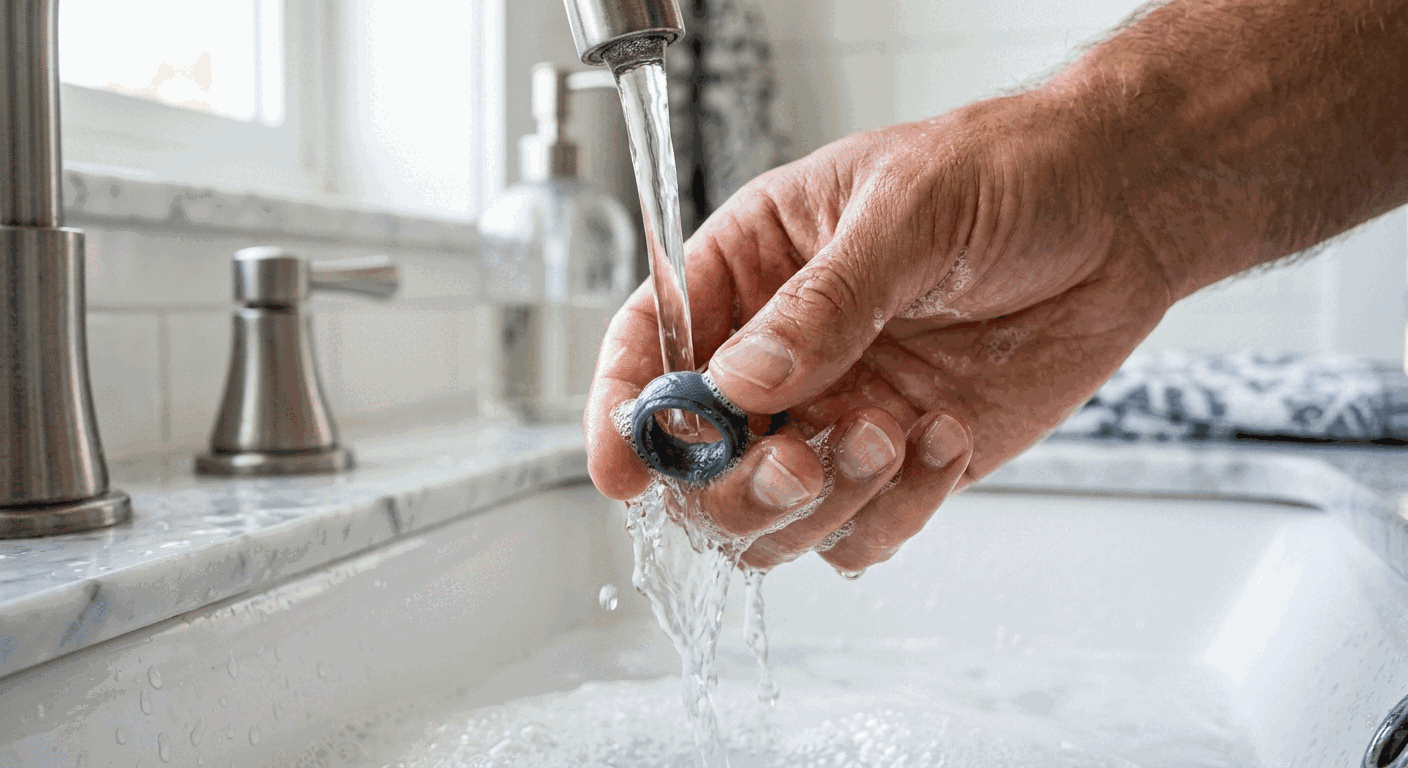
The daily clean is designed to happen naturally — shower time, after a workout, or whenever you wash your hands. Follow these steps:
- Remove your ring from your finger
- Hold it under warm (not hot) running water
- Apply a small drop of mild dish soap or hand wash
- Rub gently between your thumb and fingers for 20–30 seconds
- Rinse thoroughly until the soap is completely gone
- Pat dry with a clean cloth or leave to air dry before putting it back on
No tools needed, no soaking required. The goal is to remove daily sweat, oils, and surface contaminants before they embed into the ring’s texture.
Weekly Deep Clean (5–10 Minutes)
Once a week — especially after a big training week or long days on the tools — give your ring a more thorough clean. This is your complete silicone ring care cleaning guide Australia method for removing embedded grime:
- Fill a small bowl with warm water and add a few drops of mild dish soap
- Place the ring in the bowl and let it soak for 3–5 minutes to loosen embedded debris
- Use a soft-bristled toothbrush (designated for ring cleaning) to gently scrub both the inside and outside of the ring, paying attention to any grooves or texture features
- Rinse thoroughly under warm running water
- Inspect the ring — hold it up to light and check that all soap residue is gone
- Pat dry and allow to air dry completely before wearing
Tip for stubborn stains: Create a paste of baking soda and water. Apply it to the stained area with a soft brush, scrub gently, and rinse clean. Baking soda is mildly abrasive enough to lift surface stains without damaging medical-grade silicone.
Monthly Sanitise (Optional but Recommended)
For those who work in healthcare, food service, or high-contamination environments, a monthly sanitise is worth adding to your routine:
- Mix a solution of 1 part white vinegar to 3 parts warm water
- Soak the ring for 10–15 minutes
- Rinse thoroughly and dry completely
Alternatively, isopropyl alcohol (rubbing alcohol) can be used as a quick surface wipe — allow the ring to air dry completely before wearing. Do not use bleach or harsh chemical solvents, as these can degrade the silicone compound over time.
Common Silicone Ring Cleaning Mistakes to Avoid
Most silicone ring cleaning problems come not from neglect but from well-intentioned cleaning methods that do more harm than good. Here are the mistakes to avoid:
What NOT to Use on Your Silicone Ring
- Bleach or chlorine-based cleaners — will degrade silicone compound and cause cracking
- Acetone or nail polish remover — strips silicone and causes rapid deterioration
- Ultrasonic cleaners — designed for hard jewellery; can stress silicone’s molecular structure
- Boiling water — high heat can distort the ring’s shape and compromise stretch properties
- Abrasive scrubbing pads — will scratch and degrade the ring surface over time
- Dishwashers — the combination of high heat and harsh detergent degrades silicone faster
The other common mistake is wearing the ring wet for extended periods without cleaning underneath it. If you swim, surf, or work in wet conditions, make a habit of briefly removing the ring and drying underneath before putting it back on. This is especially important in Australia’s humid subtropical regions (Queensland, northern NSW, Darwin) where trapped moisture is a bigger skin irritation risk.
Silicone Ring Care for Different Active Lifestyles
Not all active lifestyles put the same demands on a ring. Here is how to tailor your silicone ring care cleaning guide Australia routine to what you actually do.

Gym and CrossFit Athletes
Gym chalk (magnesium carbonate) is one of the most common causes of silicone ring staining. It is white, powdery, and embeds easily into textured ring surfaces. After each gym session, rinse your ring under warm water and rub off any chalk residue immediately. A weekly deep clean with a soft toothbrush handles anything that makes it through the daily rinse.
Men training in powerlifting or gymnastics who use liquid chalk should pay particular attention — liquid chalk dries harder and is more stubborn to remove than loose powder. A brief soak in soapy water loosens it quickly. Explore the full range of men’s silicone rings built for high-intensity training.
Tradies and Outdoor Workers
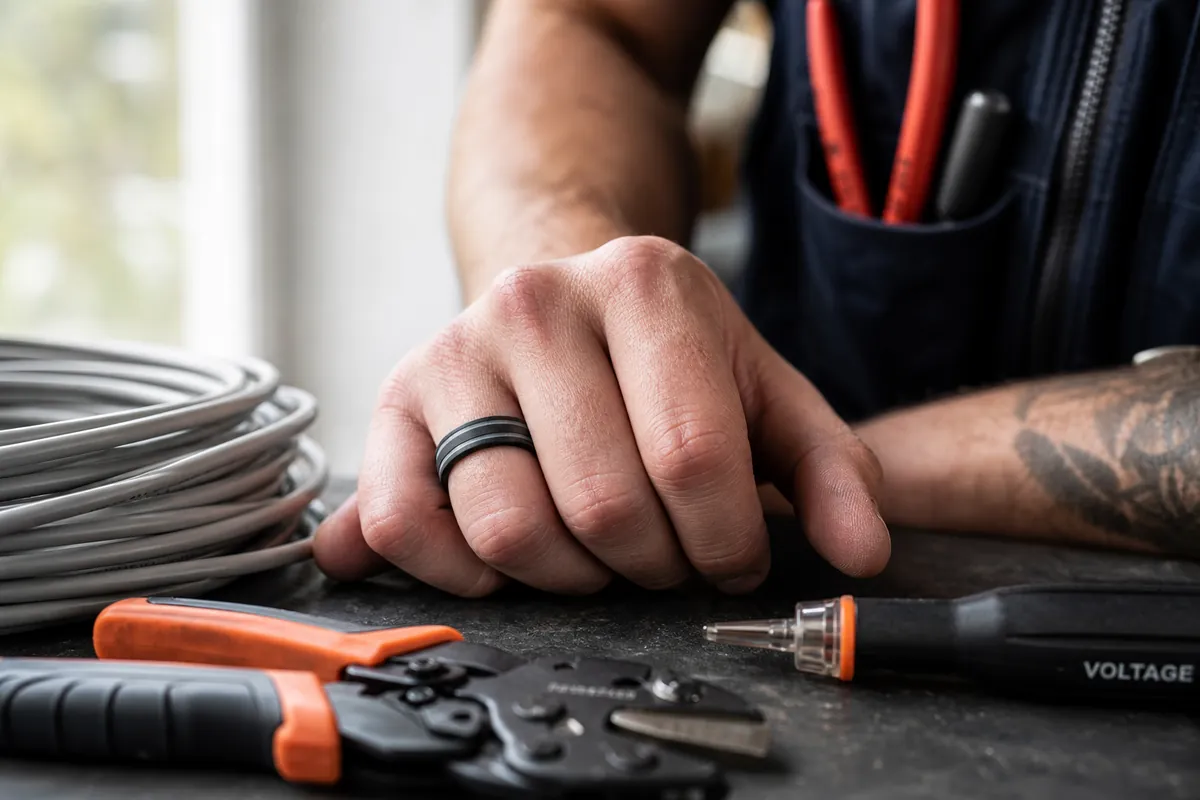
Construction, mining, and trade work exposes rings to oils, greases, cement, and fine dust — often in combination. Standard soap and water handles most of it, but grease and oil may need a slightly stronger approach. A few drops of dish soap scrubbed in with a toothbrush is usually enough. Avoid soaking rings in chemical solvents or mineral spirits, even if you are using them to clean your hands.
For those handling fibreglass or resins, it is worth removing the ring entirely for those tasks and cleaning your hands before putting it back on. This protects both your skin and the ring’s surface integrity.
Swimmers and Water Sports
Pool chlorine and saltwater are both relatively gentle on silicone, but prolonged exposure to chlorinated water can, over time, cause slight discolouration of lighter-coloured rings. After swimming, rinse your ring with fresh water and allow it to dry. For ocean swimmers in Australia — particularly those surfing in the tropics where sunscreen application is heavy — rinse off sunscreen residue promptly, as titanium dioxide and zinc oxide in sunscreens can leave a white residue in ring grooves.
If you are purchasing a silicone ring for water sports, darker coloured rings show less discolouration from prolonged pool or ocean use and are a practical choice for regular swimmers.
Runners and Endurance Athletes
Sweat is the primary culprit for active runners. Salty, acidic sweat left on the ring between cleans can cause mild skin irritation in individuals prone to sensitivity. Rinse after every run — it takes seconds and makes a significant difference. If you are training in the Queensland heat or the NT, where sweat output is extreme, consider doing a quick rinse at the post-run water tap before heading home.
How Long Does a Silicone Ring Last With Proper Care?
A well-maintained silicone ring from a quality manufacturer will typically last 2–5 years with consistent daily wear. With a proper care routine, some rings last significantly longer. According to manufacturer guidelines from leading silicone ring brands, medical-grade silicone has a lifespan of over a decade in low-stress conditions — daily wear simply introduces more mechanical stress.
Factors that affect longevity:
- Cleaning frequency — regular cleaning removes abrasive particles before they degrade the inner surface
- Chemical exposure — harsh solvents, bleach, and certain industrial chemicals dramatically shorten silicone lifespan
- UV exposure — sustained UV exposure (relevant in Australian conditions) can gradually yellow lighter-coloured silicone; darker rings are more UV-stable
- Mechanical stress — repeated extreme stretching weakens the material over time
- Heat exposure — regularly subjecting the ring to high heat (car engine work, welding proximity) degrades silicone faster than ambient wear
The practical upside: silicone rings are among the most affordable ring options on the Australian market, which means replacing a ring after 2–3 years of heavy active use is a low-cost investment. Browse the Helix Rings active lifestyle collection to find your next ring.
When to Replace Your Silicone Ring
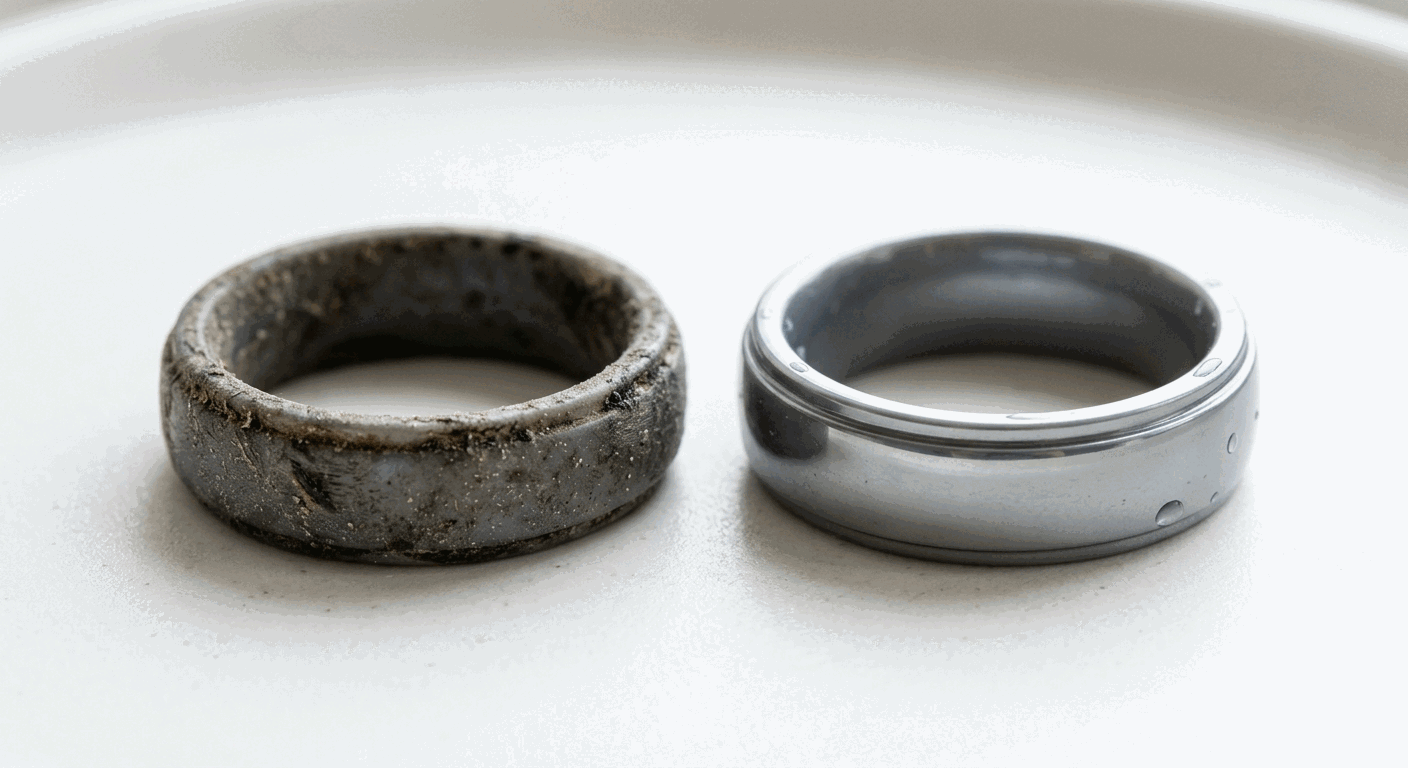
Even with excellent care, silicone rings reach the end of their useful life. Here are the clear signs it is time to replace yours:
- Visible cracking or tearing — any crack is a structural failure; the ring can no longer protect against degloving or entanglement injuries
- Persistent odour that cleaning cannot remove — indicates bacteria has embedded deeply into micro-surface degradation
- Significant loss of elasticity — if the ring no longer springs back to its original shape after removal, the silicone compound has fatigued
- Discolouration that transfers to skin — rare with quality rings, but if this occurs, discontinue use immediately
- Ring no longer fits correctly — fingers change size over time; a ring that is too loose or uncomfortably tight should be replaced
Browse the full Helix Rings collection to find your replacement. For couples, the couples silicone ring sets offer matching pairs at excellent value.
Frequently Asked Questions
Can I clean my silicone ring with rubbing alcohol?
Yes, isopropyl alcohol (rubbing alcohol) is safe for occasional use on silicone rings. It effectively kills bacteria and removes surface contamination. Apply with a cloth or cotton pad, allow to air dry completely before wearing. Do not use acetone-based products — acetone degrades silicone and is not a safe substitute.
How often should I clean my silicone ring if I exercise daily?
If you exercise daily, rinse your ring under warm water after every session and do a thorough soap-and-water clean every 2–3 days. A quick post-workout rinse takes under 30 seconds and prevents sweat, chalk, and oils from embedding in the ring’s surface texture over time.
Will chlorine damage my silicone ring?
Occasional pool swimming does not significantly damage a quality silicone ring. However, prolonged or daily chlorine exposure over months can cause gradual yellowing or subtle surface changes in lighter-coloured rings. Rinsing with fresh water after every swim minimises this effect. Darker-coloured silicone rings show less visible chlorine impact.
Can I put my silicone ring in the dishwasher?
No. Dishwashers combine high heat and harsh detergents — both of which degrade silicone faster than normal wear. A quick hand wash with mild soap takes 30 seconds and is far more effective. Ultrasonic jewellery cleaners designed for metal rings are also not recommended for silicone.
My silicone ring has developed a smell. How do I fix it?
Soak the ring in a solution of warm water and white vinegar (1 part vinegar to 3 parts water) for 15–30 minutes, then scrub with a soft toothbrush and rinse thoroughly. If the odour persists after two treatments, the ring may have bacteria embedded in surface micro-degradation and it is time to replace it.
How do I know if my silicone ring needs to be replaced?
Replace your ring if you notice cracks, tearing, persistent odour that cleaning will not remove, significant loss of elasticity, or discolouration that transfers to your skin. A ring that no longer fits correctly should also be replaced rather than modified to fit.
References & Sources
- Safe Work Australia. Workplace hazards. Retrieved from https://www.safeworkaustralia.gov.au/safety-topic/hazards
- Australasian College of Dermatologists. (2024). Contact dermatitis and occupational skin conditions. Retrieved from https://www.dermcoll.edu.au/atoz/contact-dermatitis/
Last updated: March 2026. This guide is reviewed periodically for accuracy.