Best Silicone Rings for Motorcycle Riders: Grip, Vibration and Safety
What a Riding Ring Actually Does
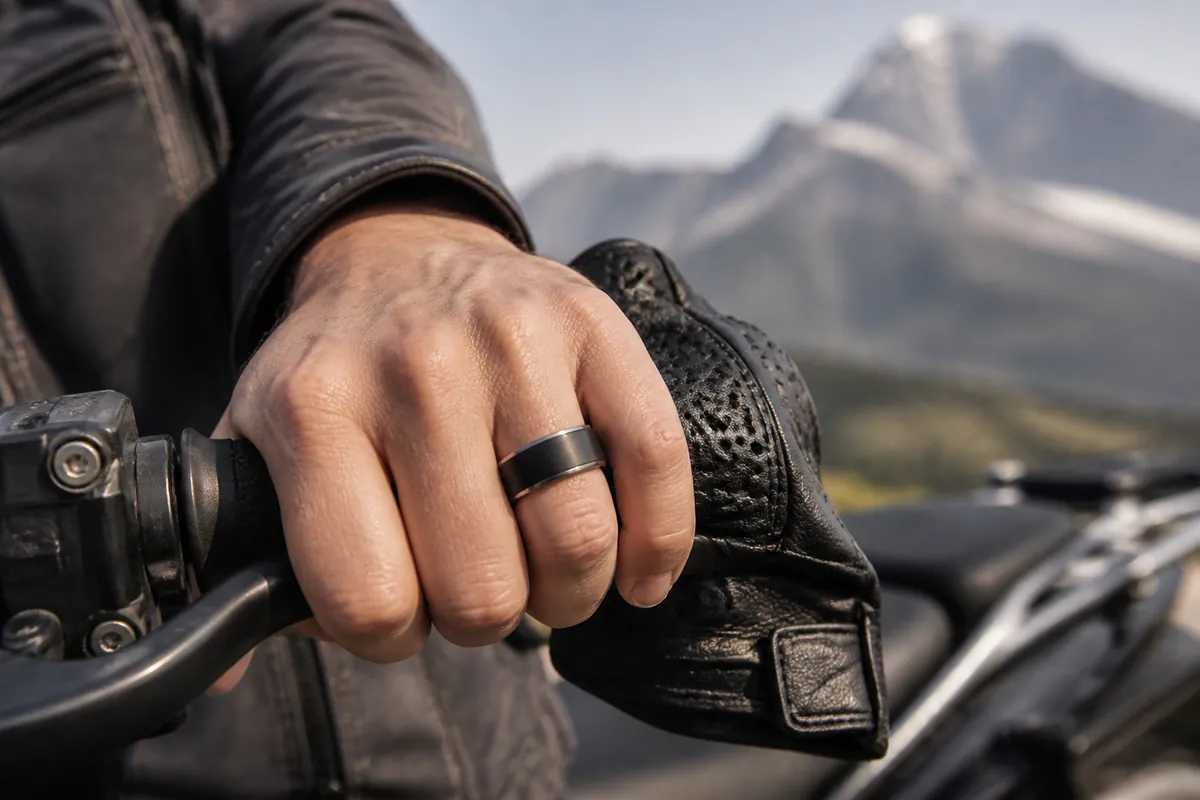
If you’ve ever pulled a metal wedding band off after a long ride and found a red groove pressed into your finger, you already know why riders switched to silicone. A silicone ring for motorcycle riders isn’t a fashion statement first, it’s a piece of gear that has to survive vibration off the handlebars for hours, grip under sweaty gloves, and, in the worst case, come off your finger in a fraction of a second rather than crushing it.
That last point is the one most people don’t think about until someone tells them a story. Metal rings and machinery have a long, ugly history together. Mechanics, tradies and riders have all lost fingers to a ring catching on something while the rest of the hand kept moving. The medical term is a ring avulsion injury, and it’s exactly as bad as it sounds (source below). A motorcycle grip, a crash barrier, a chain guard, a boot peg, any of these can catch a ring in a split second. Silicone bands are built to stretch and tear rather than hold their shape under that kind of force, which is the whole point.
Beyond the safety angle, silicone just behaves better on a bike. It doesn’t conduct heat the way titanium or steel can when you’ve been sitting in western Queensland sun for three hours. It doesn’t clink against the tank when you’re doing a walk-around check. And because it’s soft, it won’t chew up the inside of a leather glove the way a hard metal edge will over a few thousand kilometres.
Choosing the Right Ring for You
Not every silicone ring is built the same, and riders have different priorities than someone who just wants a gym-safe band. Here’s what actually matters once you’re thinking about handlebars, throttle grip and long stints in the saddle.
Fit and thickness
Too loose and it’ll spin under your glove all day, which gets irritating fast and can bunch up leather at the knuckle. Too tight and it’ll dig in once your hands swell a little on a hot ride, which happens to almost everyone after an hour or two in the sun. Aim for snug enough that it doesn’t rotate on its own but loose enough to slide off with a firm tug if you needed to.
Breakaway design
This is the feature that separates a genuine riding ring from a cheap novelty band. Segmented or breakaway silicone rings are engineered to split apart under a set amount of force, rather than stretching and staying intact like a solid loop can. If snag safety is your main reason for switching from metal, a breakaway style is worth the extra few dollars.
Texture and grip
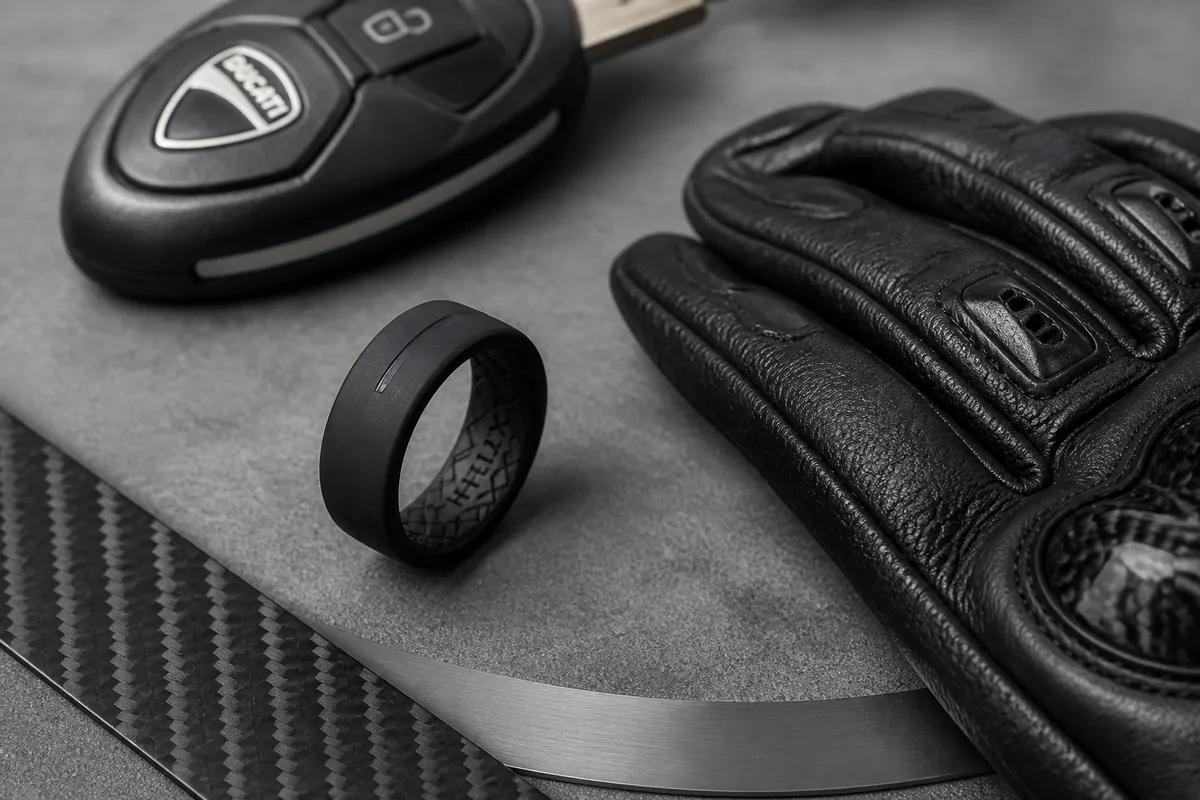
A smooth band can slide against your palm inside a glove, especially once you start sweating. Textured or ribbed profiles hold their position better and give you a bit more tactile feedback when you’re working the clutch. Browse the full silicone ring range and you’ll notice the texture options vary quite a bit between models, so it’s worth trying a couple before committing to one for daily riding.
Colour and visibility
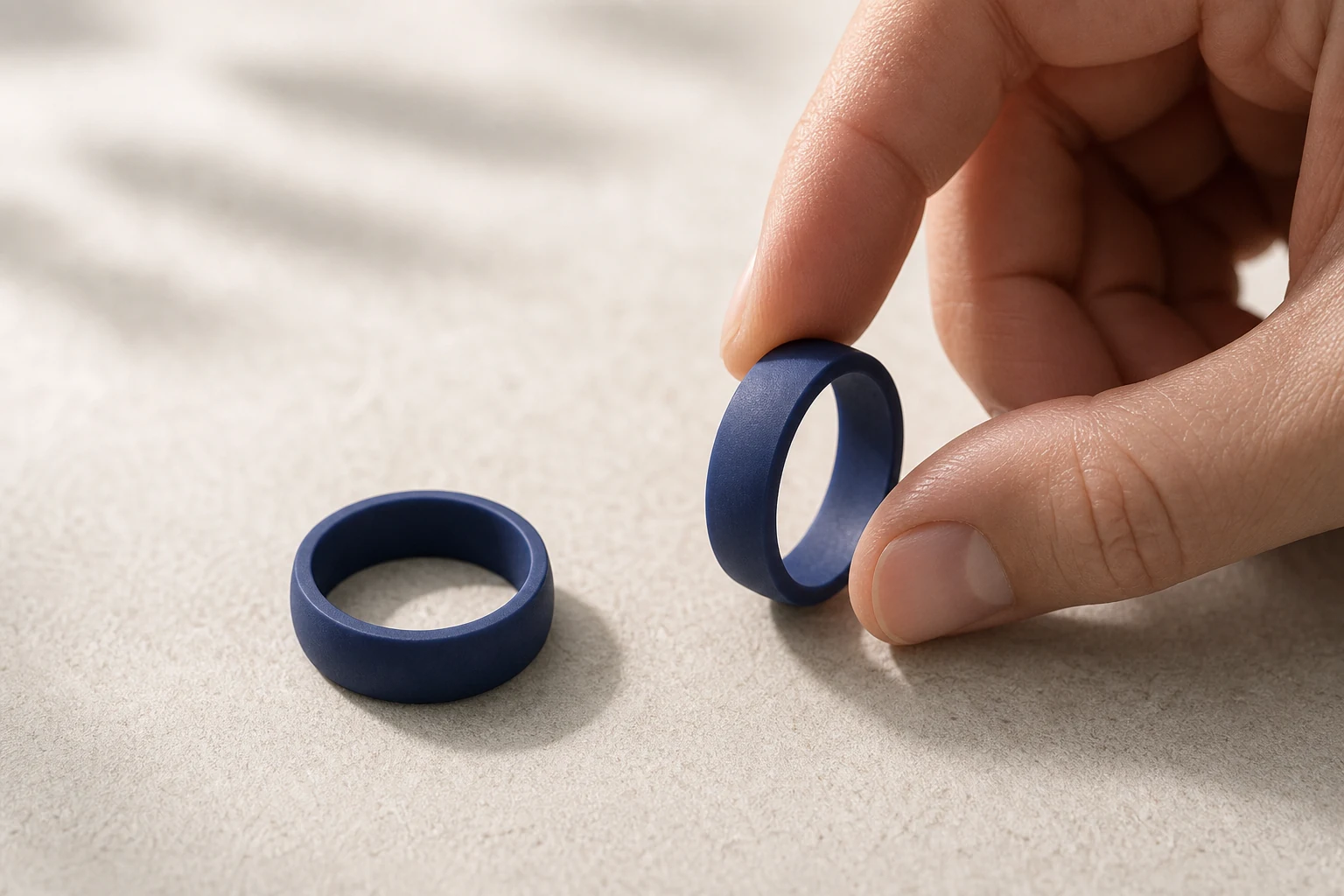
Practical, but real: a black band disappears against black gloves and a black tank, so if you ever need to check your own hand quickly (say, after a spill) a contrasting colour is genuinely easier to spot. Riders who want something that stands out tend to go for the blue silicone rings or the grey silicone rings, both of which read clearly against dark riding gear without looking loud off the bike.
Top Styles and Options
Once you know what to look for, the actual shopping part is straightforward. Here’s how the main categories stack up for riders specifically.
Classic black bands
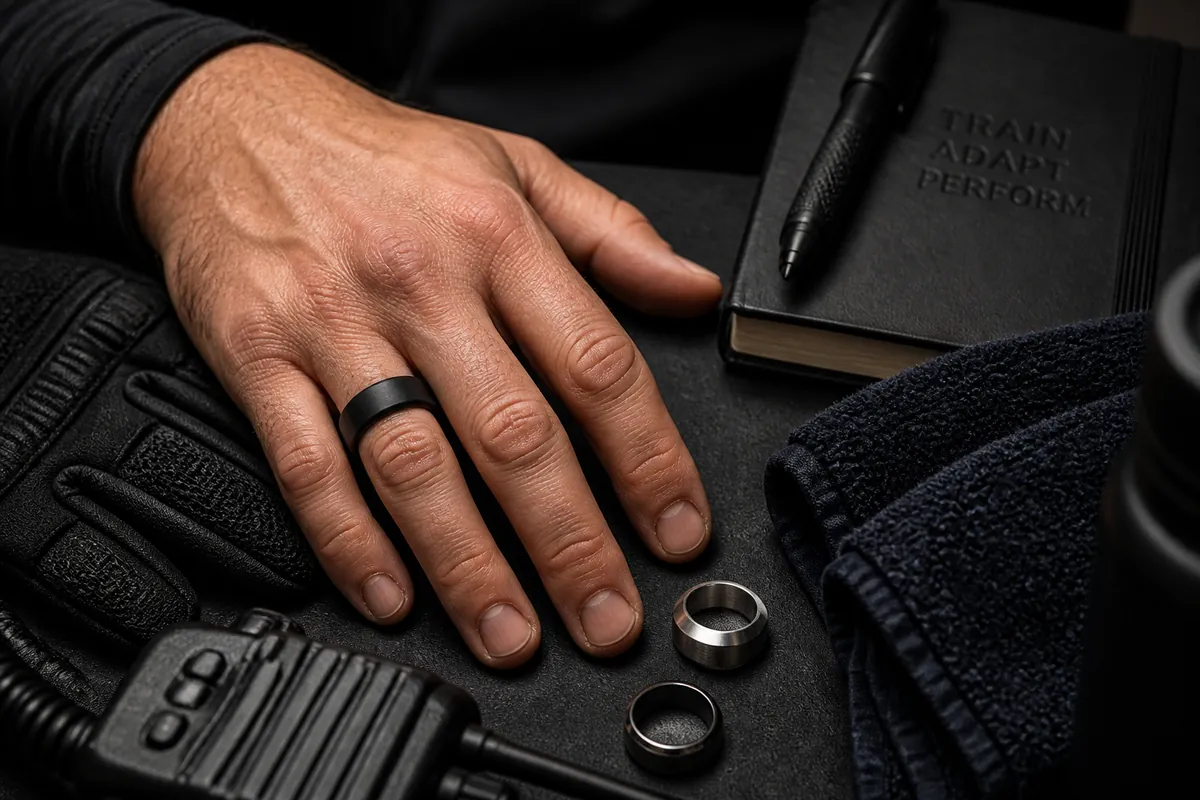
Still the most popular pick, and for good reason: it matches gloves, boots and most bike paint without a second thought. The black silicone rings collection covers everything from a plain low-profile band to slightly domed styles that feel closer to a traditional wedding ring.
Men’s riding-specific cuts
If you want something built around a broader hand and thicker finger, which is common among riders who also work with their hands during the week, the men’s silicone rings range runs wider sizing and slightly heavier profiles that hold up to daily glove-on, glove-off wear.
Multi-pack sets
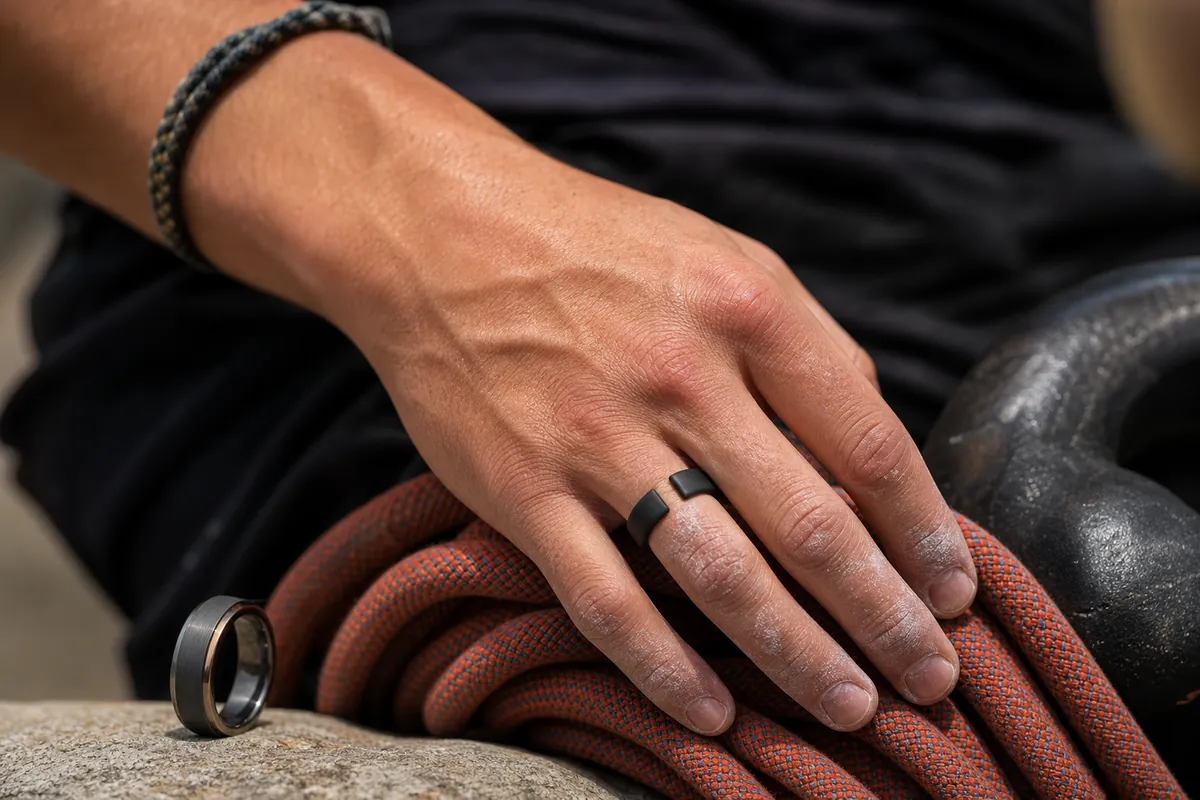
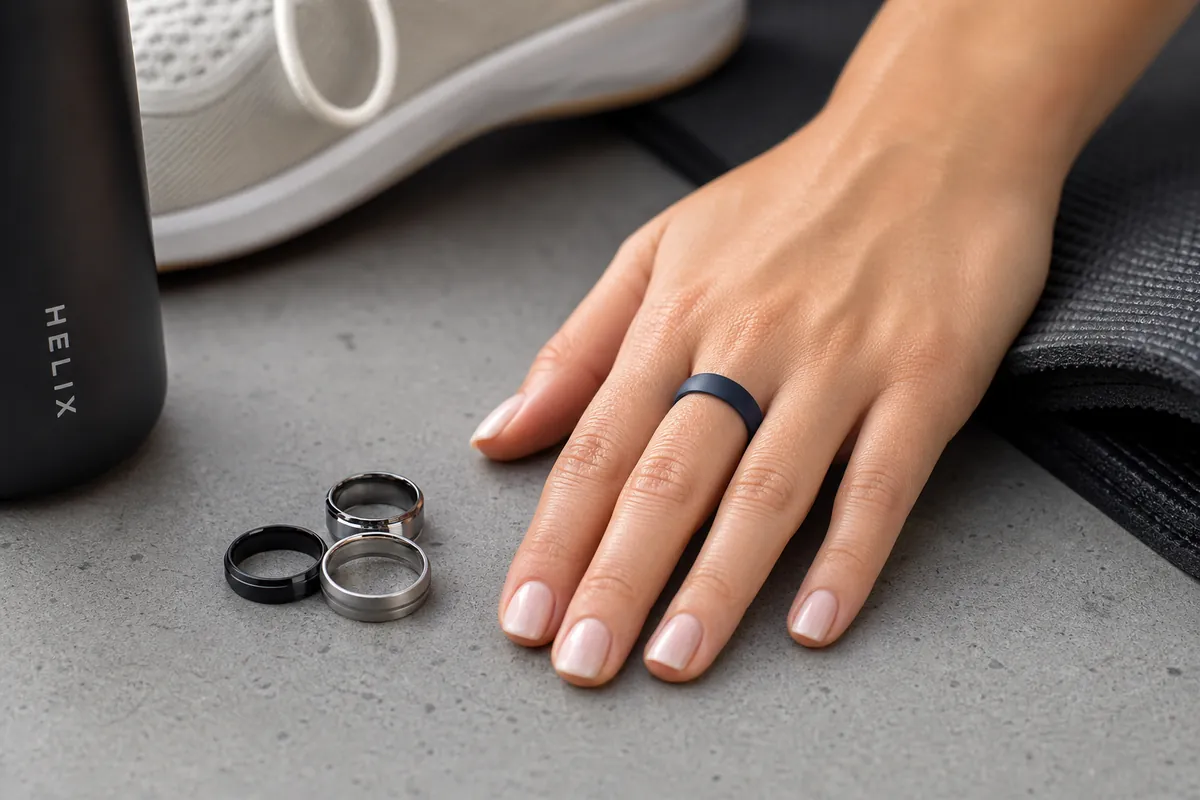
Honestly, this is what most riders end up buying. A ring pack gets you a few colours and textures for less than buying single rings separately, so you can keep one on the bike, one for the gym, and one as a spare in your jacket pocket. Given how easy these are to lose, having a spare on hand saves you scrambling before a weekend ride.
Something with a bit more weight
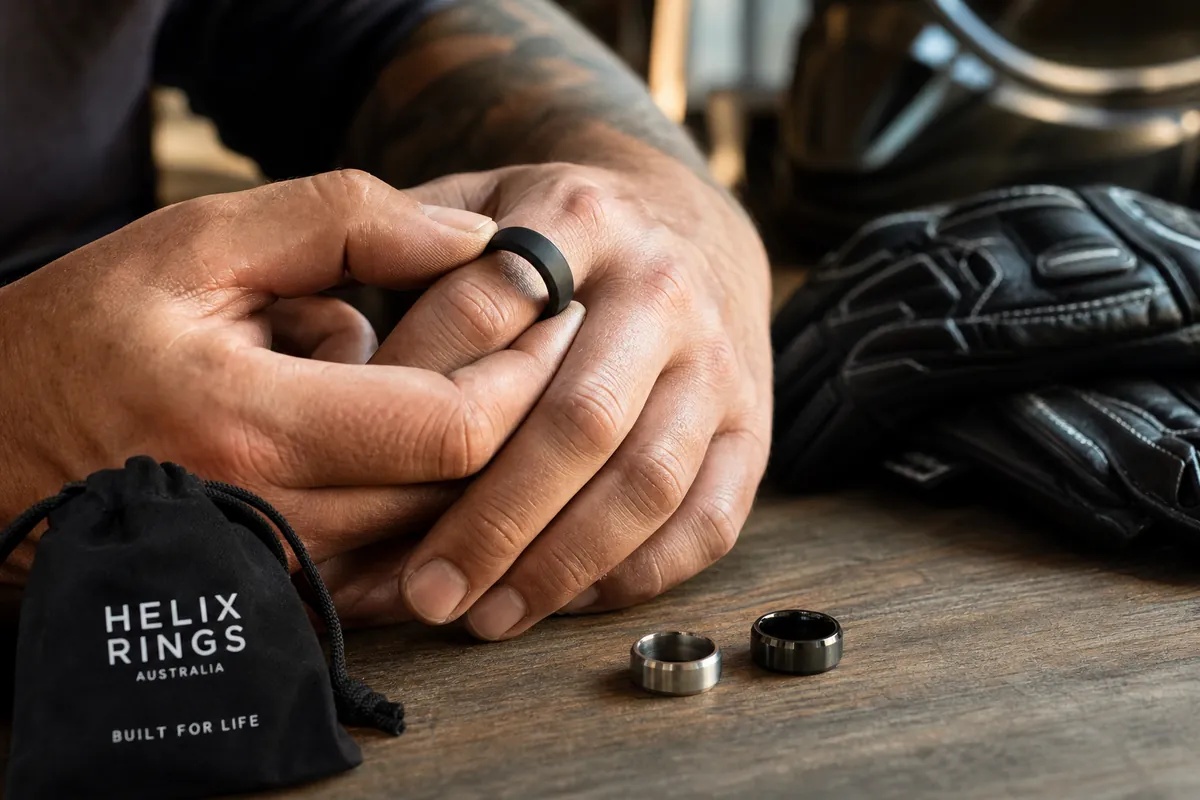
Not every rider wants silicone all the time. For date nights or off the bike, a lot of our customers pair their everyday silicone band with a custom titanium ring they wear when they’re not throwing a leg over the seat. Titanium won’t flex the way silicone does, so it’s not what you want for the actual ride, but it’s a solid option for everything else.
What to Consider Before Buying
A few practical things trip riders up when they first switch over from metal, so it’s worth going in with eyes open.
Sizing runs differently to metal
Silicone stretches, so a size that feels perfect in the packet can loosen slightly after a few weeks of wear. Measure your finger at the end of the day when it’s slightly swollen from heat or riding, not first thing in the morning when it’s at its smallest.
Check the material grade
Cheap novelty rings from a servo counter or a random online marketplace are often a lower-grade silicone that can crack, discolour or go tacky after sun exposure. Medical-grade or platinum-cured silicone holds its shape and colour a lot longer, which matters if you’re wearing it every single ride, all year.
Replace it more often than you’d think
Silicone degrades with UV exposure and repeated stretching. Most riders get somewhere between six months and two years out of a ring depending on how much sun and heat it copes with, which is honestly not bad for something that costs a fraction of a metal band. Keep an eye on the full ring range so you know what to grab when it’s time to swap one out.
Don’t ignore the breakaway rating
If a listing doesn’t mention how the ring behaves under snag force, assume it’s a solid, non-breakaway band. That’s fine for casual wear, but if you’re specifically buying for riding safety, look for products that explicitly call out a breakaway or segmented construction.
Tips From the Experts
A few things we hear repeatedly from long-time riders and gear shop staff who deal with this daily.
First, take the ring off before you glove up if you’re doing anything mechanical to the bike, chain adjustments, brake bleeds, that sort of thing. Silicone is safer than metal, but “safer” isn’t “immune,” and a segmented ring can still catch under the wrong angle of force.
Second, rotate two rings rather than running one into the ground. Riders who keep a spare in their jacket or tank bag aren’t being precious, they’re just avoiding the scenario where a ring snaps mid-trip and they’ve got nothing to replace it with until they’re home.
Third, wash it. Sweat, sunscreen and road grime build up in the texture grooves faster than people expect, and it’s genuinely just soap and water, no special treatment needed. A ring that looks grubby is also one that’s losing grip inside your glove.
Finally, don’t buy on size alone. Handle a few in person if you can, or check the sizing chart carefully online, because a ring that’s technically the right diameter but the wrong band width can still feel wrong on the bars after twenty minutes.
Frequently Asked Questions
What is the best silicone ring for riders?
A breakaway or segmented silicone band in a snug, textured fit is the safest bet for anyone spending real hours on a bike. It gives up grip and shape under enough force rather than staying intact, which is exactly what you want if it ever catches on a lever or crash bar.
How do I know which ring style suits me?
Start with your finger size measured at the end of the day, then think about how much texture you want against your palm inside a glove. Most riders do well with a mid-width black or dark-coloured band, but if visibility matters to you, a contrasting colour like blue or grey is worth trying.
What should I look for when buying one?
Check the material grade first, medical-grade or platinum-cured silicone lasts far longer in the sun than cheap novelty versions. After that, confirm whether it’s a breakaway design if snag safety is your priority, and make sure the sizing chart matches how your finger actually sits after riding.
Are there budget-friendly options available?
Yes, multi-packs are usually the best value since you get several colours and textures for less than the cost of buying single rings. It also means you’ve always got a spare in your jacket for the day one finally gives out.