Silicone Wedding Bands for Nurses and Healthcare Workers
Why Nurses Are Switching to Silicone Rings
Ask any nurse who’s worked a full shift with a metal band on and you’ll get the same story: the ring rubs raw under a glove after four hours, or it slides off and disappears into a bed somewhere at 2am. A silicone ring for nurses solves a problem that’s specific to clinical work and doesn’t really exist anywhere else. You’re washing your hands forty or fifty times a shift, gloving and de-gloving constantly, and moving patients, trolleys and equipment with your hands the whole time. A hard metal band just isn’t built for that.
The infection control angle is the one that gets talked about most, and for good reason. Metal rings, especially ones with stones or engraved detail, hold onto moisture and bacteria in the crevices around the band. The World Health Organization’s hand hygiene guidance specifically flags rings as a barrier to effective hand washing because they trap microorganisms that alcohol-based rubs and soap don’t fully reach (see the WHO reference below). Silicone doesn’t have those crevices, it’s a smooth, single piece of material, so there’s nowhere for anything to hide.
There’s also the practical safety side. Metal bands don’t compress. If your ring gets caught on a bed rail, a wheelchair, or a piece of equipment while you’re moving a patient, something has to give, and it’s usually your finger. Degloving injuries from caught rings are a well-documented occupational hazard in physically demanding jobs, and healthcare work involves exactly that kind of constant hands-on movement. Silicone rings are designed to break or stretch under load instead of holding firm, so the injury risk drops considerably.

Then there’s just comfort. A well-made silicone band moves with your hand instead of against it. You don’t feel it under nitrile gloves, it doesn’t click against a stethoscope or a keyboard, and it doesn’t leave a metal taste of cold on your skin during a night shift in an air-conditioned ward. Once nurses make the switch, most don’t go back to metal for work, even if they keep the original wedding ring for outside the hospital. If you want to browse what’s actually out there, the full range of silicone rings gives you a sense of how far the category has come from the plain rubber bands people picture.
Choosing the Right Silicone Ring
Not all silicone rings are made the same, and the difference matters more when you’re wearing one twelve hours a day, five or six shifts a week. Here’s what actually separates a ring that lasts from one that’s in the bin within a month.
Fit first, everything else second
Silicone has a bit of give, so people assume sizing doesn’t matter as much as it does with metal. It does. Too tight and it’ll dig into your finger every time you clench a fist to draw blood or reposition a patient. Too loose and it’ll spin around, catch on gloves, or slide off entirely when your hands are slippery from hand sanitiser (which, on a ward, is most of the day). Measure your actual ring size rather than guessing off an old band, since swelling, weight changes and even the time of day can shift finger size slightly.
Breathable design over solid rubber
A lot of the newer silicone rings use a honeycomb or perforated internal structure rather than being solid all the way through. This matters a huge amount in healthcare settings because it lets air circulate and sweat evaporate instead of pooling under the band. Solid silicone against skin for twelve hours straight, especially under a glove, is a recipe for irritation and, ironically, the exact bacterial build-up you were trying to avoid by ditching the metal ring in the first place.
Medical-grade silicone, not the cheapest option
There’s a real gap between food-grade or medical-grade silicone and the low-cost silicone used in novelty bands. The cheaper stuff can degrade faster with repeated exposure to alcohol-based sanitiser, which is obviously a problem if you’re using sanitiser every fifteen minutes. Look for rings that specify medical-grade or hypoallergenic silicone. Browsing men’s silicone ring styles or the women’s equivalents will usually show you the material spec up front if the brand is being straight with you.
Top Styles and Colour Options
Once you’ve settled on fit and material, the fun part is actually picking a style that feels like a wedding band rather than a hospital wristband. The category has moved well past the plain black rubber loop most people still picture.
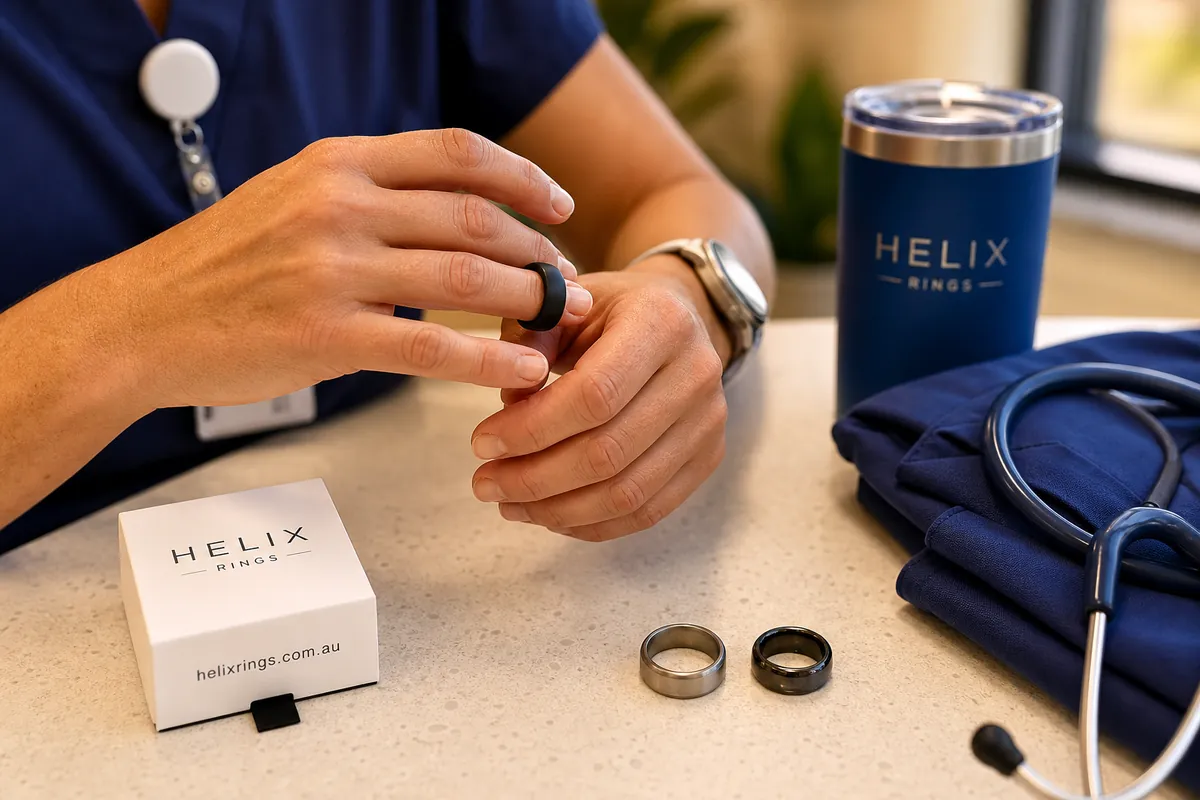
Black is still the most popular pick for work because it’s neutral, doesn’t show scuffs from constant hand washing, and looks close enough to a traditional band that patients and colleagues don’t clock it as anything unusual. The black silicone rings range covers everything from plain matte bands to ones with a subtle metallic edge.
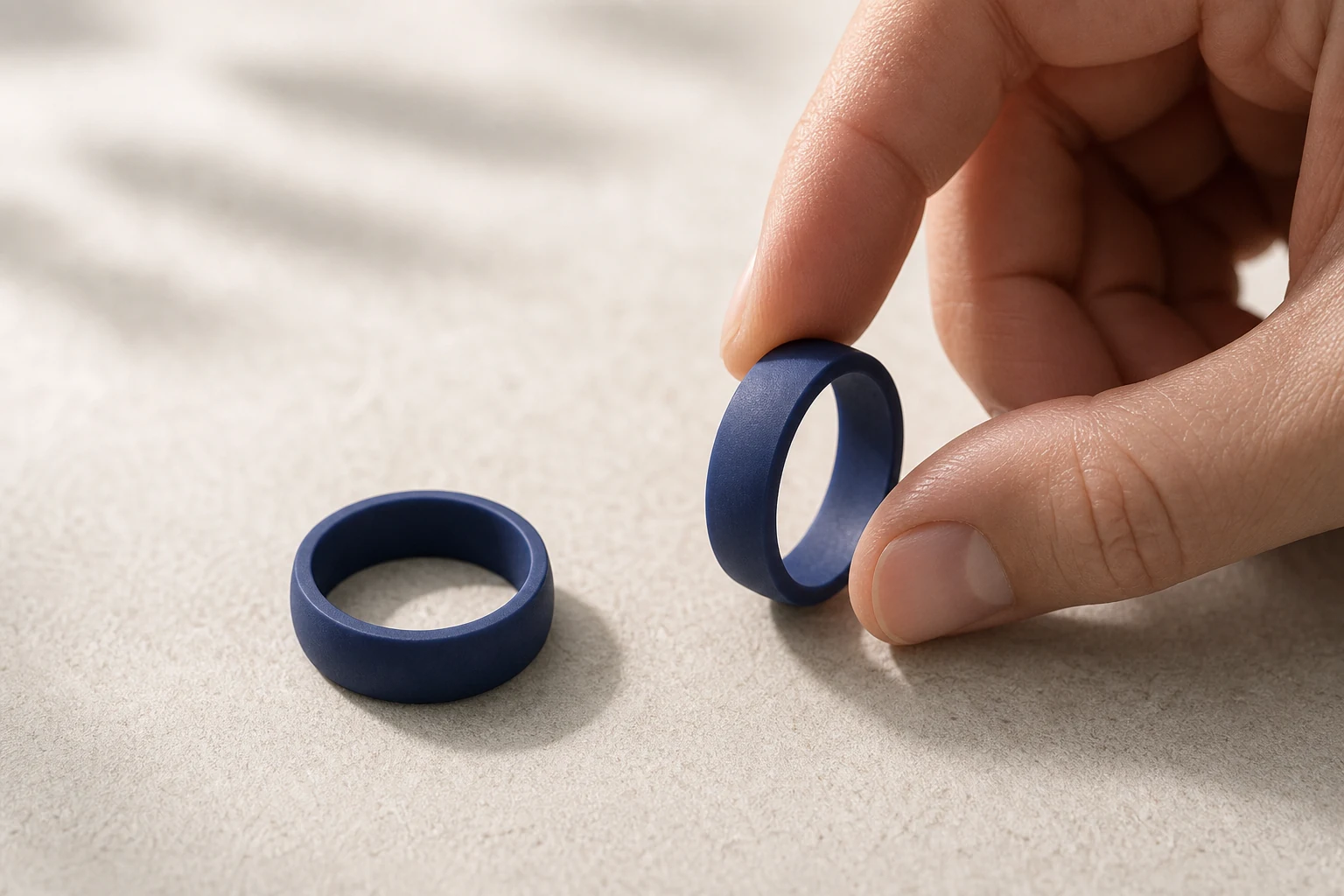
Blue is the other big one for hospital staff, partly because it reads as calm and professional rather than casual, and partly because a lot of scrubs and lanyards already sit in that colour family so it doesn’t clash. Have a look through the blue silicone rings if you want something with a bit more personality than black without going bright.
Grey sits in between the two, muted enough for a clinical setting but with a bit more visual texture than a flat black band, particularly in the brushed or marbled finishes. The grey silicone rings collection has a few of these if you want something that still reads as understated.
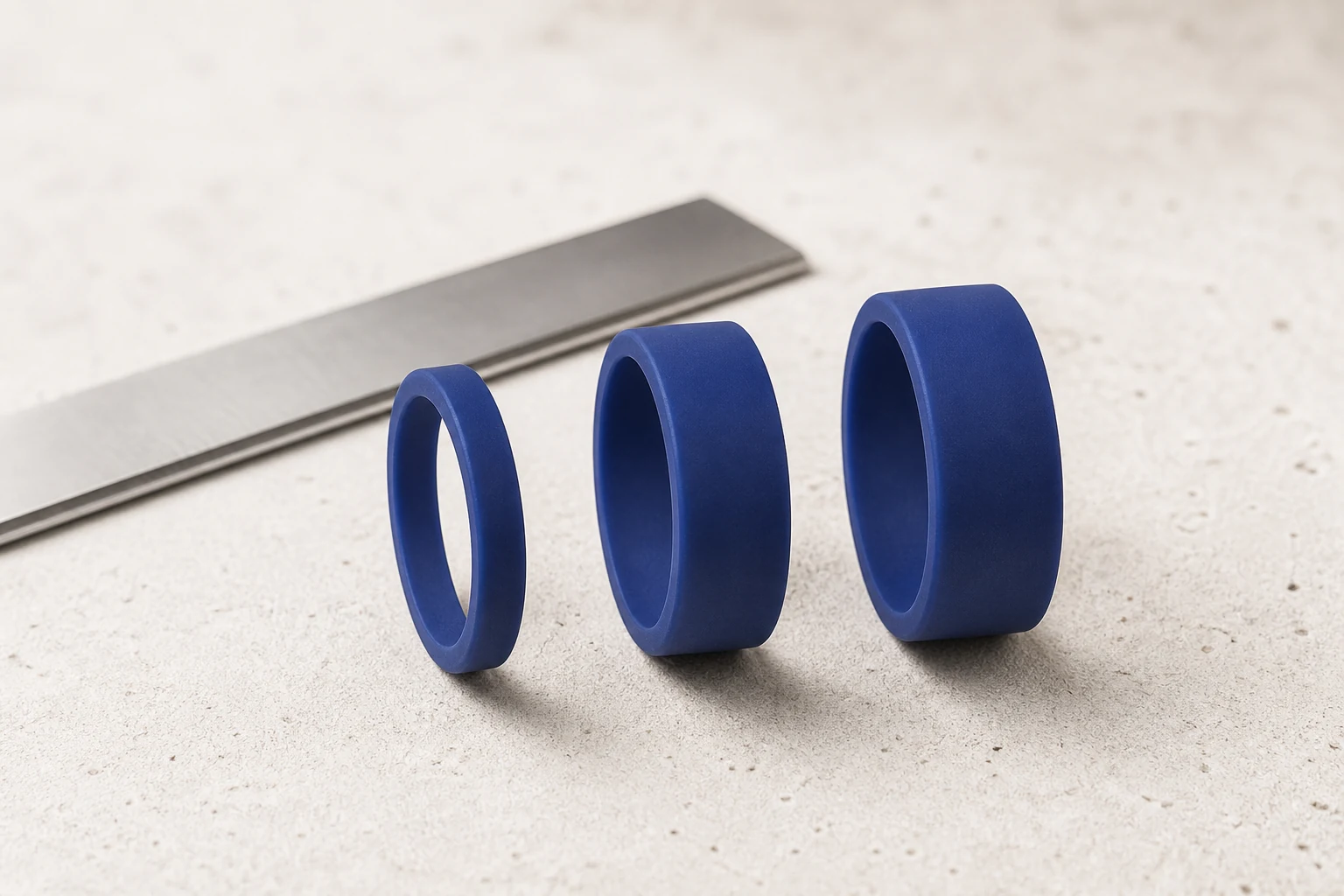
Beyond colour, there’s also the question of finish. Thin, stackable bands are popular with nurses who want something that barely registers under a glove, while others prefer a slightly wider band that feels closer to their actual wedding ring in weight and presence. If you and your partner both work shifts, some couples buy a set together rather than choosing separately, which is where the ring packs come in handy since you get a few widths and colours to test out which one actually survives daily wear before committing to just one.
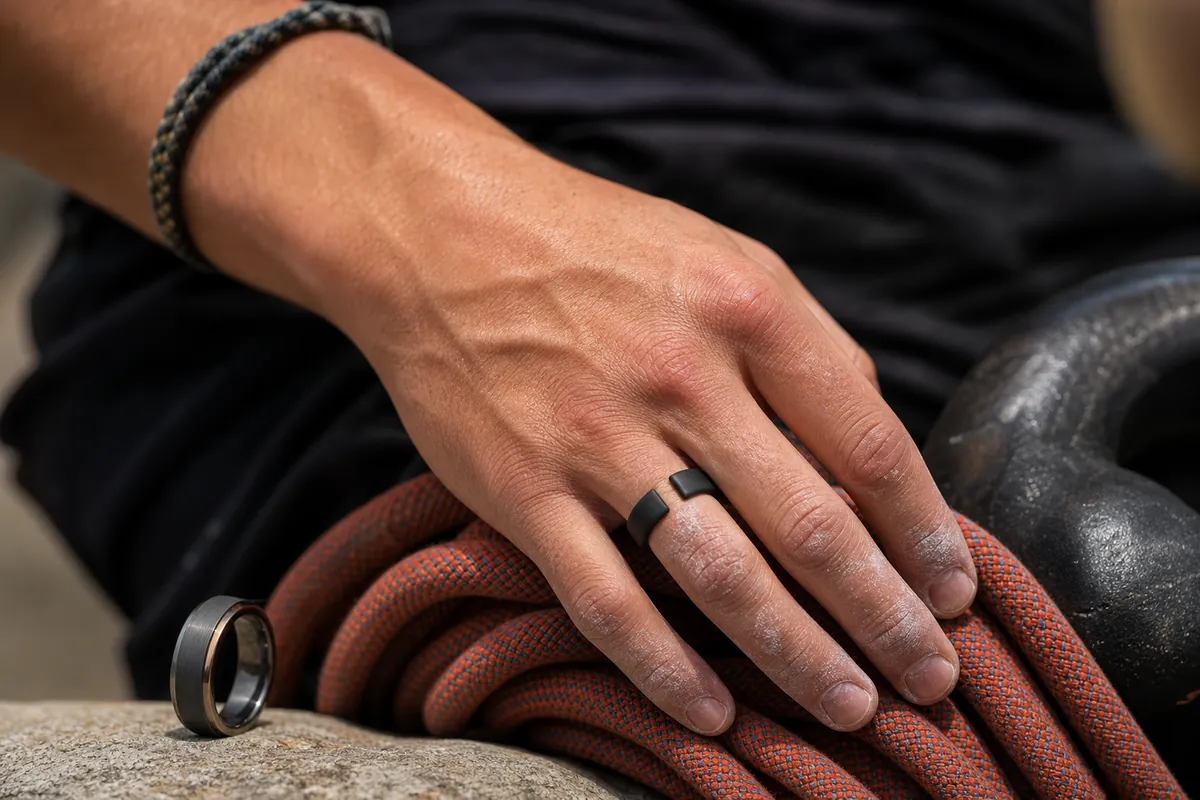
It’s also worth mentioning that silicone isn’t the only material worth considering if you want something with a bit more permanence for days off. Titanium is hypoallergenic, doesn’t corrode from repeated sanitiser exposure, and holds up to knocks better than most metals, which makes custom titanium rings a reasonable option for your “off duty” band while silicone covers the shift work. A lot of nurses end up with two rings for exactly this reason: one for the ward, one for everywhere else.
What to Check Before You Buy
A few things separate a ring you’ll actually keep wearing from one that ends up in a drawer after a fortnight.
Check the hospital’s own policy first. Some infection control policies are stricter than others about jewellery on the ward, particularly in surgical, ICU or neonatal settings. Most hospitals that restrict metal rings are fine with silicone because it’s non-porous and can be removed instantly for scrubbing in, but it’s worth a quick check with your infection control team rather than assuming.
Think about how it holds up to alcohol gel, not just soap. You’ll be using hand sanitiser far more than soap and water most shifts, and lower-grade silicone can start to feel tacky or slightly degrade with that much alcohol exposure over months. Medical-grade silicone is built to take it.
Don’t ignore width and thickness. A band that’s too thick can genuinely interfere with glove fit, creating a pressure point that becomes uncomfortable by hour eight. Thinner bands, generally in the 4 to 6mm range, tend to work best for anyone gloving up regularly.
Replace it more often than you’d replace metal. Silicone isn’t designed to last decades the way a metal band is. Most manufacturers suggest replacing a silicone ring every six to twelve months of daily wear, especially in a job with this much hand washing and friction. Buying two or three at once (which is exactly what the multi-packs are for) works out cheaper than buying single rings on repeat.
Tips From Nurses Who Wear Them
A few things that come up again and again from healthcare workers who’ve been wearing silicone for years rather than months.
Keep a spare in your locker. Bands do occasionally split or lose their shape, usually months after you’d expect, and running a full shift ring-free after years of wearing one feels strange enough that most people would rather swap it out immediately.
Rotate two rings rather than wearing one constantly. This isn’t really about the ring wearing out faster, it’s about giving the silicone (and your skin underneath it) a chance to fully dry out between wears rather than staying damp under a glove twelve hours a day, five days straight.
Size down slightly if you’re between two sizes, rather than up. Silicone has enough natural stretch that a slightly snug fit settles in within a day or two, whereas a ring that’s a touch loose will spin and catch from day one and never really improve.
If you’re buying for someone else, like a partner starting their first hospital job, a set from the ring packs is a safer bet than guessing a single size and style, since new nurses often haven’t worked out yet whether they prefer a thin discreet band or something with a bit more presence.
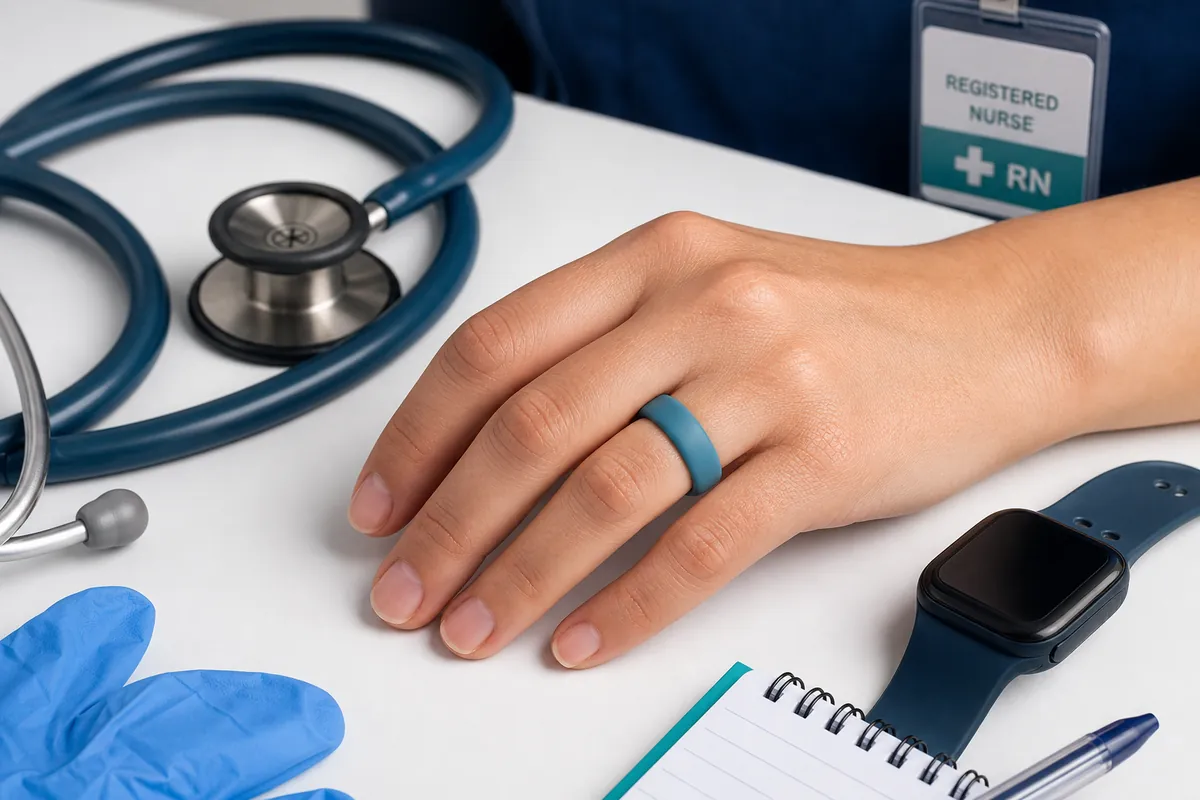
For anyone still weighing up whether it’s worth the switch at all, it helps to browse the full ring range to compare silicone against titanium and tungsten side by side rather than treating it as an either-or decision. Most healthcare workers end up landing on silicone for shift work regardless, simply because nothing else handles the combination of hand hygiene, glove use and constant hand movement as well.
Frequently Asked Questions
What is the best silicone ring for nurses?
The best option is usually a thin, breathable band in medical-grade silicone, somewhere between 4 and 6mm wide so it doesn’t interfere with glove fit. Black and blue tend to be the most practical colours for clinical settings since they don’t show scuffing from repeated hand washing.
How do I know which silicone ring for nurses is right for me?
Start with an accurate finger measurement rather than guessing off an old metal ring, since fit matters more with daily glove use than people expect. From there it’s about matching width and colour to your ward’s dress standards and how much you want the ring to stand out.
What should I look for when buying a silicone ring for nursing shifts?
Look for medical-grade or hypoallergenic silicone, a breathable internal structure rather than a solid slab, and a width that won’t bunch up under nitrile gloves. It’s also worth checking your hospital’s jewellery policy before you buy, just to confirm silicone is fine for your specific ward.
Are there budget-friendly silicone rings for nurses?
Yes, and buying a multi-pack is usually the smarter move financially since silicone rings need replacing every six to twelve months with daily wear anyway. A set covers that turnover at a lower per-ring cost than buying single replacements one at a time.