Silicone Rings for Swimmers: Chlorine, Saltwater and Pool Safety Explained
What a Silicone Swim Ring Actually Is
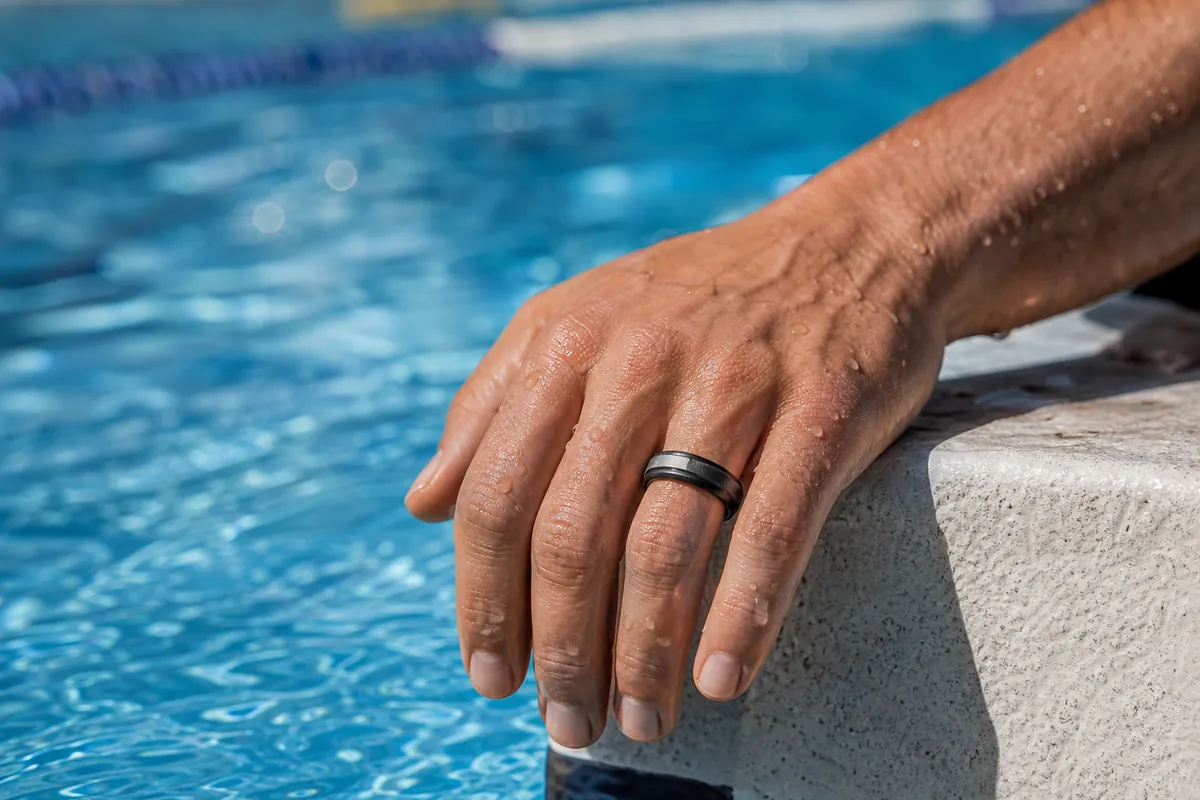
A silicone ring for swimming is exactly what it sounds like: a band made from medical-grade or food-grade silicone rubber instead of gold, platinum or titanium, designed to be worn somewhere a metal ring would be a liability. Pools, especially chlorinated ones, are hard on jewellery. Chlorine reacts with metal alloys, and repeated exposure can pit, discolour or weaken a traditional band over years of laps. Saltwater is arguably worse for costume jewellery and plated pieces because the salt accelerates corrosion and can leave a ring feeling gritty within a few sessions.
Silicone doesn’t corrode. It doesn’t oxidise, it doesn’t tarnish, and it won’t leave a green mark on your finger after a humid swim meet. That’s the whole appeal for lap swimmers, triathletes and anyone who showers, swims and trains in the same ring day after day. The other advantage that doesn’t get talked about enough is safety. A rigid metal band caught on a pool ladder rung, a starting block, or a lane rope can cause a degloving injury, which is about as unpleasant as it sounds. A good silicone band is designed to stretch and release, or in some cases snap cleanly, before that happens.
Not all silicone is equal though. Cheap novelty bands from a $2 shop are usually a lower-grade silicone that goes gummy, picks up a chlorine smell, and yellows within a couple of months. That’s the gap a properly made ring closes, and it’s why people who swim regularly end up replacing a bargain-bin band with something built for the job. If you want a browse of what a well-made version actually looks like, the full silicone ring range is a reasonable place to start comparing.
Choosing the Right Ring for the Pool
Fit matters more for swimmers than almost anyone else wearing a silicone ring. Too tight and it’ll dig in once your fingers swell slightly from warm water or humidity. Too loose and it’ll slide off in the first fifty metres and you’ll be diving for it at the bottom of the lane. Most brands, including Helix, size silicone rings the same way as standard ring sizing, but because silicone has some give, it’s worth going with your true measured size rather than sizing down for a “snug” feel like you might with a hard metal band.
Thickness is the next thing to think about. A thinner band (around 4-6mm) is less noticeable during freestyle and butterfly where your hands are doing most of the work, while a thicker band gives more durability if you’re also wearing it at the gym or doing manual work between swims. If swimming is the only place you wear it, thinner and lighter is usually the better call because you’ll barely notice it under a swim cap glove or during a flip turn.
Breathability is underrated too. Some silicone rings are solid, some have small internal channels or a slightly different weave that lets air and water move rather than pooling underneath. That matters for saltwater swimmers especially, because trapped saltwater against skin for hours is a fast track to irritation. If you’re swimming most days, look specifically for a ring marketed with airflow or breathable channels rather than a flat solid band. The men’s silicone ring collection has a mix of both if you want to compare the feel side by side.
Top Styles and Options
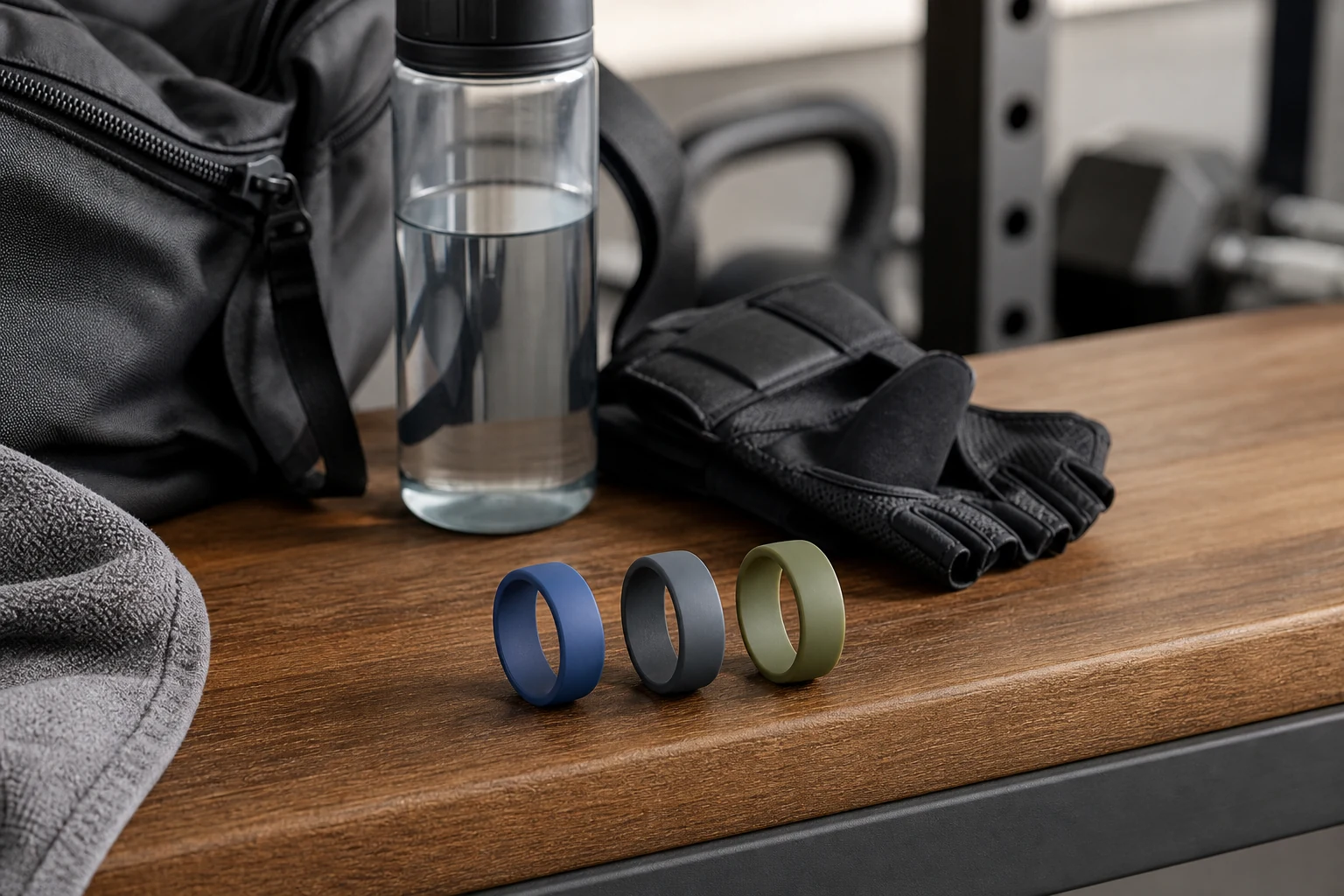
Colour is mostly personal preference, but it does have a practical side for swimmers. Darker colours like black silicone rings hide chlorine staining and general pool grime better than pale tones, which is why they’re the most common choice among people who swim five or six times a week. If you want something with more presence on deck, blue silicone rings are a popular middle ground, especially for anyone who wants their band to actually look like it belongs in the pool rather than trying to pass as a metal ring from a distance.
For something a bit different, green silicone rings and grey silicone rings both do a good job of looking neutral enough for work the next day, which matters if you’re swimming before or after a shift and don’t want to be swapping rings twice a day. On the warmer end of the palette, bronze and brown silicone rings read as more understated jewellery and less “sports gear,” which some people prefer if they’re wearing it as a genuine wedding band replacement rather than purely functional pool kit.
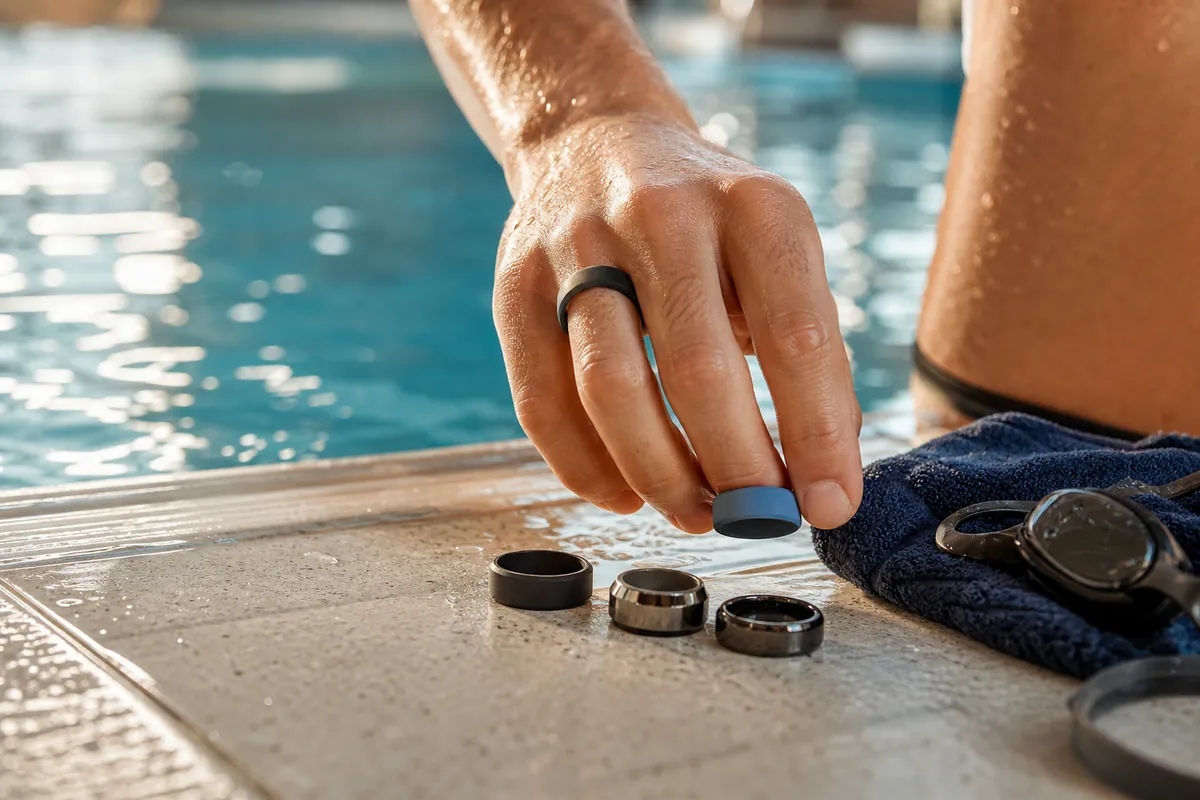
If you’re not ready to commit to one colour, buying a multi-pack is genuinely the smarter move for swimmers, not just a sales gimmick. Chlorine exposure adds up, and having a rotation means no single ring is copping daily damage. The ring packs are built for exactly that: swap one in while another airs out and dries properly, and you roughly double the working life of each individual band.
What to Check Before You Buy
Read the material spec before you buy, not just the marketing copy. “Silicone” on its own isn’t a guarantee of quality: look for medical-grade or food-grade silicone specifically, because that’s the grade that’s been tested against skin irritation and doesn’t leach the way lower grades can when repeatedly exposed to chlorine and heat. The CDC’s guidance on healthy swimming notes that chlorine is a disinfectant working continuously in pool water, which is a fair reminder that anything sitting against your skin in that environment for an hour at a time needs to actually be rated for it, not just water-resistant in the loose sense (CDC, Healthy Swimming).
Avoid rings with metal cores, magnetic inlays or glued-on decorative pieces if pool use is the main job for the ring. Those components are usually the first thing to fail, either through corrosion of the metal core or the adhesive breaking down under repeated wet-dry cycles. A one-piece moulded silicone band with no bonded parts is the more durable option and it’s also the safer one, since there’s nothing rigid inside to catch on equipment.
Check the breakaway rating if it’s listed. Some manufacturers test their rings to release under a specific load, which is the whole point if you’re worried about a ring catching on a ladder, a starting block, or gym equipment between swim sessions. It’s a small detail that a lot of buyers skip past, but it’s the single feature that actually prevents an injury rather than just reducing discomfort. The same catching risk that applies around gym equipment and machinery applies at the pool edge and on deck equipment (Consumer Reports).
Lastly, think about how you’ll actually use it day to day. If you’re swimming saltwater ocean sessions as well as chlorinated pool laps, a ring that’s been tested against both is worth the extra research, because saltwater residue left to dry on silicone can leave a slightly gritty film that chlorine alone doesn’t. Swimming Australia’s general water safety resources are a decent starting point if you want broader context on what’s actually recommended for pool and open water gear (Swimming Australia).
Tips from People Who Actually Swim in Theirs
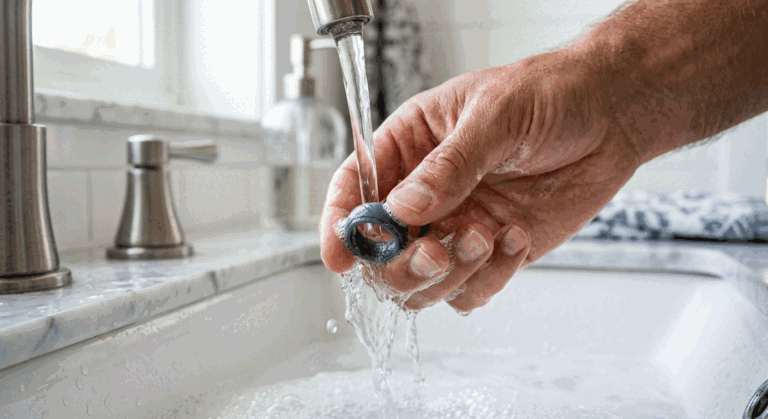
Rinse it every single time, not just when you remember. Chlorine and salt residue left on silicone for hours between sessions is what causes most of the smell and discolouration people complain about. A ten-second rinse under a tap and a pat dry with a towel is enough, you don’t need anything special.
Don’t store it wet in a swim bag. Silicone that sits damp in an enclosed bag for a day or two is basically incubating bacteria, and that’s usually where the smell comes from more than the chlorine itself. Let it air dry fully before it goes back on your finger or into a drawer.
Rotate rings if you swim most days. This is the single biggest thing serious lap swimmers do differently from casual ones. Wearing the same ring every day means it’s never fully drying out between exposures, which shortens its life noticeably. Two rings on a rotation last longer individually than one ring worn constantly, even though the total wear is the same.
Check for stretching or tackiness every few weeks. Good silicone holds its shape for a long time, but if you notice a band feeling looser than it used to or slightly sticky to the touch, that’s your sign it’s breaking down and it’s time to replace it rather than keep pushing it. It’s a cheap swap compared to the alternative of it snapping mid-swim.
If in doubt about sizing or style, it’s worth reading through what other buyers say worked for them on the Helix blog, or just browsing the full site to see the range side by side before deciding. A quick look at the about page also gives a sense of the materials and testing standards behind the rings if that’s something you weigh up before buying.
Frequently Asked Questions
What is the best silicone ring for swimming?
The best option is a one-piece, medical-grade silicone band with no bonded metal parts and a breathable design, since that combination holds up best against repeated chlorine and saltwater exposure. Darker colours like black or grey also tend to show less staining over time, which matters if you’re swimming most days of the week.
How do I know which silicone ring for swimming is right for me?
Start with true finger measurement rather than sizing down, then decide on thickness based on whether you’ll wear it outside the pool too. If you swim often, a thinner, breathable band in a darker colour will generally serve you better day to day than a thicker, decorative style.
What should I look for when buying a silicone ring for swimming?
Check the material grade (medical-grade or food-grade silicone specifically), confirm it’s one-piece moulded with no glued or metal components, and see if it has a listed breakaway rating. Those three details matter far more than colour or brand name for actual pool durability and safety.
Are there budget-friendly silicone rings for swimming?
Yes, and buying a multi-pack is usually the better value move rather than one premium single ring, since you can rotate rings and extend the life of each one. It also means you’re never stuck without a ring while one is drying out after a swim.