Why Electricians Should Avoid Metal Rings on the Job: A Silicone Ring Safety Guide
Why Metal Rings Are a Risk on Site
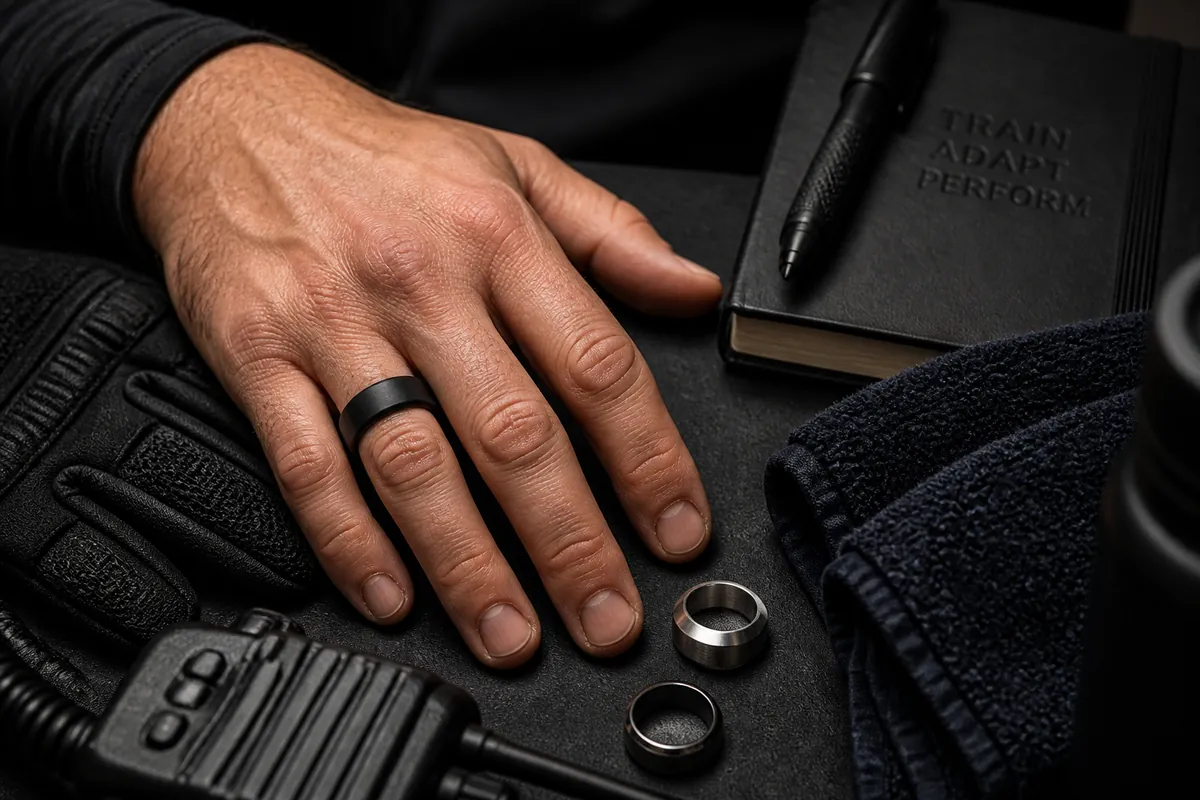
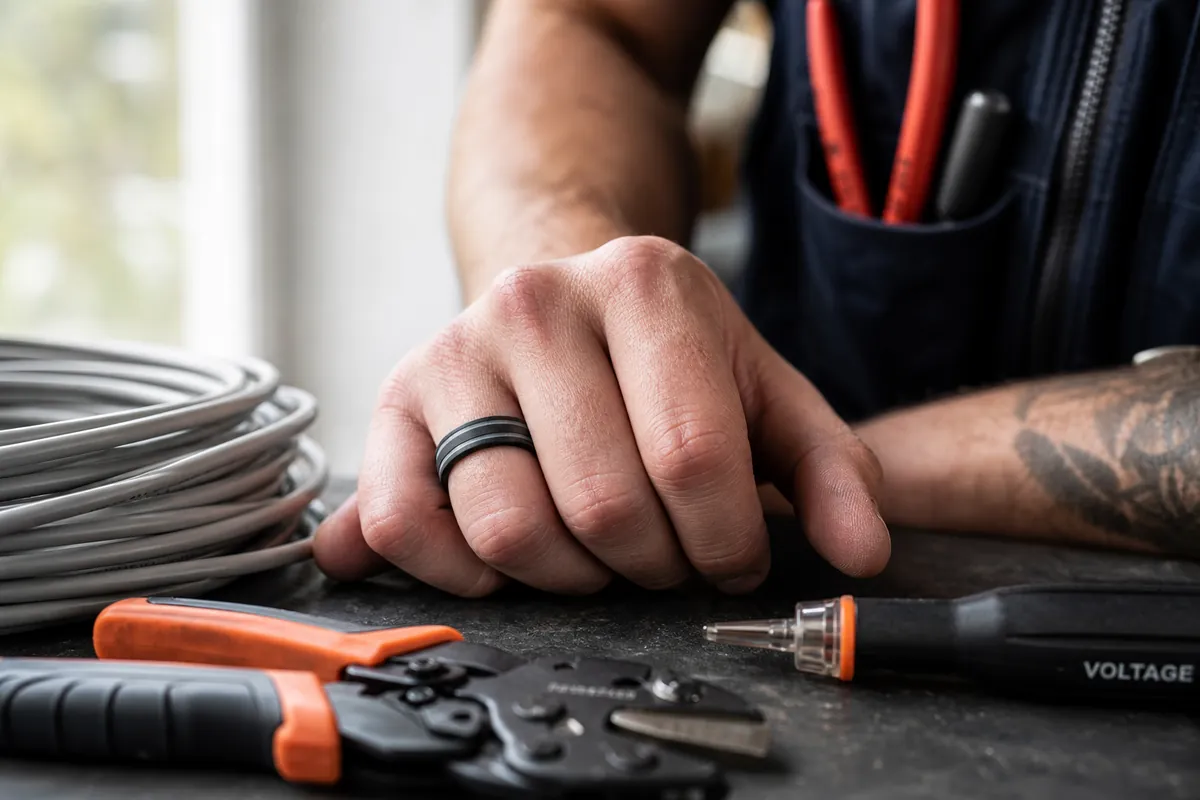
Ask any sparkie who’s been in the trade more than a few years and they’ll have a story, or know someone who has one, about a ring and a switchboard that didn’t end well. Gold, silver, tungsten, stainless steel, it doesn’t matter which metal, they all conduct electricity, and a ring is basically a bracelet for one finger that sits permanently against skin. Brush a live terminal with a metal band on and you’ve created a direct path for current to travel through your hand. At low voltage that’s a nasty burn. At higher voltage or with an arc flash event, the ring itself can heat up almost instantly and cause a full-thickness burn around the finger before you’ve even had time to pull your hand back.
The conductivity risk gets most of the attention, but the mechanical risk is just as common and honestly probably causes more trips to hospital. Climbing a ladder, pulling cable through a roof cavity, reaching into a panel, there are dozens of moments in an electrician’s day where a ring can catch on something. When that happens with a rigid metal band, the ring doesn’t give. The result is what surgeons call a degloving injury, where the skin and soft tissue get stripped from the finger because the ring won’t break or stretch. It’s one of the more gruesome injuries a hand can suffer and it often ends in amputation rather than repair.
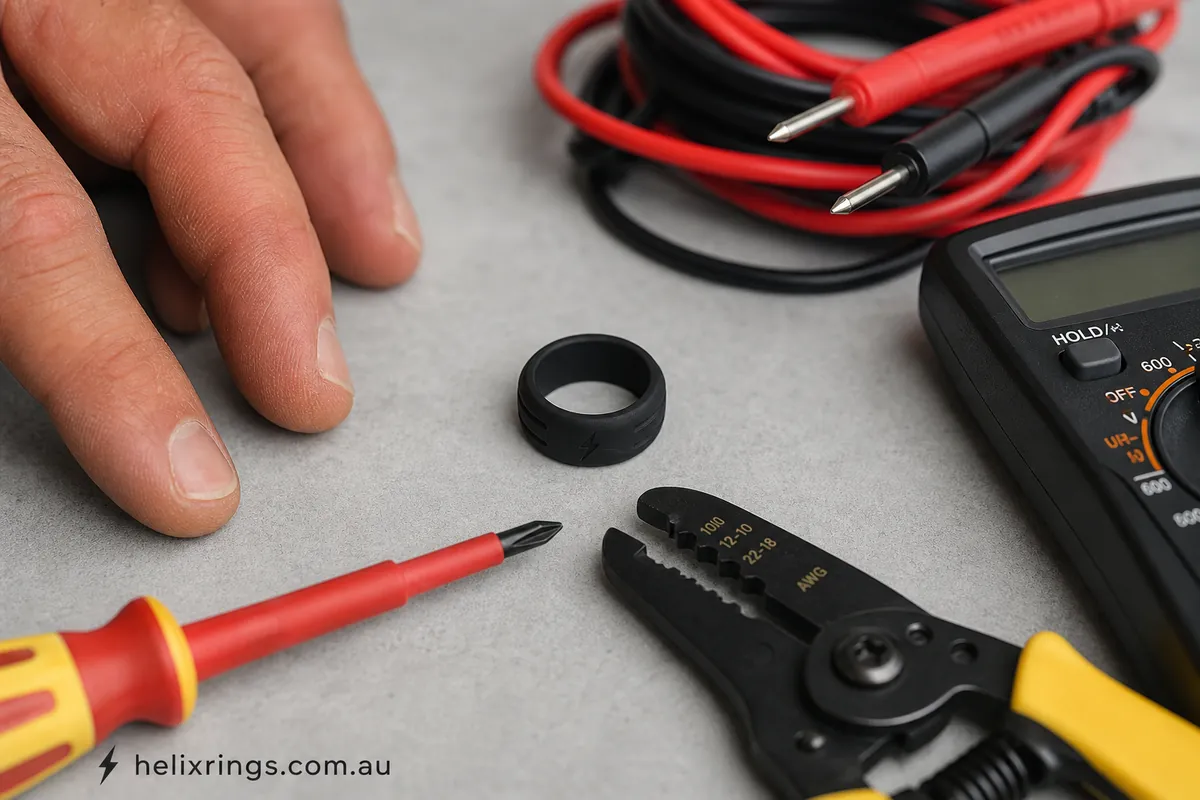
This is exactly the gap silicone rings were designed to fill. A good one is built to break apart or stretch off under load well before it can crush or degloves a finger, and because silicone doesn’t conduct electricity the way metal does, it removes that shock pathway entirely. Have a look through the full silicone ring range and you’ll see this isn’t a compromise band, it’s a purpose-built one.
Choosing the Right Silicone Ring
Sizing is the first thing to get right, and it trips up more people than you’d expect because silicone rings sit differently to metal ones. Most brands run a comfort-fit that’s slightly looser than a traditional band so it’s easy to remove in a hurry, but you still don’t want something that spins freely or slides off when your hands are sweaty on a 38 degree day in the roof space. Measure your existing ring size if you have one, or better yet, order a sizing kit before committing to a colour and style. A ring that’s too tight will cut circulation on a hot day; one that’s too loose defeats the whole safety purpose because it can slip down over knuckles and get caught in tools.
Thickness and profile matter more for tradies than they do for office workers. A thin, low-profile band is less likely to snag on cable, PPE gloves, or the edge of a switchboard door than a chunky, domed style. Some electricians prefer a rounded inner edge with a flat outer face so the ring sits flush against the finger rather than standing proud. If you’re working with your hands in tight conduit or behind panels all day, that flush fit is worth prioritising over a fashion-forward chunky look.
Breathability is the other factor worth thinking about, especially in Queensland or Northern Territory summers. Solid silicone traps heat and sweat against skin, which over a ten-hour shift can lead to irritation or even a mild rash under the band. Look for a design with airflow channels or a slightly vented profile. It’s a small detail but it’s the difference between a ring you forget you’re wearing and one you’re constantly fidgeting with by 3pm.
Top Styles and Colours
Electricians tend to gravitate toward darker, low-key colours for one simple reason: a black or charcoal ring doesn’t show grime, flux residue, or the general grubbiness that comes with the job. Black silicone rings are the most popular choice on site for exactly that reason, they look sharp straight out of the box and they still look sharp after a week of switchboard work. Grey silicone rings are a close second, giving a bit more of a brushed-metal look without any of the conductivity risk of the real thing.
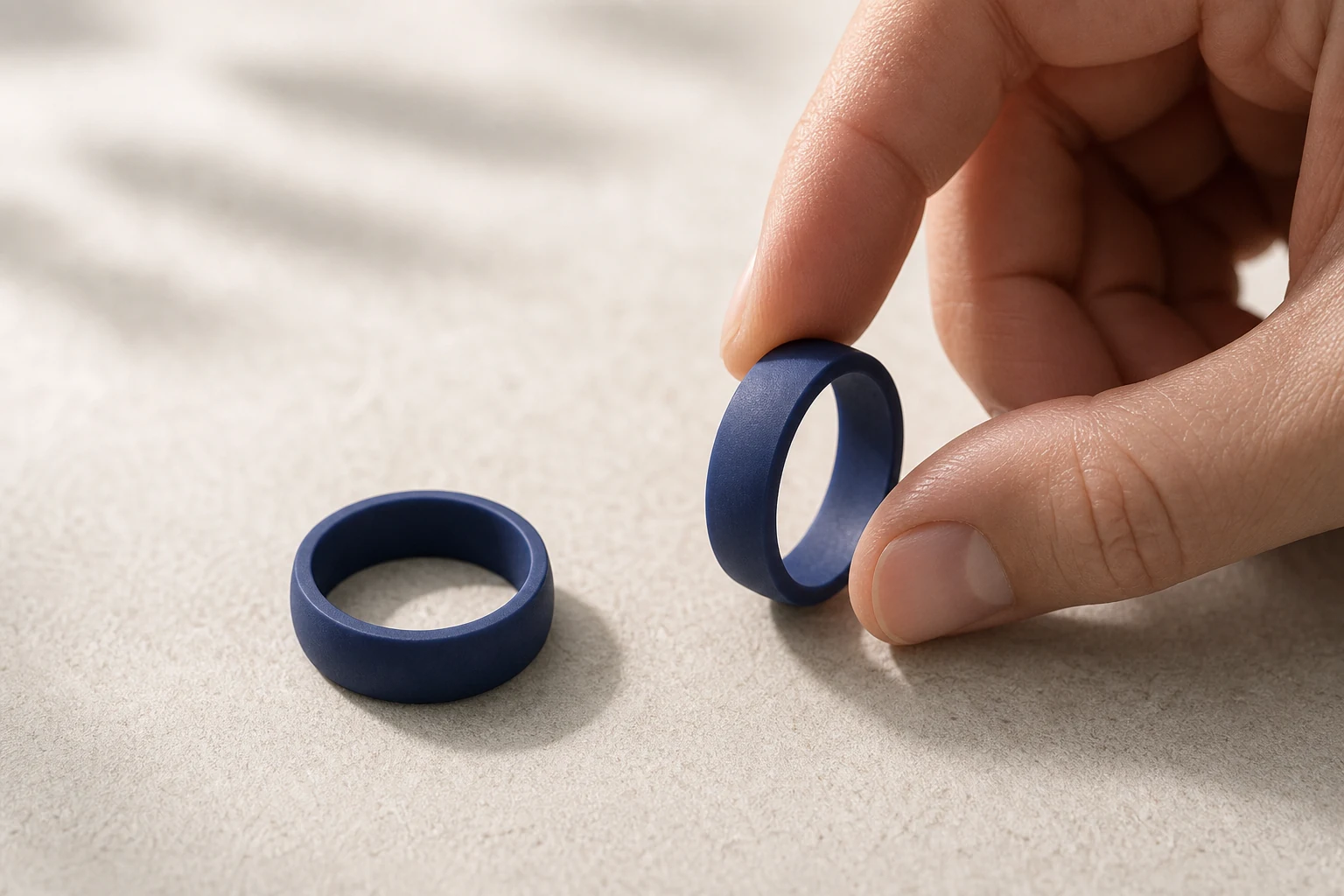
If you want something with a bit more personality for off-site hours, blue silicone rings are a solid middle ground, dark enough to still look intentional but with a bit of colour that reads as a proper piece of jewellery rather than just a work accessory. Some blokes keep two rings on rotation, a black or grey one for the tool belt and a brighter colour for weekends, which is easy to do given how affordable silicone bands are compared to a second metal ring.
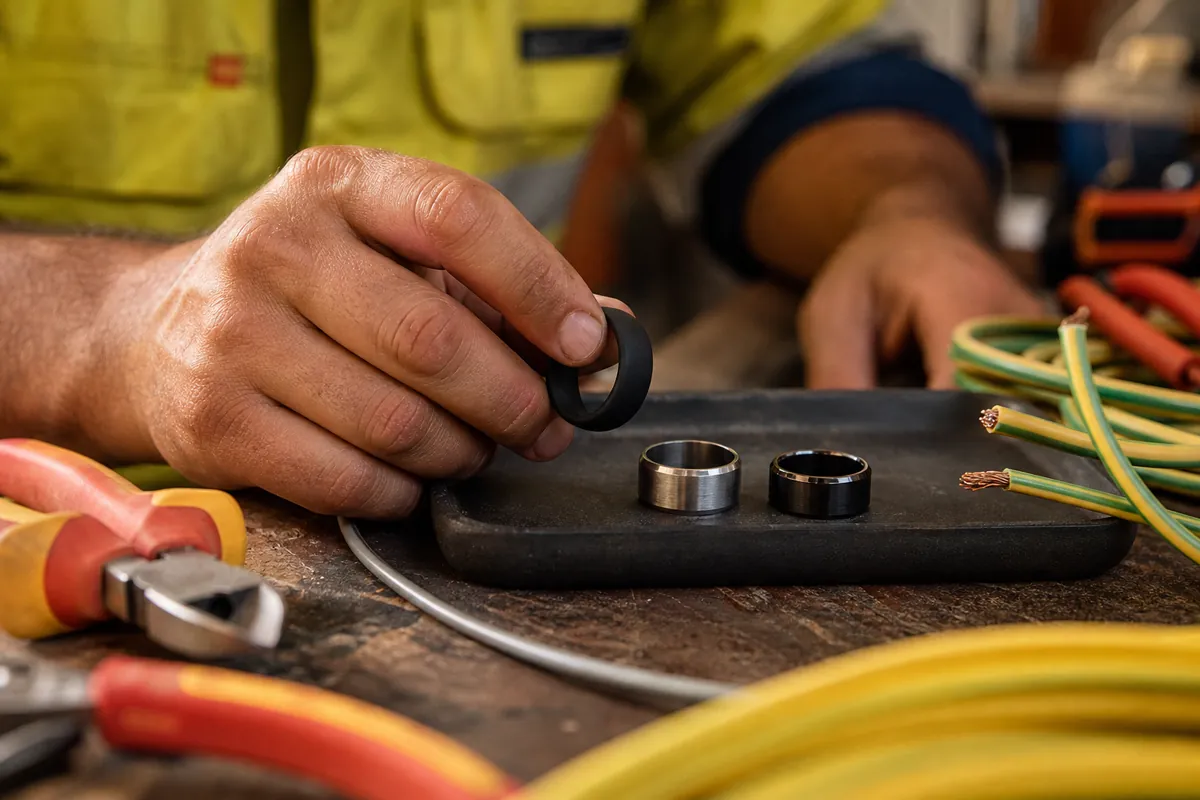
For anyone who wants options without having to buy one at a time, the ring packs are worth a look. You get several colours and finishes in one order, so you can figure out which fit and thickness actually suits your hands and your work before settling on a daily driver. It’s also handy for tradies who go through rings faster than most, between UV exposure, chemical contact, and general site wear, having a spare on hand means you’re never stuck wearing a metal band because your silicone one wore out mid-week.
What to Check Before You Buy
Not all silicone rings are built the same, and for a trade where the ring genuinely needs to perform, that difference matters. First, check the break-force rating if the brand publishes one. A ring designed for safety-conscious trades should be engineered to fail at a specific load, giving way before it crushes a finger, rather than just being a soft novelty band that happens to be made of silicone.
Second, look at what the silicone is rated for chemically. Electricians come into contact with cable lubricant, insulation cleaner, and the odd bit of solvent when stripping old wiring. Cheap silicone can degrade, discolour, or go tacky when it hits certain chemicals, which is annoying at best and a hygiene issue at worst. Medical-grade or platinum-cured silicone tends to hold up better across the board than the cheaper compounds used in bulk imported rings.
Third, think about certification if your workplace has a formal PPE or dress code policy. Some larger contractors and utilities have specific rules around jewellery on site, and a documented non-conductive rating on your ring can save an awkward conversation with a site supervisor. It’s worth checking your employer’s electrical safety policy or asking your safety officer directly, since policies vary between residential, commercial, and high-voltage work. The Safe Work Australia model code for managing electrical risks in the workplace is a good starting reference if you want the official line rather than site folklore.
Finally, don’t underestimate fit adjustability. Hands swell in heat and shrink in the cold, and tradies who work outdoors feel that more than most. A ring with a bit of give, rather than a rigid fixed diameter, copes with that seasonal change far better. Browse the men’s silicone ring range and you’ll notice most listings specify a comfort tolerance, which is worth reading before you order.
Tips From the Trade
Older electricians who switched from metal to silicone years ago generally say the same three things. Buy two sizes if you’re between measurements, because a ring that’s slightly loose is safer than one that’s slightly tight when you’re working near live equipment. Replace the ring every twelve to eighteen months even if it still looks fine, since UV exposure and chemical contact break down the material’s tensile strength long before it looks worn. And keep a spare in the ute or tool bag, because the whole point of a breakaway ring is that it sometimes actually breaks away, and you don’t want to be back in a metal band the next day because you forgot to reorder.
A few also mention testing fit with gloves on, since a ring that sits fine bare-handed can feel completely different under a pair of insulated gloves. If you’re regularly gloved up for switchboard work, try the ring on with your usual gloves before deciding on a final size. It sounds like a minor detail until you’re twenty minutes into a job with a ring digging into your palm under a glove liner.
Whichever style you land on, the full ring collection gives you a place to compare fit, colour, and thickness side by side rather than guessing from a single product photo, and the Helix Rings homepage is worth a bookmark if you’re outfitting a whole crew, since bulk orders for a team of electricians are a common request.
Frequently Asked Questions
What is the best silicone ring for electricians?
The best option is a low-profile, breakaway-rated band in a dark colour like black or grey, since it hides grime and won’t stand proud where it can snag on cable or conduit. Medical-grade silicone holds up better against site chemicals than cheaper imported bands, so it’s worth checking the material spec before you buy.
How do I know which silicone ring for electricians is right for me?
Start with an accurate size measurement rather than guessing from your old metal ring, since silicone bands fit differently. From there, match the thickness and profile to how tight your work is, a flush low-profile band suits panel and conduit work, while a slightly thicker style suits general site duties.
What should I look for when buying a silicone ring for electrical work?
Look for a published breakaway force rating, chemical resistance to solvents and cable lubricant, and a comfort-fit sizing tolerance for seasonal hand swelling. If your employer has a jewellery policy for electrical work, confirm the ring’s non-conductive rating meets what your site actually requires.
Are there budget-friendly silicone rings for electricians?
Yes, silicone rings are generally a fraction of the price of a metal band, and buying a multi-pack works out cheaper per ring than ordering single colours one at a time. It also means you’ve always got a spare on hand for when a ring does its job and breaks away.