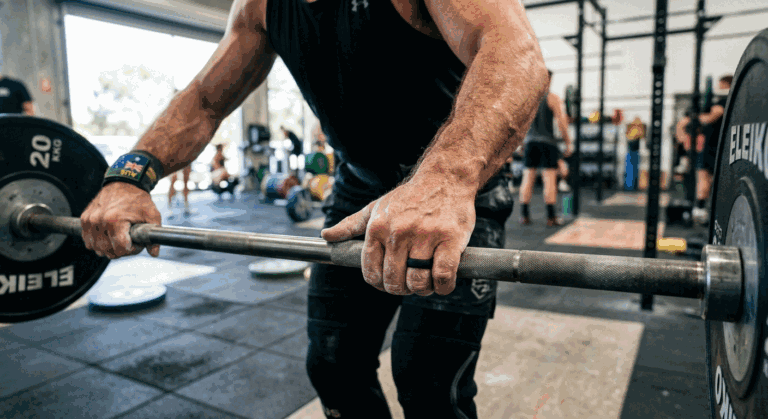
Silicone Wedding Bands for Pregnancy and Weight Fluctuation
What Silicone Pregnancy Rings Are For
Somewhere around the second trimester, most pregnant women notice their rings getting tight. It’s not just water weight in the obvious sense, it’s a genuine physiological shift: blood volume goes up by roughly 30 to 50 percent to support the pregnancy, and extra fluid pools in the extremities, especially in the hands and feet, particularly by the end of the day or in hot weather (Mayo Clinic). That’s the medical term “oedema” doing its thing, and it’s completely normal for most women, though it’s also one of the things midwives keep an eye on if it shows up suddenly or severely (Better Health Channel).
Here’s the problem nobody warns you about at the bridal shop: a metal wedding band doesn’t stretch. Once your finger swells past the point where the ring will slide off, you’ve got two options — leave it on and hope it doesn’t need to be cut off in an emergency, or take it off and put it somewhere you’ll definitely lose it. Neither is great. Emergency rooms deal with swollen-finger ring removals often enough that it’s a known scenario, and cutting a sentimental metal band off in a hurry is exactly the kind of moment nobody wants at 32 weeks pregnant.
A silicone ring sidesteps the whole issue. It’s soft, it’s got a bit of give, and if your finger does swell to the point of real discomfort, you can cut it off yourself with kitchen scissors in about four seconds, no drama, and it costs less than a nice coffee to replace. That’s really the whole pitch: it’s a symbolic band that flexes with your body instead of fighting it. If you want to see the breadth of what’s out there, the full silicone ring range is a good place to start browsing before you commit to a size or colour.
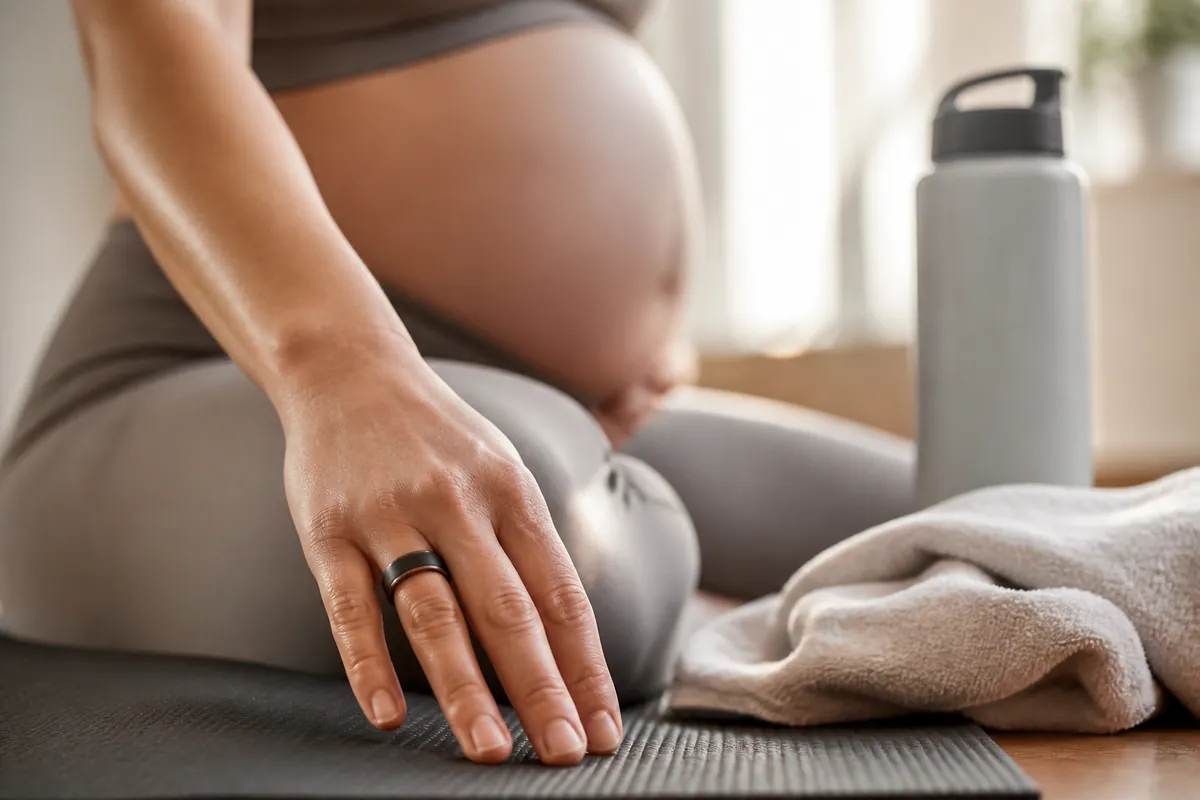
Choosing the Right Silicone Ring
Sizing is where most people get it wrong, so let’s deal with that first. Don’t size a silicone ring to your pre-pregnancy finger and don’t size it to how swollen your finger is on the worst day either. The trick is to measure a few times across a week, ideally once in the morning and once in the evening, and pick a size that sits comfortably in the middle. Silicone rings from most Australian suppliers, including this brand, are available in half-sizes, so there’s rarely a reason to round up or down more than you need to.
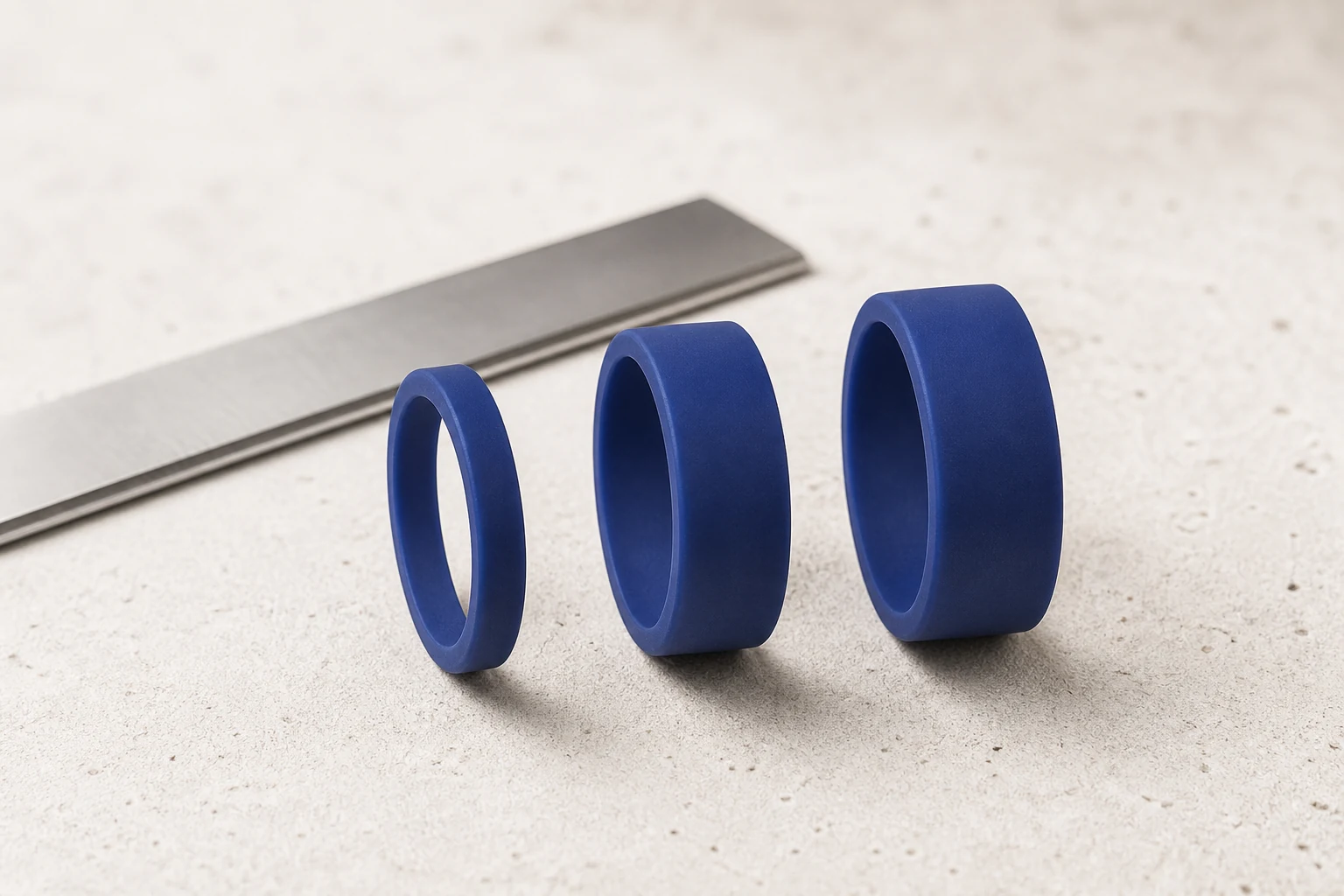
Width and thickness matter more than people expect too. A slim 4mm to 6mm band is going to be far more forgiving on a swelling finger than a chunky 8mm or 10mm ring, simply because there’s less material fighting the skin. If you’ve never worn silicone before, start narrower than you think you want. You can always size up later, and because these rings run somewhere between $19 and $29 each rather than $300-plus for a metal band, buying two or three sizes as your pregnancy progresses isn’t the financial gut-punch it would be with anything set with a stone.
A lot of women actually buy a small multipack for exactly this reason, one size for early pregnancy, one for the third trimester, one for postpartum when everything is still settling. If that sounds sensible, the ring packs are built for precisely that kind of flexibility, and they work out cheaper per ring than buying singles.
Top Styles and Colour Options
Silicone doesn’t mean you’re stuck with a plain rubber band that looks like it belongs on a gym junkie’s finger (though if that’s your style, there’s nothing wrong with it). The range has genuinely grown up over the last few years. There are faceted styles that mimic a cut diamond profile, thin stacking bands you can layer two or three at once, and finishes that look close enough to brushed metal that people won’t clock it as silicone unless they’re looking closely.
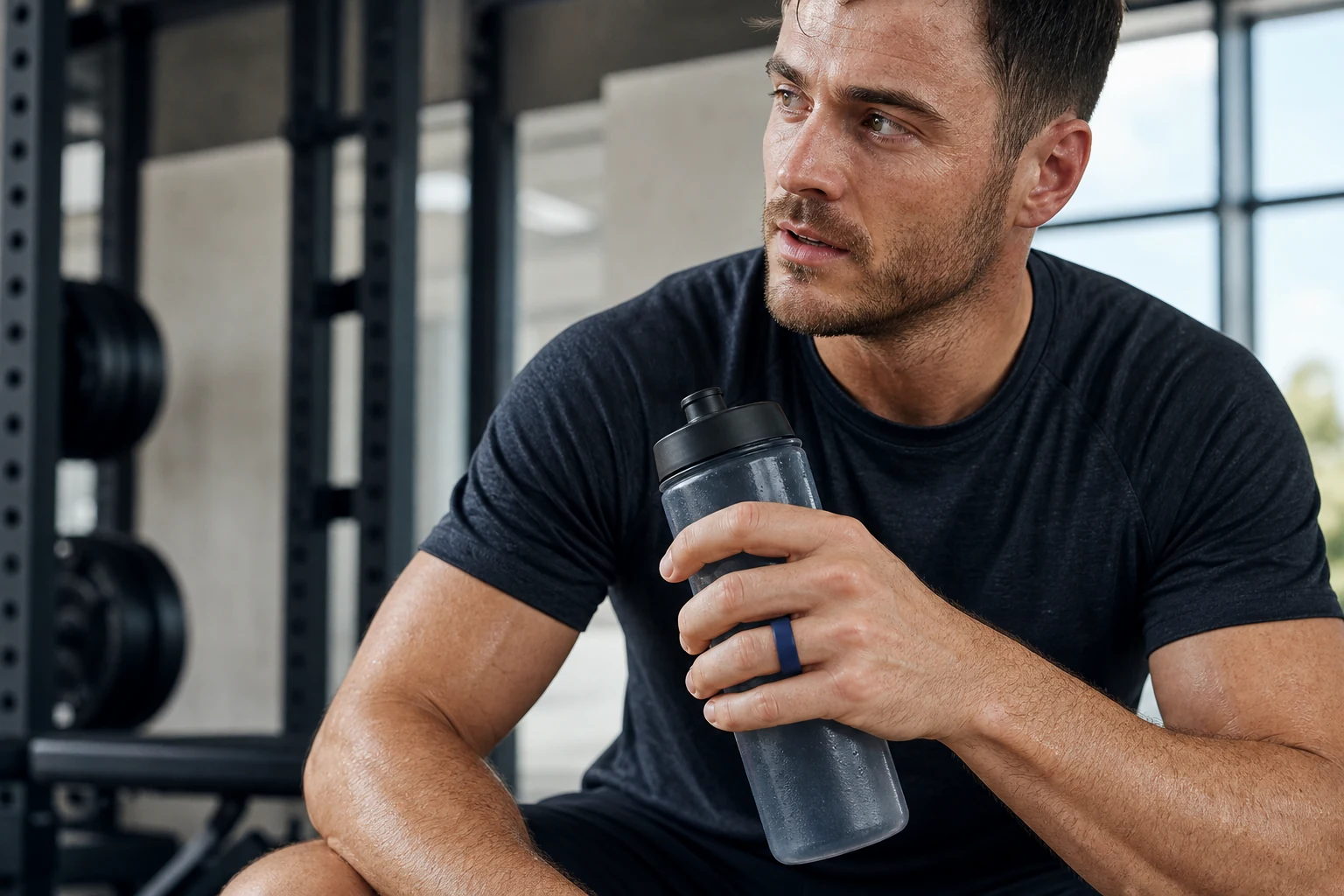
Colour is where a lot of the personality comes in, and it’s worth picking something that still feels like “your” wedding ring rather than a placeholder. Classic black is the most popular choice by a wide margin, understated and works with everything, and the black silicone ring collection covers most of the standard and faceted styles. If you’d rather something with a bit more presence, the blue silicone rings tend to be popular with people who want a nod to “something blue” without going full costume jewellery, and there’s a genuinely warm bronze tone that reads closer to rose gold than most people expect from silicone.
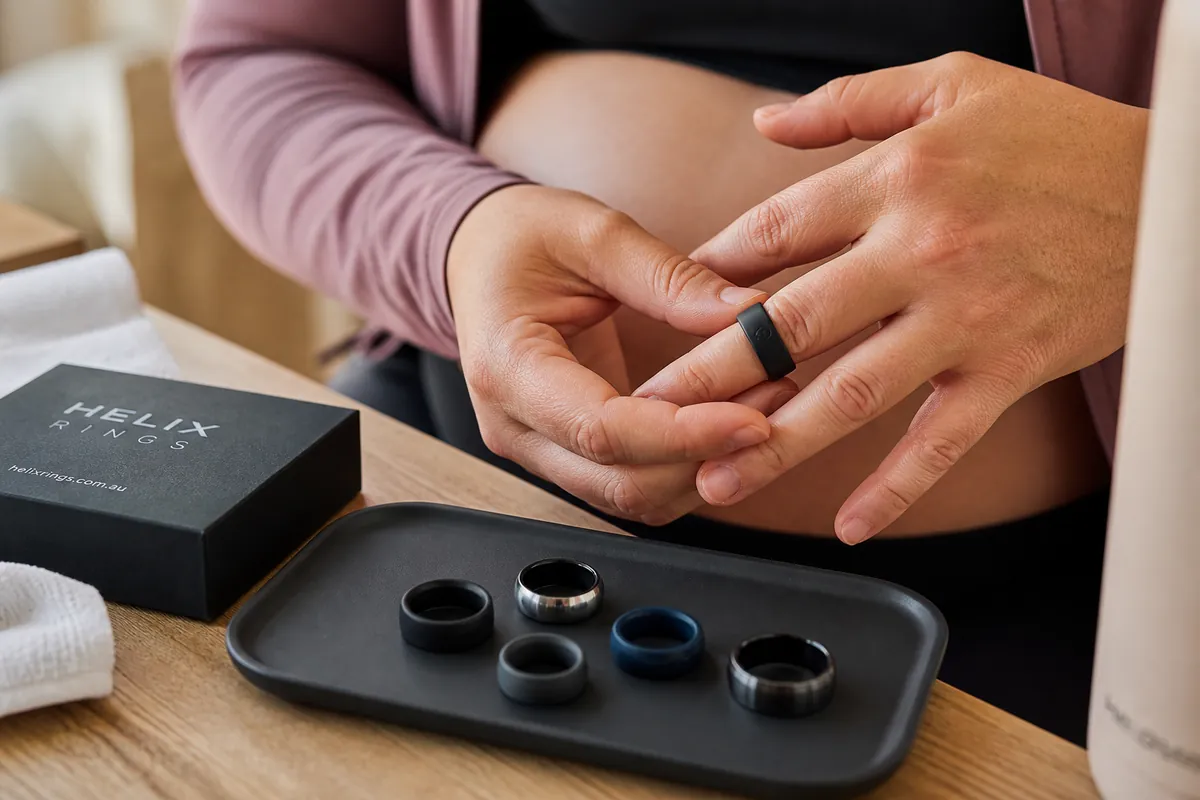
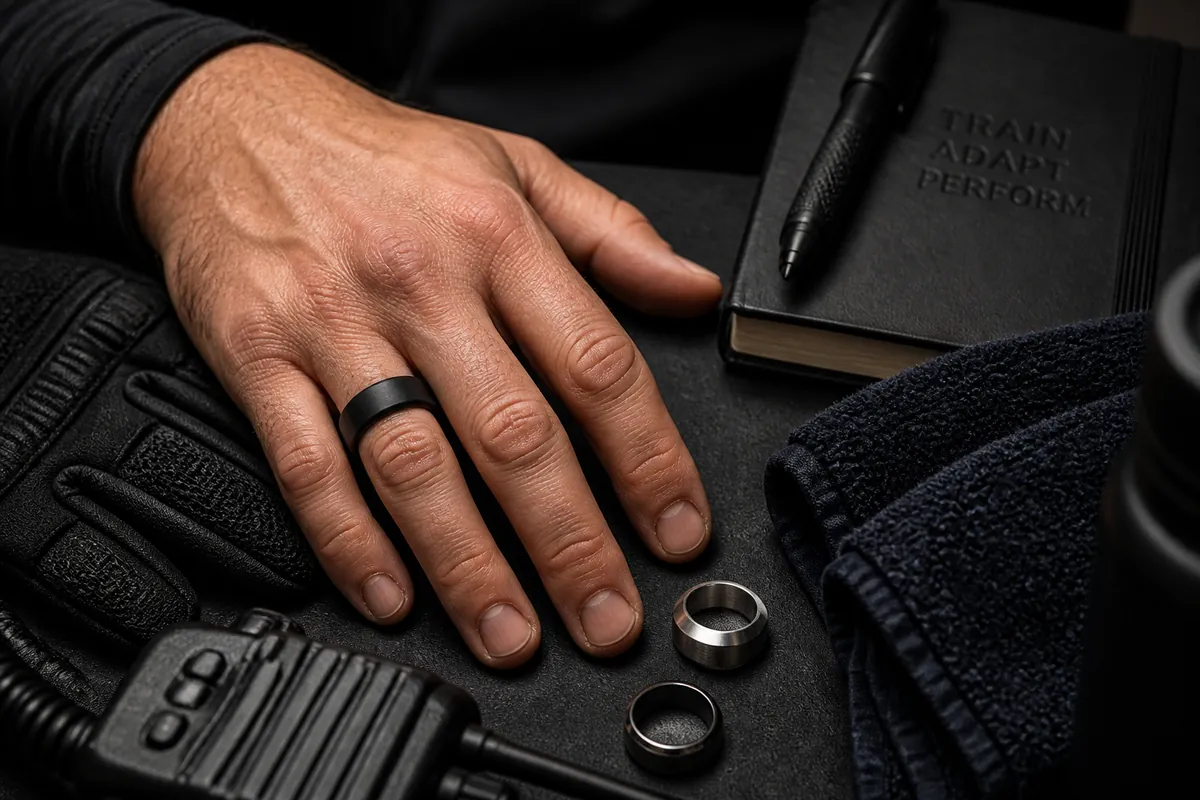
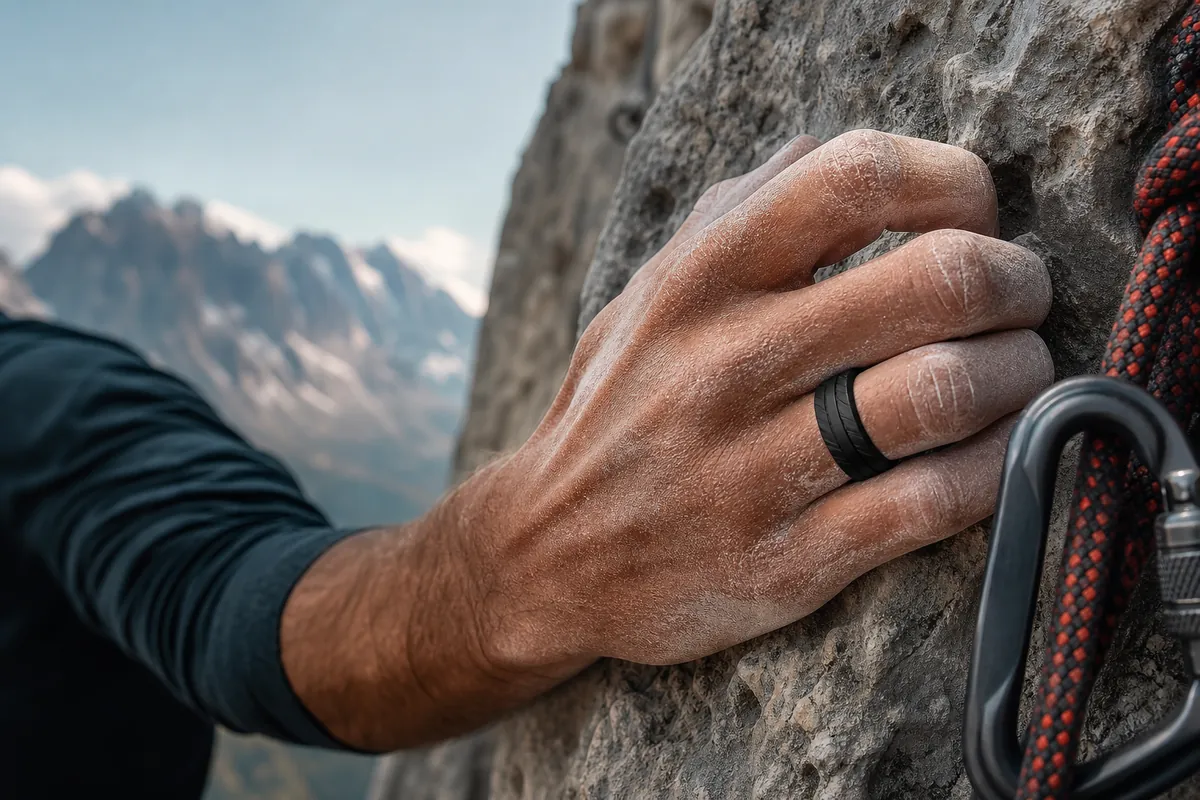
Partners sometimes end up buying a matching set through this whole process too, since a lot of expecting dads end up switching to silicone at the same time for work reasons (manual trades, gyms, anywhere a metal ring is a genuine safety hazard around machinery). The men’s silicone ring range covers that without needing to shop two separate brands. For couples who want the swap to still feel like an upgrade rather than a downgrade, it’s worth browsing the complete ring range together and picking styles that pair, even in different colours.
What to Consider Before Buying
A few practical things worth thinking through before you order, beyond just size and colour.
Medical-grade material. Not all silicone rings are made equal, and the cheapest ones on marketplace sites can use lower-grade silicone that’s stiffer, more prone to staining, or holds onto smells. Look for rings specifically described as medical-grade or food-grade silicone, since that’s the same standard used in things like baby bottle teats and surgical equipment, and it’s the material that’s actually been tested for prolonged skin contact.
Breathability. Some newer designs include small internal channels or a slightly textured inner surface so air and moisture can move rather than getting trapped against the skin all day. If you already know you run warm or you’re prone to skin irritation, that’s worth prioritising over a purely flat-band design, especially through summer pregnancy months when hands swell more anyway.
Postpartum breastfeeding swelling. Worth knowing ahead of time: swelling doesn’t necessarily end at delivery. A lot of women get another round of finger swelling in the first weeks of breastfeeding as hormones and fluid levels keep shifting, so don’t assume you’ll be straight back into your metal band the week you leave hospital. Keeping a silicone ring in rotation for those first postpartum months is common, and it’s a lot less stressful than being caught out.
Skin sensitivity. Pregnancy hormones can make skin more reactive than usual, full stop. If you’ve never worn silicone before, it’s worth doing a short trial wear, a few hours here and there, before committing to wearing it daily for months. Genuine reactions to medical-grade silicone are uncommon, but pregnancy is exactly the time your skin might surprise you.
Durability around water and chemicals. Unlike a lot of metal bands, silicone handles hand sanitiser, dishwashing, and constant hand-washing without tarnishing, which matters a lot once there’s a newborn in the picture and your hands are wet approximately all day. If you want something with a slightly more premium, engraved-metal look for occasions where silicone feels too casual, it’s worth looking at custom titanium rings as a second option to keep for date nights or family photos.
Tips from the Experts
Bridal and wedding planning publications have started covering this trend properly over the last few years, not as a novelty but as a practical accessory choice, particularly for active brides and anyone whose job or body doesn’t suit a fixed metal band (The Knot). A few things jewellers and midwives tend to agree on:
- Buy your silicone ring before the swelling starts, not after. Trying to get an accurate size once your fingers are already puffy just locks in a size that’ll be loose again postpartum.
- Keep your original metal band somewhere safe and insured rather than trying to force it to fit. Resizing a metal ring twice, once for pregnancy and once back afterward, usually costs more than a handful of silicone rings combined.
- If swelling in your hands is sudden, severe, or paired with headaches or vision changes, that’s a different situation entirely and worth calling your midwife about straight away, not just a ring problem (American Pregnancy Association).
- Rotate two sizes rather than betting on one. Most women’s ring size moves up half a size to a full size by the third trimester, then settles somewhere close to (but not always exactly) where it started once breastfeeding hormones level out.
If you’re new to the brand generally and want a sense of who’s behind the rings and the sizing advice, the about page has the background, and the blog has a few other guides on sizing and care that pair well with this one.
Frequently Asked Questions
What is the best silicone ring for pregnancy swelling?
A slim, medical-grade silicone band in the 4mm to 6mm range tends to work best, since narrower bands flex more comfortably as your finger changes size through the day. Faceted or stacking styles are popular because they still look intentional rather than purely functional, and a breathable inner design helps if you’re prone to swelling in warm weather.
How do I know which silicone ring size is right?
Measure your finger a few times across a week, both morning and evening, and pick a size that sits comfortably in the middle rather than at either extreme. Many women keep two sizes on hand, one for early pregnancy and one for the third trimester, since a size that fits well at 12 weeks likely won’t at 34 weeks.
What should I look for when buying a silicone ring?
Prioritise medical-grade or food-grade silicone over the cheapest option you can find, since lower-grade material tends to stiffen, stain, or hold onto odour faster. It’s also worth checking whether the design includes any breathability channels, and buying half-sizes either side of your measurement if you’re unsure, since silicone rings are inexpensive enough that having a spare isn’t a real cost concern.
Are there budget-friendly silicone ring options?
Yes, silicone wedding bands typically run somewhere between $19 and $29 each, a fraction of a metal band’s cost, and multipacks bring the per-ring price down further if you want a few sizes or colours on hand. That affordability is a big part of the appeal during pregnancy, since your size is likely to change more than once over several months.